
Annamaria Garden has over 20 years’ experience in the field of organisational and personal transformation, and in running her own practice in London for 15 years. She has a PhD from MIT in Boston and served for nearly five years on the research faculty of London Business School. She now lives in New Zealand and has authored seven books.
Tell us a little about Burnout and the Mobilisation of Energy?
It aims to help people who are burnt out or are on the slippery slope towards burnout. It explores the subject of burnout in individuals, jobs and organisations. It looks at the severe depletion of energy that defines burnout. It describes three conditions that distinguish high from low burnout people; boundaries, closure and self-investment. Burnout is in dependent of the mobilisation of energy and the book describes the latter and what creates it. The book is part-descriptive, part-theoretical and part research-based.
What is burnout?
Burnout is unique – it is not stress, depression or anxiety. It has one key symptom: an extreme form of energy depletion where energy is hard to replenish. Methods that may work for stress and anxiety may not work. Solving burnout requires that you understand what makes it unique.
What can be done?
We need to start with the individual – why they are burnt out. Then we can progress to the job and then organisation. When looking at burnout, the time spent on leisure matter more than time spent at work. If burnt out, we often cancel leisure, so it is important to reinstate those leisure activities we enjoy. It is also important to look at pacing, stopping for 5-10 minutes every few hours, and having one day off a week, if possible. The best thing of all to do is to learn from people who are low in burnout even though faced with high work demands.que.
You talk about ‘introject’, can you explain what this is?
An introject is an idea, message or ‘should’ that you have internalised but it isn’t ‘you’. Nevertheless, this introject ‘runs you’. An introject is a psychological concept. You do not have to go to this level, this depth, to get out of burnout. You can, instead, read the quotations describing the different approaches of those who are high in burnout and those who are low. You can, with effort, adopt the approaches of the latter. This is how I became a low burnout person even though I work hard.
Some jobs immunise you against burnout and some do then opposite, can you explain more about this?
A job will immunise you against burnout if it makes psychological sense to you. If it doesn’t you will run around getting burnt out for seemingly no reason. It is the responsibility of managers and the organisation to have enough common sense and understanding of human beings to construct jobs in a way that makes sense to them.
You also talk about the mobilisation of energy. Can you explain what this is?
Mobilisation of energy is a natural expression of energy that is frequently blocked by well-meaning managers. They focus excessively on goals, targets, action plans, minutes of meetings and so on. By doing this they miss the PRIOR need for motivation and mobilisation of people.
You can’t sidestep the latter and get away with it.
How did you go about researching the book?
There are several sources: my own story and how I got out of burnout; my PhD research as well as recent research in a mental health facility; my 15 years consultancy in London where I often came across burnout.
What is next on the agenda for you?
I have almost finished a book called Beyond Positive Psychology. This is about the four most useful ideas for living a life. Beyond that is another book on mobilising energy in organisations.

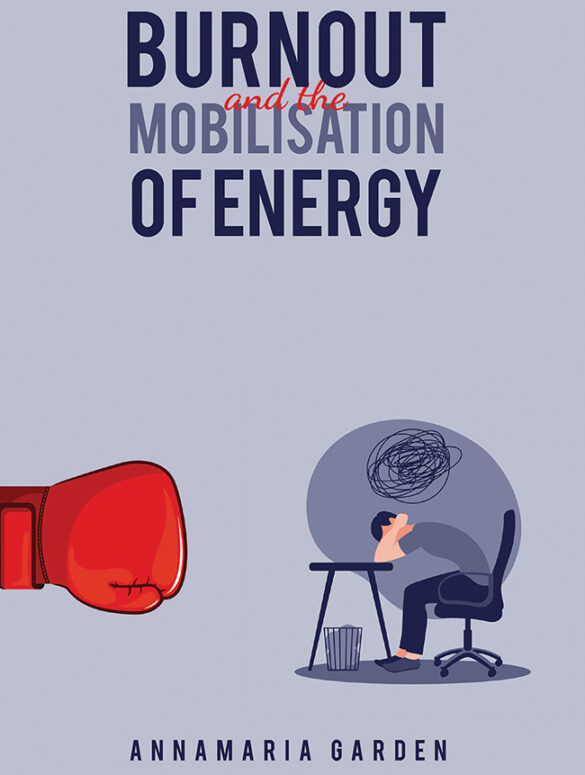
Burnout and the Mobilisation of Energy
By Annamaria Garden, Austin Macauley Publishers, $32.50.
Available from any good bookshop.
More information atannamariagarden.co.nz