
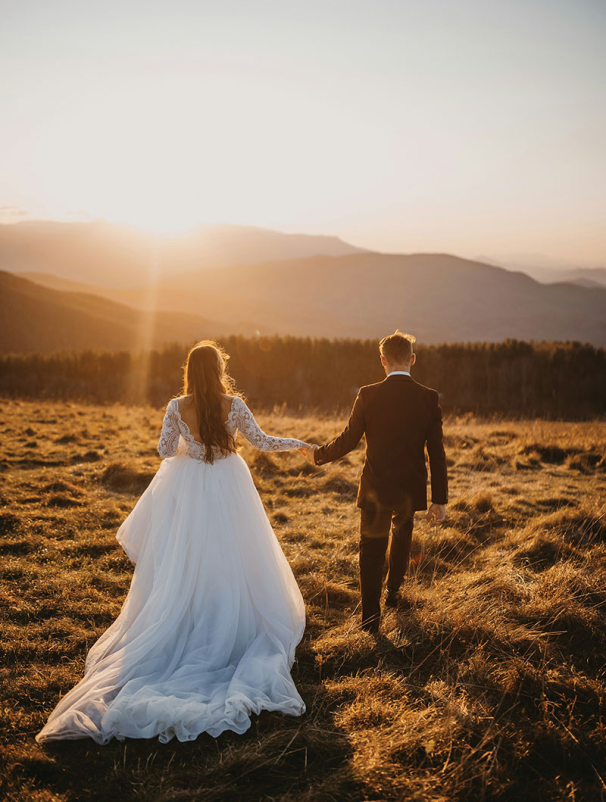
LIFTING THE VEIL
The earliest recorded evidence of a formal marriage ceremony dates to around 2350 BC in Mesopotamia – however, it had little to do with love or religion. Anthropologists believe that for millennia, families were loosely organised in groups of around 30 people, often with several male leaders, shared partners and communal child-rearing. As hunter-gatherers settled into agrarian societies, more stable arrangements became necessary to manage land, inheritance, and workload.
In Ancient Greece marriage was unashamedly transactional, with fathers hand over their daughters with the words: “I pledge my daughter for the purpose of producing legitimate offspring.” Ancient Roman marriage was similarly pragmatic, functioning as a way to transfer property, wealth, rights and alliances across generations.
Also, romantic or sexual fidelity was not expected of men, while wives were expected to remain within the domestic sphere.
In Islamic tradition, marriage carries great emphasis, for many Muslims representing a lifelong partnership and a social contract between families that strengthens the wider community. It is widely regarded as the foundation of family life, with the Prophet Muhammad teaching that marriage completes “half of one’s religion”.
Marriage within traditional Māori society was shaped by the importance of whakapapa and tribal connections. Partners – particularly those of high rank – were often carefully chosen to maintain or strengthen links between hapū and iwi.

In medieval Europe, marriage remained largely strategic. Among the Anglo-Saxons it was used to secure trade, peace and mutual obligation; personal consent mattered little. As Christianity gained power, marriage became formalised by the Church. By the eighth century it was recognised as a sacrament, and in the 16th century modern wedding vows were codified. By the late 19th century, marriage patterns began to shift again, and the upheavals of the 20th century – particularly war – reshaped family life even further. World War Two say more than 3,000 wives, 1,000 children, and 700 fiancées arrive in Aotearoa New Zealand from 35 countries in Europe, the Middle East, and the Pacific. And around 3,000 Kiwi women married US troops stationed locally.
Civil unions – widely interpreted as a type of gay marriage – were introduced in New Zealand, in 2005. Eight year later, same-sex marriage was made legal; the Netherlands was the very first country to legalise it in the year 2000.