
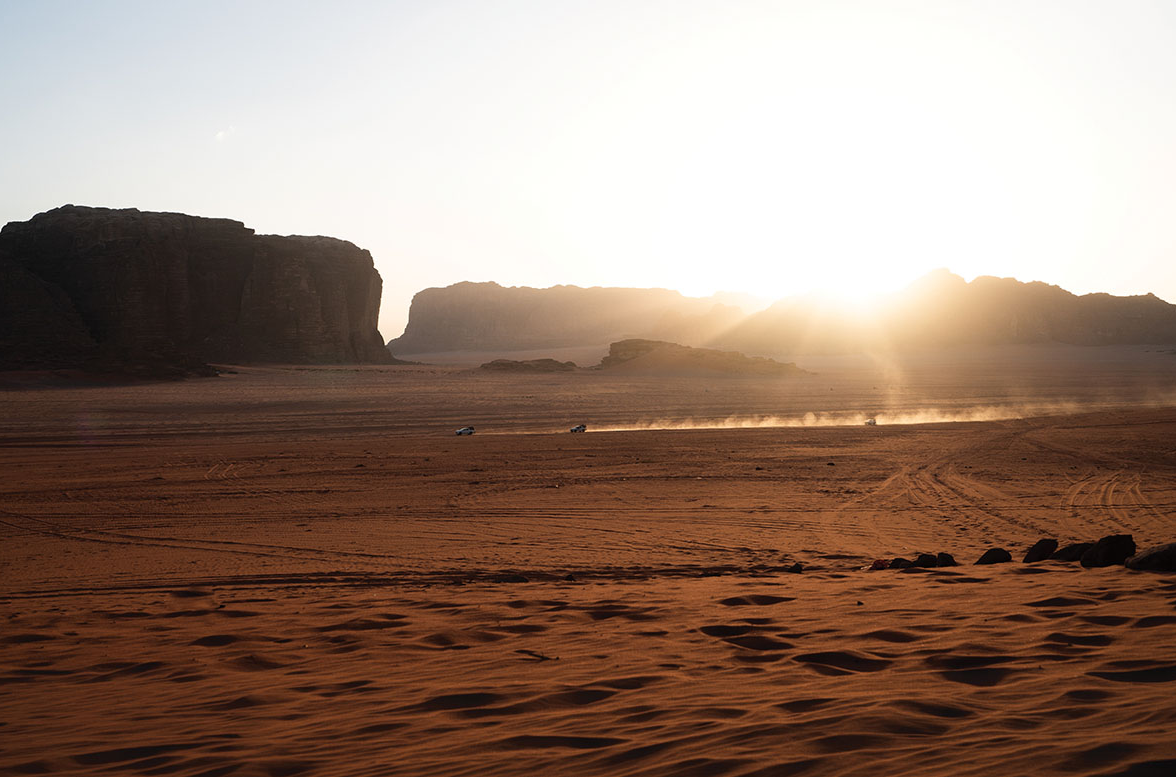
From early half-track cars and wartime Jeeps to Land Rover icons and modern endurance routes, the evolution of off-roading represents a relentless pursuit of muddy freedom.
LAYING TRACKS
French engineer Adolphe Kégresse developed a half-track car called Autochenille for Tsar Nicholas II before World War I. André Citroën later acquired the rights, promoting the Autochenille through high-profile expeditions across Asia and Africa – the B2 model became the first vehicle to ever cross the Sahara. Widely adopted by military, farming and forestry sectors, it also became popular on British grouse moors.
MILITARY ROOTS
Advances in off-road tyre technology reduced the need for tracked vehicles, ushering in the era of wheeled off-roaders. The USA-built Jeep led the charge thanks to its rugged design and deep-tread tyres proving ideal for reconnaissance, communications and utility work across harsh terrain. Developed rapidly after 1940 as the army sought a reliable replacement for horses, the off-roader is widely hailed as playing a major role in the Allies’ second world war victory. Surplus Jeeps later fuelled a civilian off-road boom, cementing their place as one of the most iconic and influential vehicles of the 20th century.
ROVING
Originally inspired by Jeep, the British-built Land Rover evolved from humble beginnings as a utility vehicle into one of the defining names in luxury off-roaders. The Rover Motor Company built its first prototype in 1947, nicknamed the ‘Centre Steer’ owing to its central driving position. Designed to support Britain’s agricultural recovery, the concept led to the first production Land Rovers in 1948, laying the foundation for today’s powerful V8-driven Defender models.
EATING DUST
One of the world’s most dangerous off-road races, the Baja 1,000 is a brutal test of endurance across roughly 1,900 kilometres of desert on Mexico’s Baja California Peninsula. Featuring classes from motorcycles to pickup trucks, it has claimed both lives and machines alike. The first official race was held in 1967, though its roots trace back five more years when stuntman Bud Ekins rode the route to test a Honda Scrambler… and sparked a legendary annual motorsport challenge.
LOAD OF TAT
With no official signs or single path, the TransAmerica Trail (TAT) is only for those in the off-road know! The coast-to-coast off-road route reaches more than 8,000 kilometres across the United States, created for dual-sport motorcycles and 4×4 vehicles. Stretching across 13 states that link the Atlantic to Pacific Oceans, it follows dirt, gravel and forest tracks through remote terrain, including areas such as Moab. Expect to face mud, sand, rocks and water crossings, with the best conditions typically between May and September.