
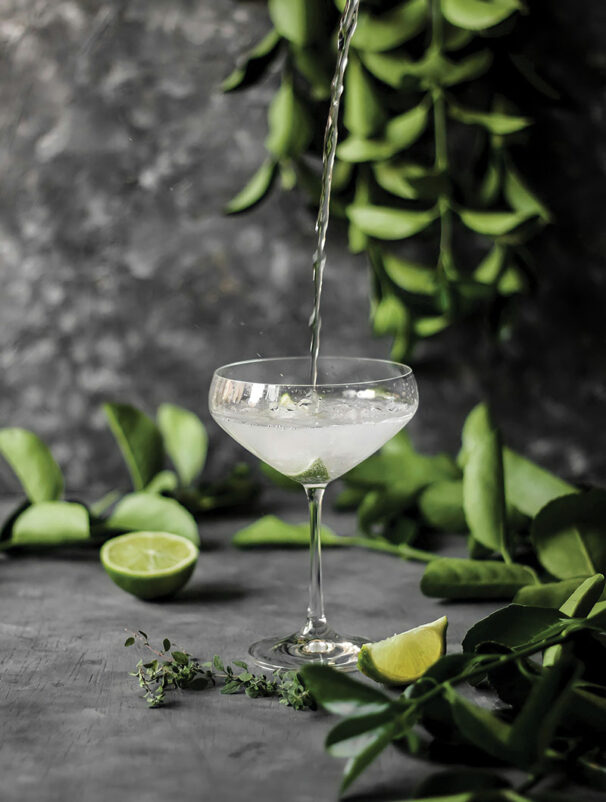
A popular spirit whose style and cultural positioning has seen incredible change over time, gin’s flavour is primarily from juniper berries and it originated as a medicinal ‘liquor’.
England led the love of the easy-to-make grog and its popularity surged after the introduction of import tariffs on French brandy. This led to the infamous Gin Craze of the first half of the 18th century in England, a period of widespread production, low prices, and significant social issues often blamed on excessive gin consumption. Various Gin Acts aimed to stop
‘the lower classes from drinking themselves to death’ through regulation of production and sales, gradually shifting the industry to a more respectable footing.
Early gins were produced in ‘all in one’ pot stills, had a rougher profile, and were sometimes flavoured with substances like turpentine or even sulfuric acid! A significant change came in the 19th century with the invention of the column still. This allowed for the creation of high-proof neutral spirits, paving the way for a higher level of refinement including the lighter ‘London dry’-style that is now seen as the ‘true’ gin. In British colonies, gin gained popularity as a mixer with quinine tonic water, used to combat malaria, giving rise to the enduring gin and tonic cocktail. This colonial tradition combined with ongoing high tariffs (read high prices) meant gin moved its social standing up in the world, becoming a popular sip for the aristocracy and ruling classes.
Various Gin Acts aimed to stop ‘the lower classes from drinking themselves to death’ through regulation of production and sales, gradually shifting the industry to a more respectable footing.
While gin is a key part of many cocktails – none better known than the negroni and the martini – it has experienced a global resurgence since the early 2000s, marked by innovation, new brands, and a proliferation of styles. This has meant expanding the market beyond traditional drinkers as the drink continues to evolve. Today, gin is a diverse spirit produced through various methods and flavoured with a wide array of botanicals enjoyed by a wide societal segment.
New Zealand was slower to embrace the ‘ginaissance’ that began early 2000s, yet the scene has exploded dramatically, now featuring over 100 local producers, most with several offerings. Growth has been aided by factors including the global appreciation of New Zealand as a quality producer and lockdown creating plenty of time for people to search for and drink new and interesting drops.
WORDS — TIM WARREN