
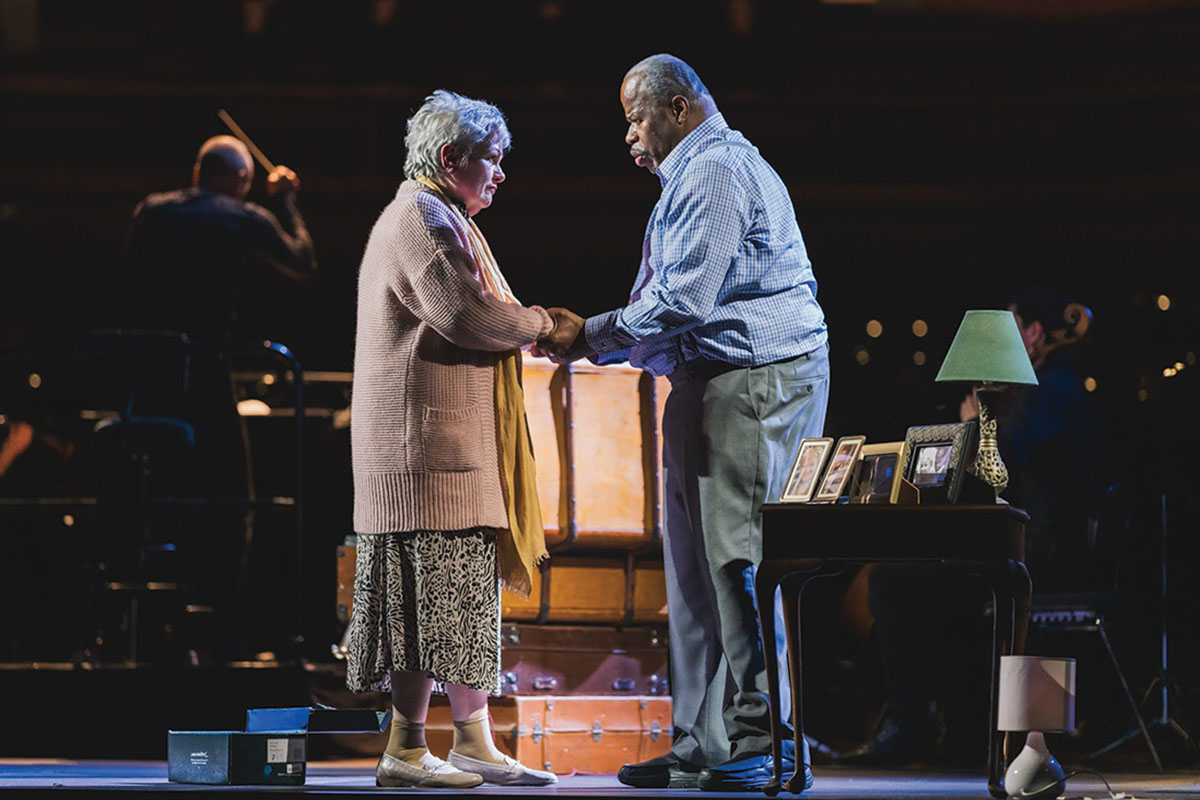
Bartók’s Bluebeard’s Castle comes to Auckland Town Hall on 13 and 14 March as part of Te Ahurei Toi o Tāmaki Auckland Arts Festival, featuring the Auckland Philharmonia Orchestra and international opera stars baritone Lester Lynch (US) and soprano Susan Bullock (UK).
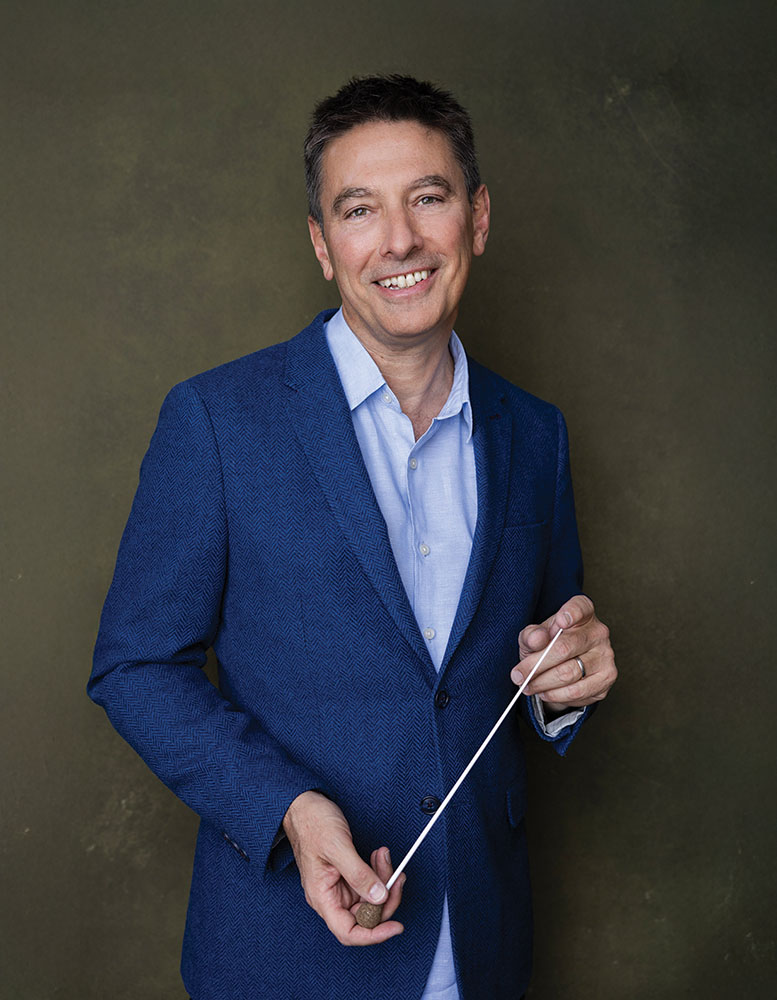
Verve chats with the conductor and General Director of NZ Opera Brad Cohen.
From a conductor’s point of view, how does Bartók use the orchestra to express emotion?
What the two characters say is poetic rather than detail-led. What is astonishingly specific is the way the orchestra works as a magic carpet underneath and between what the singers say, with iridescent aural colours and texture expressing their emotional journey second by second. There’s really nothing else like it in the whole operatic repertoire.
This staging replaces the traditional Gothic setting with something much more familiar and domestic. Did that change the way you approached the music?
The challenge with Bluebeard is one of scale. There’s almost no repetition in the entire hour of the opera – everything is in constant musical flux. Having an intimate, domestic setting actually helps to focus the audience on the detail and precision of what’s happening between the characters. Instead of humans casting huge spooky shadows on a large wall, this staging holds us at a human scale – albeit one pulsating intensely with both emotion and what is unspoken.
At NZ Opera we say that opera is, at its core, simply telling stories through the power of the human singing voice.
Lester Lynch and Susan Bullock have both lived with this production for some time. What do they bring to these roles that feels distinctive or especially moving?
The benefits of repetition! Both Susan and Lester truly inhabit their roles. There is no acting – at least as far as we can see it – which is to say it is acting of the highest refinement. Bluebeard is an opera, but most of all it’s an experience conducted through the ears into the body; and physicality characterises the way Lester and Susan have built their interpretations over many years of experience.
This is Bartók’s only opera. What do you think opera allowed him to express that other forms didn’t?
Bluebeard owes a lot to Debussy’s only opera, Pelléas et Mélisande. Both are psychodramas, intense dramas which trust the orchestra to carry the emotional narrative for characters who leave much unsaid. It comes from Wagner, actually, this idea of
the orchestra carrying the emotional content as a kind of subconscious ocean. Bluebeard, as I say, is a one-off. I can’t imagine what another opera by Bartók would even be like – and that uniqueness is a beautiful thing!
For people who may not attend opera often, what do you hope they take away from experiencing Bluebeard’s Castle live… and how would you entice first-timers to attend?
At NZ Opera we say that opera is, at its core, simply telling stories through the power of the human singing voice. In 2023, what our Wellington and Christchurch audiences of Bluebeard’s were left with was perhaps a sense of overwhelm, of rich lived experience – and of sorrow. The long silence after the final note sounded was magical and resonant. And that, in a way, is the moment I am most keenly looking forward to; when all the freight of storytelling and emotion lands, and we are left simultaneously connected and stunned.
For tickets and further info visit nzopera.com