
The silent bookshops, gardens, and cemeteries serve as restful havens within the eternal pulse of its two million inhabitants.
I recently joined the throng of people for whom those legendary locations are part of just another daily commute, riding busses that rumble along Haussmann’s boulevards.
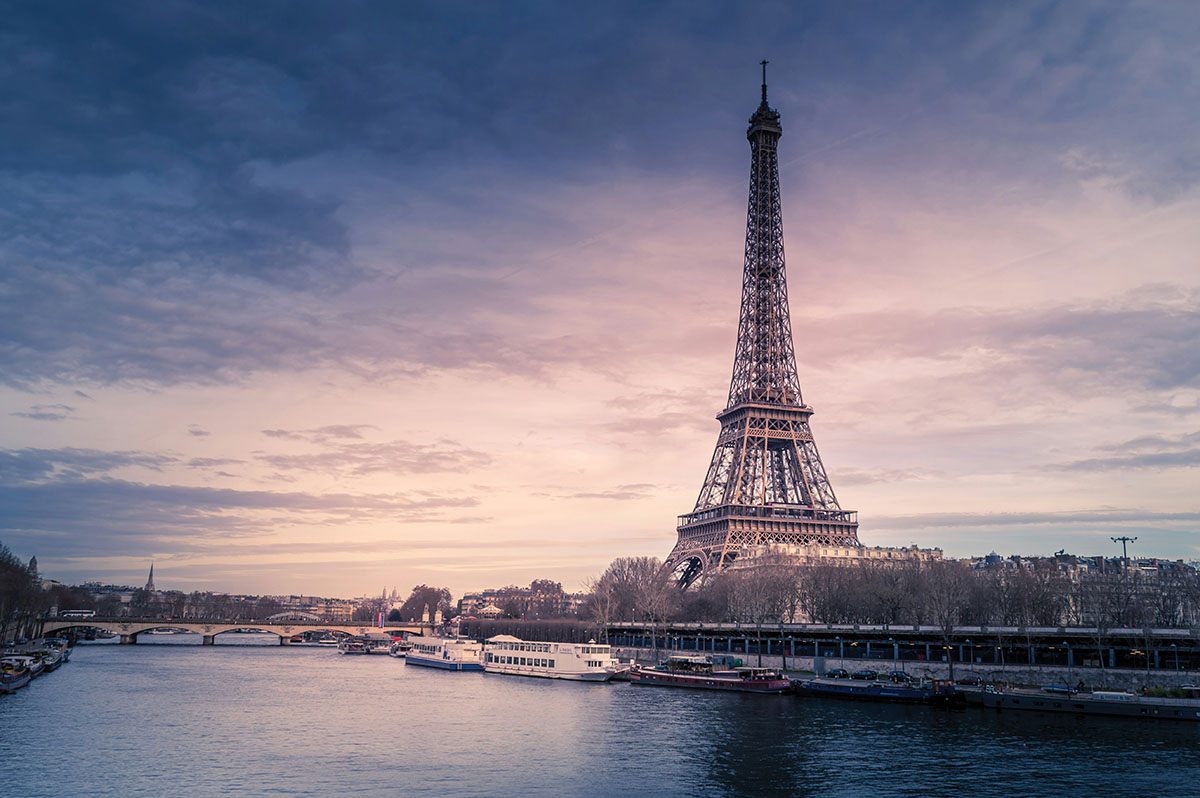
Day 1: Eiffel Tower
As we drove into Paris from the airport, our cab driver informed us that Paris was in “Christmas mode”, his favourite time of year to be in the city. Travelling to visit the most iconic symbol of Paris, the Eiffel Tower, it was obvious what he meant. Bright boulangeries on street corners were hung with festive lights and window chalk snowflakes drifted on glass shop fronts; the city was aglow for the holidays. As the iconic tower appeared through the fog, the utmost tip remained obscured. Wandering through the park, the tower guided like a beacon, and we emerged from a quiet Impressionist scene into a bustling street flooded with tourists. The tower was more intricate than I expected, the latticed ironwork forming twirling cross-hatched patterns, star shapes, and curving arches. It’s also absolutely massive, and decorated with the gold-engraved names of significant French scientists, mathematicians, and engineers.
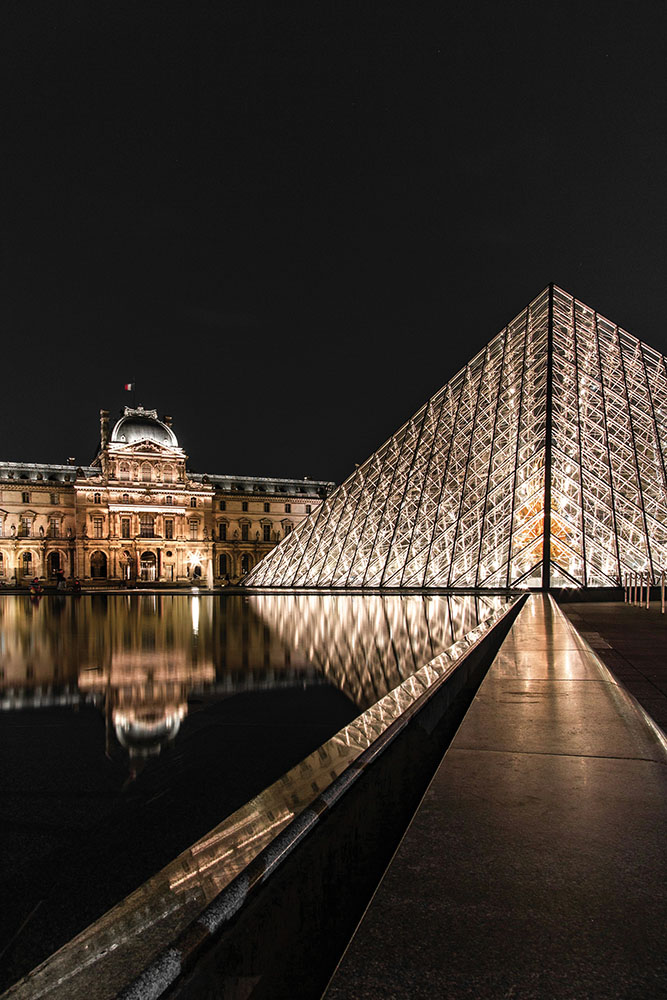
Day 2: The Louvre
We descended beneath the iconic glass pyramid in an escalator to the bright, open centre of the Louvre, and began by stepping into the Denon Wing. I wandered in a daze, enchanted by the storied collection of some history’s most significant artworks – particularly incredible is ‘The Raft of the Medusa’ (1818) by Théodore Géricault, a mammoth piece of thrashing surf and roiling storm clouds, a billowing sail the only propelling force for stranded survivors of a shipwreck. The Denon Wing is also home to Leonardo da Vinci’s ‘Mona Lisa’ (1503) which is said to be the reason 80% of its nine million yearly visitors come to the Louvre. An incredible surprise was Napoleon’s apartments. Their beauty is comparable to rooms within the Palace of Versailles. Chandeliers, dripping with diamonds, hang from extensively decorated ceilings, some even with marble busts set into gold sculptural elements. Nobody advised me to look up when visiting the Louvre, but it’s certainly essential. Each gallery ceiling is painted with sweeping murals, with symbolic goddesses in swirling drapery and cherubs playing amongst rolling clouds.


Day 3: The Palace of Versailles
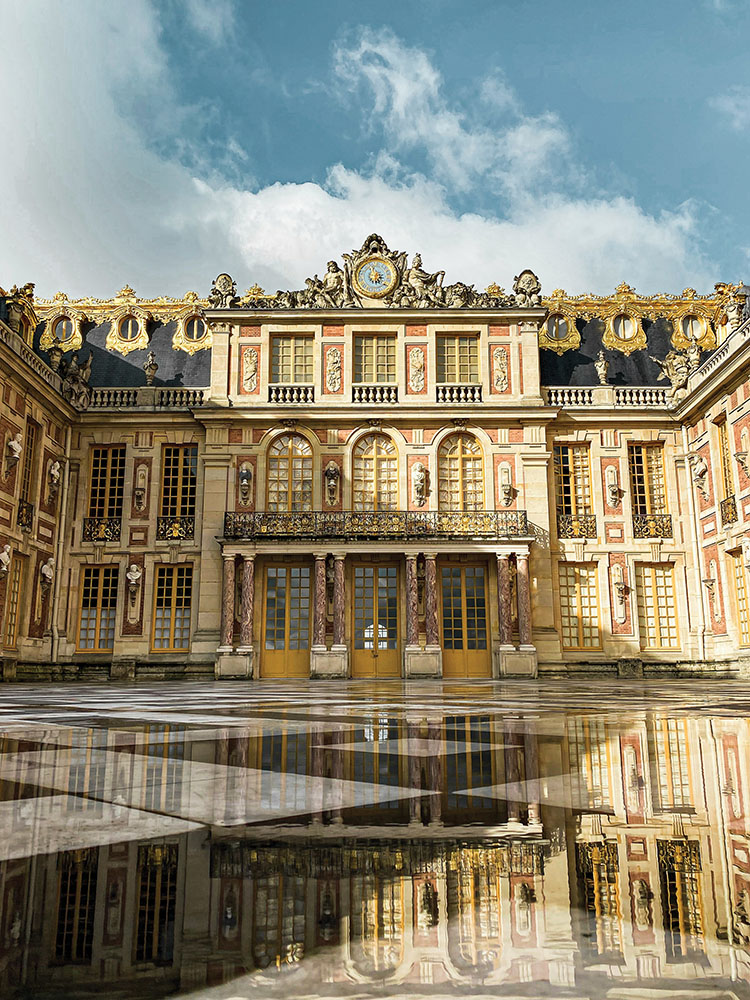
Compared to the intensity of Paris, Versailles felt subdued to the point of being peaceful. Built in 1631, the palace has been home to four French monarchs, perhaps the most well-known being King Louis XVI – husband of Queen Marie Antionette. It’s only a short walk from the train station, and through the gloom of wintery fog the first hint we saw of the magnificence inside were the tall, gilded gates of the palace grounds.
We followed the throngs into the palace, but with over 2,000 rooms, soon found less crowded areas to explore. The layout of the rooms can appear strange, with stretching hallways connecting each room, usually ending at a spiralling stairway or small gallery. As you move through each opulent room, another seems to rise, equal in beauty and splendour.
The palace grounds seem to stretch endlessly, and hours can easily be spent wandering through perfectly formed gardens and peering into the many ponds topped with drifting swans.

Day 4: Pere Lachaise Cemetery
Scenes straight out of Miroslav Šašek’s This is Paris rushed by the bus windows as we hurtled towards the Père Lachaise Cemetery. We passed a local flower market, saw a baker stride across the street with an armload of bread, and watched from traffic lights as a woman polished to gleaming gold the typically brassy doorknobs on one of many ornate entryways.
Arriving at the cemetery gates, instantly the bustle and noise of the street fell away. There was an air of solemnity amongst the scattered visitors stood at the cemetery map – a deeply necessary provision as the grounds cover 44 hectares. The map displays a confusion of grids which turn to winding pathways, with a list of where the notable dead reside. We were here to undergo a pilgrimage to two significant graves: The Doors frontman Jim Morrison, and the Irish playwright Oscar Wilde.
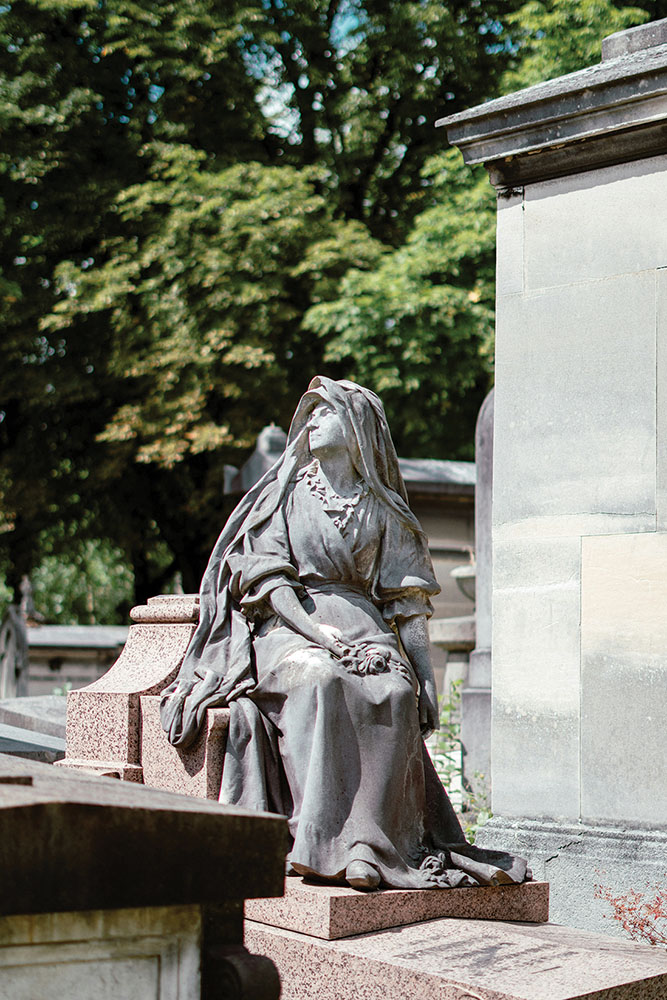
We located Morrison first. We knew we were drawing near as we spotted graffiti tributes scratched into surrounding graves, with etched arrows pointing us to the ‘Lizard King’. His grave was littered with offerings like fresh-cut flowers, hand-written letters, CDs and cigarettes. Small tombs lined cobbled paths, some with stained glass depicting saints or family emblems. It felt extremely Edward Gorey, with strange sculptures, uneven stone stairways, and intricate memento mori art.
On our way to visit Wilde, we heard a tinkering kind of pecking sound accompanied by the drone of a portable radio. Turning a corner, a man in work clothes was tapping a new name into a fresh gravestone, a reminder that the cemetery is still very much in use. Oscar Wilde’s grave is comparatively sparse compared to the extensive tributes at Morrison’s, as it’s shielded by glass and adorned with a plaque asking visitors to respect the wishes of his family by paying respects tracelessly. Once however, his grave was coated in lipstick kisses, with stacks of his books and piles of flowers left in tribute.
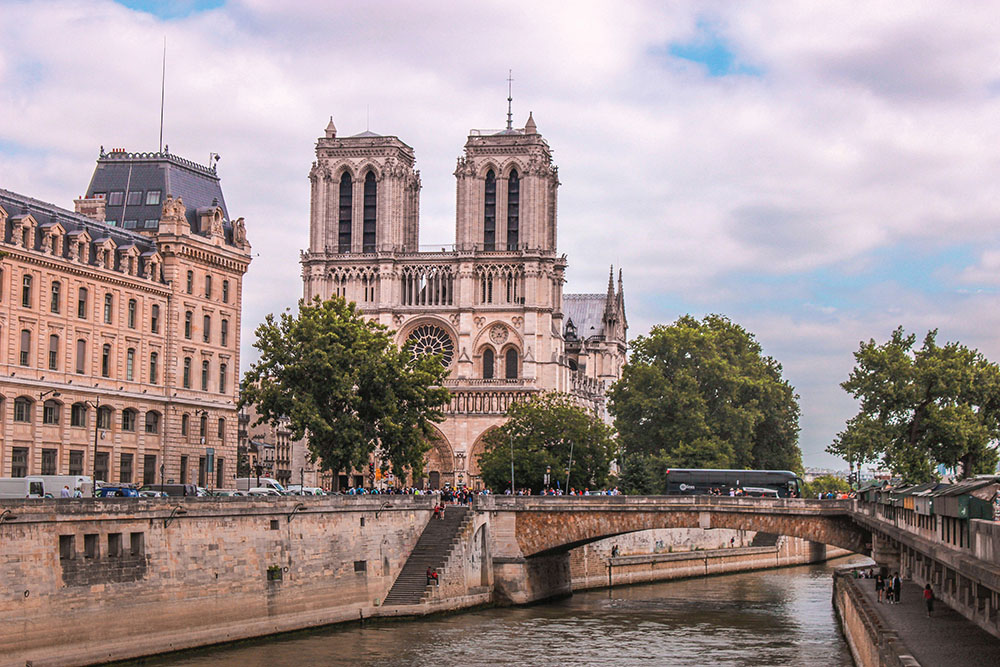
Day 5: Canal Saint Martin, the Notre Dame, and the Seine /
Along the Seine’s embankment are a multitude of stalls selling maps, books, keepsakes, posters, postcards, allowing you to shop as you stroll along the riverside. Love for Antoine de Saint-Exupéry’s children’s book, The Little Prince, is strong here – each stall seems to have its own gorgeous vintage copy and referential postcards. We descended a long staircase from street level to the side of the river, and listened to the car horns on the bridges above.
I have aspired to visit Shakespeare and Company Bookshop for many years, and it didn’t disappoint. It’s a kind of literary institution, famed for its status as a place of inspiration and support for authors – even going so far as allowing some, including Darren Aronofsky, Kate Grenville, and Ethan Hawke, to spend a night inside the shop. It was very busy on the day we visited, and I found that slightly wonderful – that so many people wanted to be a part of the literary community the shop fosters, to share in the cultural and artistic history of Paris.
Shakespeare and Company is a three-minute walk from Notre Dame Cathedral, so of course we stopped to marvel at its gorgeous architecture. Similarly to the Eiffel Tower, the exterior of Notre Dame was more intricate up close than I had previously noticed. Worked into the patterning of stone archways above the entrances are statues of people, martyrs crowned by angels. Swathed in cloaks, the folds are carved with incredible realism – almost like columns supporting the ancient stone.
In the afternoon, we headed to Canal Saint Martin. This is a neighbourhood of Paris named for its nearly 5-km canal, which was implemented by Napoleon Bonaparte. It’s known for its quirky independent shops, creative atmosphere, and picturesque footbridges arching over the waterway. We enjoyed exploring a less intense, more artsy neighbourhood of Paris, and managed to pick up some really unique items whilst strolling through the streets.
I adored the magic of Paris. Like the memory of a silent cemetery on a shimmering morning, or that shiver you get whilst witnessing iconic artworks or a bed where a queen once slept – Paris keeps coming back to me. And, one day, I hope to return the favour.