
A picture, they say, speaks a thousand words. The Oxford Dictionaries word of the year in 2015 (remember those innocent times!) wasn’t even a word, rather the ‘face with tears of joy’ – or ‘crying with laughter’ – emoji 😂 . Once considered childish – perhaps even silly – pictographic expressions of mood, emoji are now regularly used in all manner of business and professional correspondence. Verve examines their meteoric rise ⤴️.
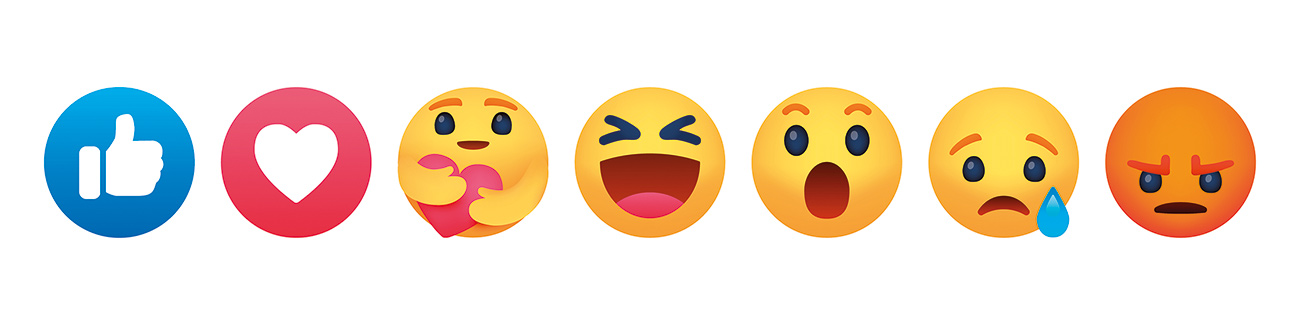
According to Forbes, emoji serve as an essential tool that “can aid in productive and diverse workplace communication”. And with more folk now working remotely – meaning less face-to-face interactions – many argue that the emoji is more essential than ever.
A Star (and a Smile and a Sad Face) is Born
‘Emoticon’ and ‘emoji’ are often used interchangeably, but they are two separate entities, with the latter evolving from the former. The notion of using a typographic display to convey feeling was first suggested by Professor Scott Fahlman of Carnegie Mellon University in 1982 due to concerns that posts on an internal electronic bulletin board were being misconstrued. He suggested light-hearted posts be followed by 🙂 while 🙁 would be added to the end of serious musings, and so, the emoticon (‘emotion icon’) was born. Soon, Carnegie Mellon students at the university’s Language Technologies Institute and Computer Science Department were creating further symbols which were then adopted by folks across the internet.
The trend was honed by the Japanese in the mid-1980s via kaomoji (馹湞礄), a more complex type of emoticon that incorporated elements of anime and manga. But it wasn’t until 1999 that the emoji –from the Japanese e (絵), and moji (湞礄), which roughly translates as ‘pictograph’ – was born. The emoji was developed by interface designer Shigetaka Kurita, part of an NTT Docomo team developing the world’s first widespread mobile internet platform, i-mode.
“In Japanese comics, there are a lot of different symbols,” Kurita tells The Verge. “People draw expressions like… when someone gets an idea and they have the lightbulb. So there were a lot of cases where I used those as a kind of hint and rearranged things.”
Docomo was unable to copyright its emoji, and soon rival carriers such as AU and Softbank (then J-Phone) began developing their own, often with more detail and sometimes incorporating animation, to appeal to a wider customer base. The emoji remained a Far Eastern phenomenon for the best part of a decade, but a lack of standardisation meant cross-carrier compatibility was an issue – and remained so until Google took notice. In 2007 the search engine giant requested that Unicode Consortium (a global non-profit dedicated to developing internationalised software and product standards) step in. The following year, Apple developed their first emoji keyboard, though still aimed at the Japanese market, eventually adding a further 608 emoji to Kurita’s initial tally of 176. They were soon being noticed – and used – more in the West, with Apple continuing to expand its suite and Android adding an emoji keyboard over the following couple of years. The word ‘emoji’ was added to Oxford Dictionaries in 2013.
Emoting
There are now around 3,500 emoji, with an estimated five billion used each day on Facebook and Facebook Messenger alone (where the ‘crying with laughter’ one is the most popular – likewise on Twitter – while Instagrammers are mostly likely to use the ‘heart’, ❣️).
According to a 2020 US study, nearly a third of staff regularly use emoji in workplace communications; however, an equal number of workers avoid them in order to appear more professional. Research in 2016 found that emoji activate both verbal and nonverbal parts of the brain in ways that traditional letters and numbers can’t. More recently, 29% of Kiwis said their perceptions of workmates change if they use emoji, with the majority interpreting them as warm and friendly.
“Language and communication norms are constantly changing and it’s clear that emojis have a part to play in this,” says Miriam Meyerhoff, Linguistics Professor at Victoria University Wellington. “It’s interesting to see that young women are leading the way as the biggest users of emojis, which fits in with other studies that show they usually drive language change.”
Unsurprisingly, views on emoji use vary greatly across age groups and depending on who the communication is being sent to, with workers less likely to send a smiley face to their boss (though 41% of respondents of the 2degrees ‘Good Chat’ Emoji Study had received an emoji from a superior).
There are also some industries or topics – health and legal, perhaps – where signing off with an emoji is probably usually best avoided. Plus, possible unprofessionalism aside, there is also the danger that messages may be misinterpreted as, at best, inappropriate, at worst, harassment. If uncertain about the meaning of an emoji you wish to send – or have received – check the website, Emojipedia (emojipedia.org) – though that still doesn’t guarantee that the sender/recipient will interpret it in the same way! Not so long ago, I learnt that my dear –and clearly spotlessly-minded – mother had been signing off some WhatsApp messages with the ‘poop’ emoji believing it to simply be a quirky smiling face. True story. Maybe I should check if she’s due an eye test 👀.
WORDS — Jamie Christian Desplaces