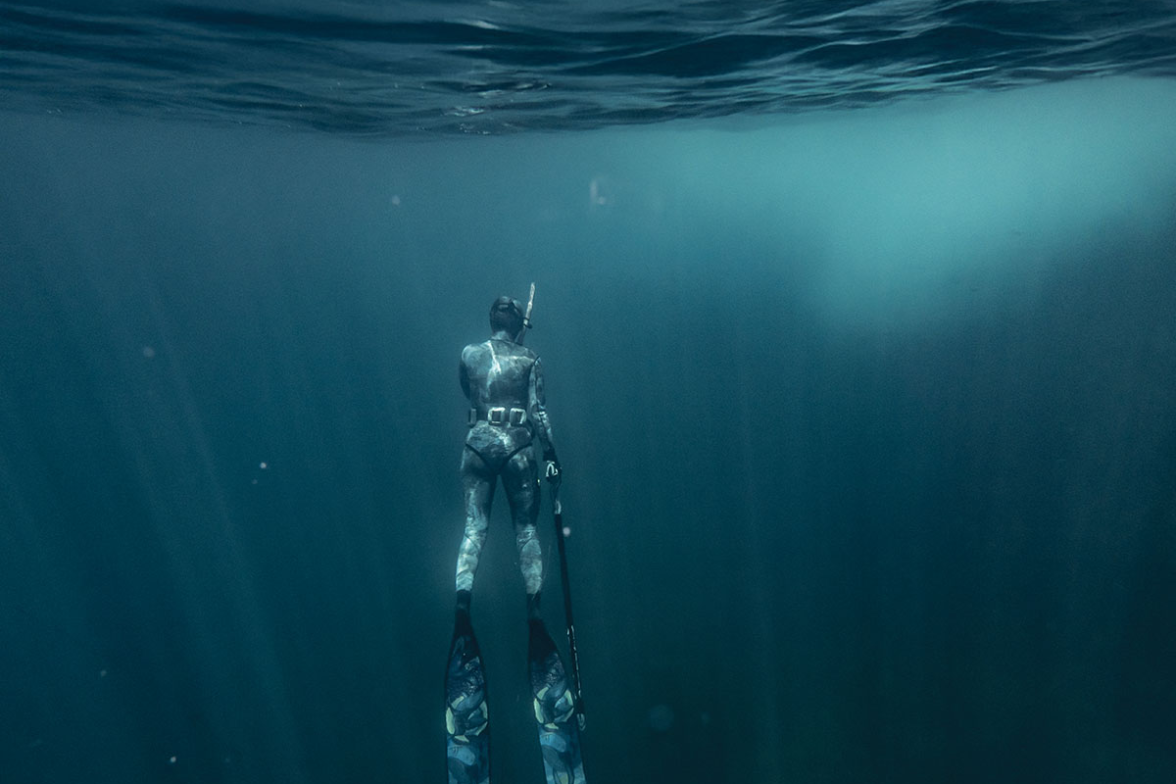
Practised for around 8,000 years, freediving – sometimes referred to as apnea, from the Greek for ‘without breathing’ – has long been adopted by coastal cultures the world over. Sponge diving in Ancient Greece was even an Olympic sport, while the Bajau people of Southeast Asia, renowned for their ability to hold their breath for many minutes at a time, are often called the ‘Sea Gypsies of Malaysia’.
Nowadays, freediving has also evolved into a modern sport focused less on speed and adrenaline, and more on mastering calm, controlled breathing and deep relaxation beneath the surface of the sea.
“Once people understand that freediving isn’t about pushing limits but about listening to your body, most fears soften,” says freediving instructor and founder of Salt Aotearoa, Renee Taylor. “It becomes grounding rather than extreme. Freediving is actually built on slowing down: slowing your breath, your heart rate, your nervous system.”
Fear, she continues, is best “reframed as respect”. Though she admits to sometimes being afraid in the ocean – whether it be of the depth, the darkness, or the sharks – Renee has learnt to safely channel panic into awareness and emphasises that she teaches others to do that before they even step into the water.
“My whakapapa is Albanian, Māori (Ngāti Ranginui, Ngāti Raukawa), English and Scottish,” she says. “I didn’t grow up with a strong connection to my Māori identity or the ocean, and for a long time I felt incredibly disconnected, from my culture, from self, from belonging. I discovered freediving and spearfishing at 30 – I’m 37 now – during a period of burnout and big personal change.”
The ocean, she continues, became a place where “everything came together” – her identity, mindfulness, food gathering, responsibility to the environment and more. She feels “most indigenous” in the moana, and it was that journey that ultimately became the foundation for Salt Aotearoa.
“The more time I spent in the ocean, the more I recognised how deeply it supported my hauora: mental, physical, social, emotional, spiritual. Freediving speaks to all pillars of Te Whare Tapa Whā, so in this way is so incredibly powerful as a tool for healing and wellness.”
Renee describes freediving as “mindfulness in action”.
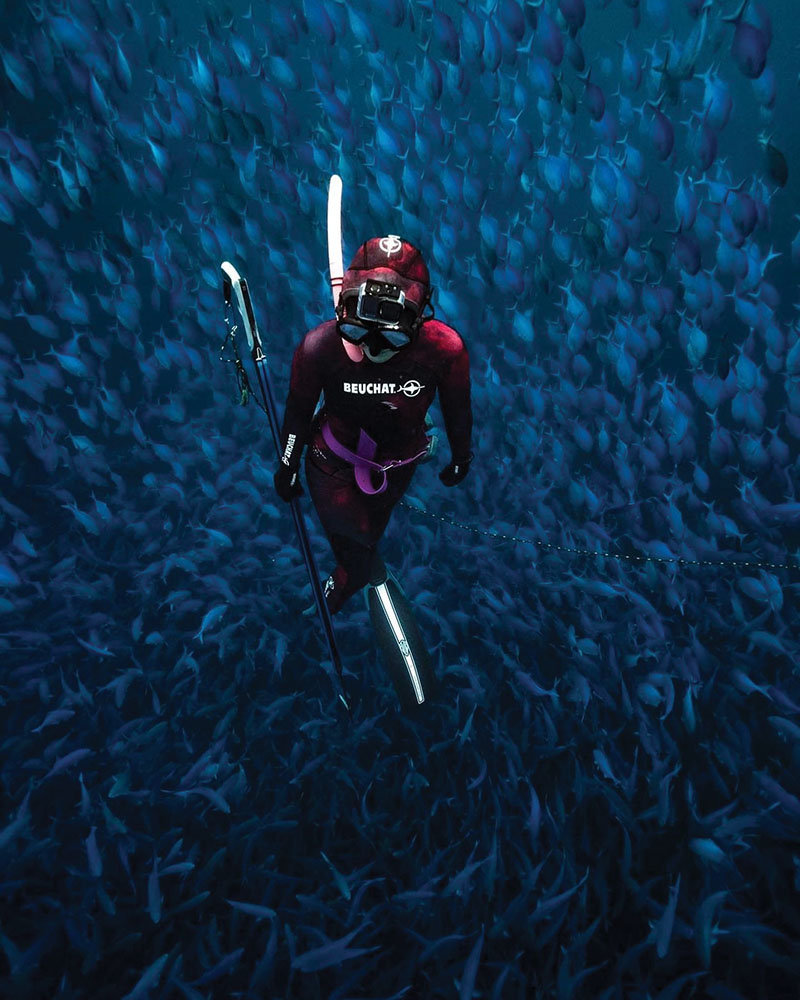
“When I started freediving almost seven years ago, it was very male dominated, and while there’s nothing wrong with that, many wāhine didn’t feel comfortable entering those spaces, asking questions, being beginners, or simply being themselves.
“A wāhine-focused space removed a lot of those barriers. Something really special happens when you bring women together around a shared passion, there’s a collective energy, deep support, and genuine connection. Salt prioritises wāhine, while still working alongside tāne and mixed support crews, because ultimately, it’s about restoring balance, not exclusion.”
Even for participants that choose to never freedive again, Renee says that the skills learnt can be lifechanging.
“The breathwork alone can improve sleep, reduce anxiety, and build resilience. It is something that can have a positive impact on all of our pillars of wellbeing. I’ve actually developed my own self-reported measurement tool to help generate data to prove what we know, that freediving can be a healing tool, and we hope that this might be able to provide more funded pathways to access the moana for healing.”
Being beneath the ocean with nothing but your breath – “no machinery, no distractions” – is the ultimate in empowerment.
“When you add gathering your own kai, understanding ecosystems, and sharing food together, it becomes a full-circle experience that most fitness activities just can’t offer,” says Renee. “It connects you to yourself, to your community, to your culture, to the taiao, and to your kai. It does everything.”