
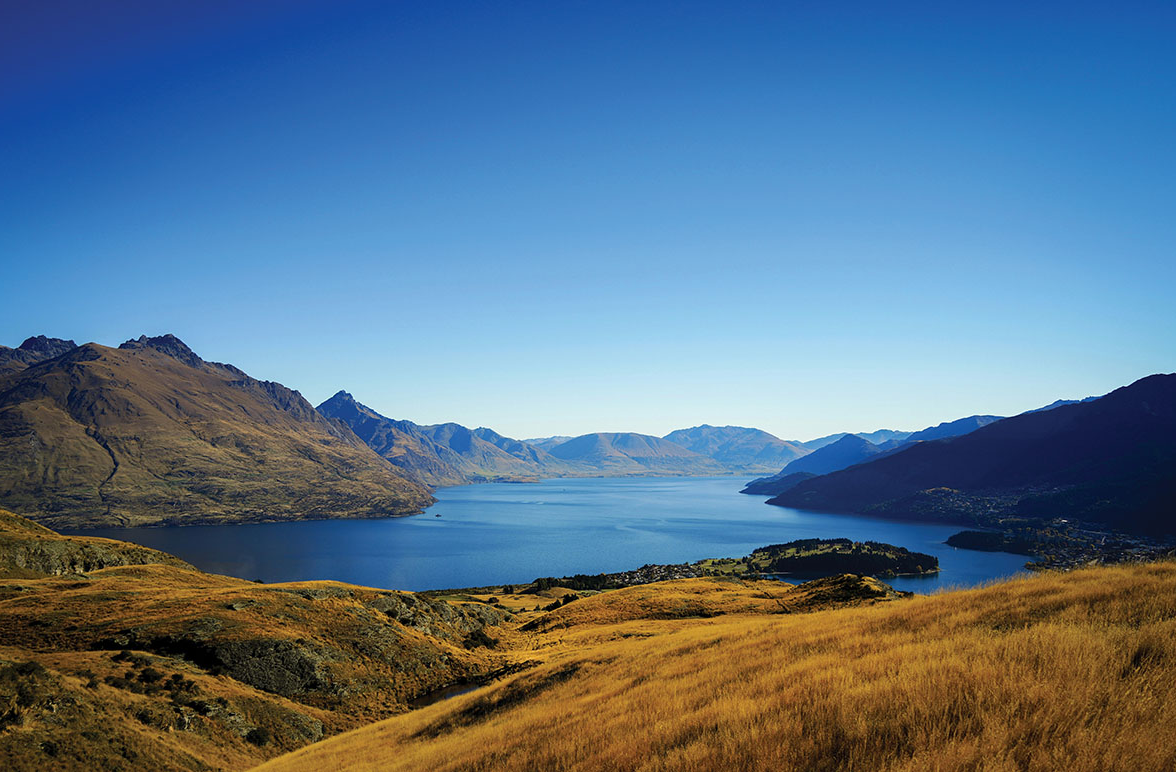
From the adrenaline-soaked streets of Queenstown to the laid-back shores of Wānaka and the gold-rush charm of Arrowtown, Aotearoa New Zealand’s Southern Lakes region is one of the most compelling destinations on earth.
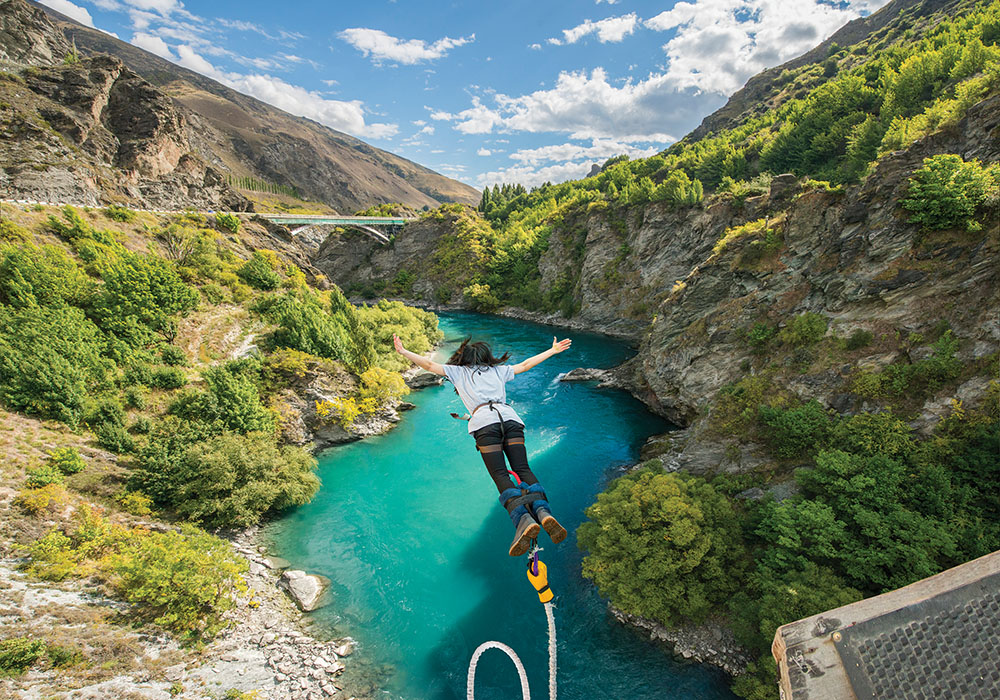
Queenstown Adrenaline Adventures!
AJ Hackett Bungy NZ operates two sites in and around Queenstown, each offering a different flavour of freefall.
At Kawarau Bridge, you leap 43m above the river’s turquoise waters while spectators watch from the viewing deck below. A zip ride alongside the bridge adds a gentler but no less exhilarating option, reaching 60km/h over 130m, while the Kawarau Swing dangles thrill-seekers from the platform before letting them release themselves over the river when ready.
For the ultimate experience, Nevis Bungy is the highest in Australasia at 134m and with over eight seconds of freefall above the dramatic Nevis Valley gorge. The Nevis Swing – the world’s most famous – offers a 300m arc, while the Nevis Catapult, the world’s biggest human catapult, launches riders 150m across the ravine at almost 100km/h in just 1.5 seconds, hitting 3G of force.
Bungy’s Birth
The birthplace of commercial bungy jumping, Kawarau Suspension Bridge sits 20 minutes east of Queenstown above the cobalt swirls of its namesake river, with green cliffs looming dramatically on either side. Built in 1880 at the height of the gold rush, the 120m bridge was an engineering landmark in its day, its innovative cable design earning designer Harry Higginson an international award. Today it’s famous for something rather different – a 43m leap into the gorge below.
The roots of bungy jumping stretch back centuries to Vanuatu’s Pentecost Island, where a ritual called land-diving sees islanders leap from wooden towers with vines tied to their ankles – an act of heroism still practised today.
The modern version traces to April Fool’s Day 1979, when Oxford University’s self-styled Dangerous Sports Club dressed in top hats and tails leapt from Bristol’s Clifton Suspension Bridge using elastic cords. They were promptly arrested, but footage of the stunt caught the attention of Aucklander AJ Hackett, who together with business partner Henry van Asch committed to making it consistently safe – and commercially viable.
Throughout the 1980s, AJ Hackett and business partner Henry van Asch refined the concept – reengineering parachute harnesses and developing cords with the help of Auckland University scientists – before pulling off one final publicity stunt: an illegal jump from the Eiffel Tower. The arrest was brief and the global headlines priceless.
On 12 November 1988, Hackett and van Asch launched the world’s first commercial bungy operation at Queenstown’s Kawarau Suspension Bridge. Twenty-eight people paid $75 each to take the plunge, and an industry was born.
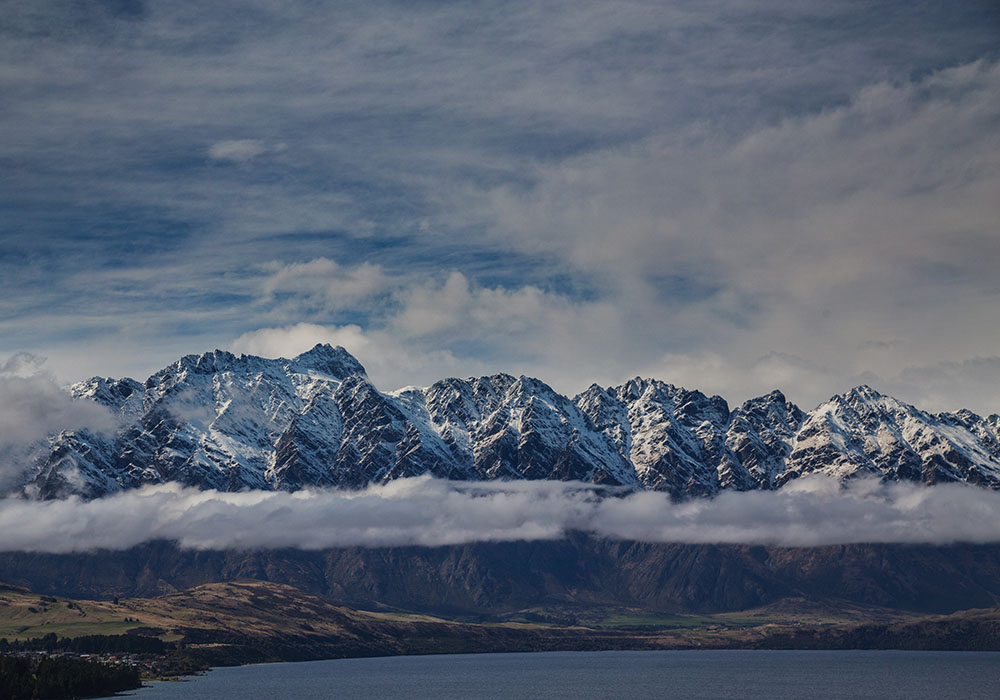
Ski Queenstown
Queenstown’s two main ski fields, The Remarkables and Coronet Peak, are generally open from mid-June through to late September or early October.
Thirty minutes from Queenstown, The Remarkables sits in a natural north-facing alpine amphitheatre – a stunning suntrap with something for every ability level. Wide groomed runs, backcountry terrain, narrow chutes and rock drops are all on offer, with lifts rising from a 1,622m base to 1,943m and a vertical drop of 357m.
Just twenty minutes from town, Coronet Peak is the more accessible of the two and despite sitting lower than The Remarkables, it actually boasts a greater vertical drop (481m). Famed for its expansive rolling pistes, it’s a favourite with beginners and intermediates but also hosts international competitions on its more advanced runs. On selected Wednesday and Friday nights throughout winter, the slopes are floodlit for night skiing – a rare and exhilarating option unique to Coronet Peak.
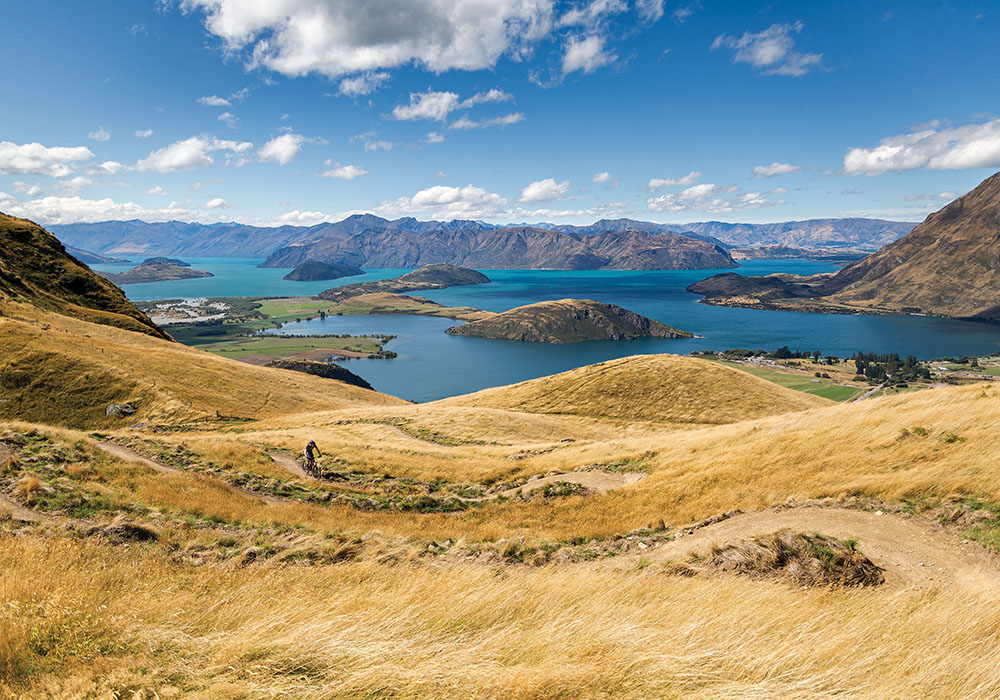
Bike Otago!
New Zealand’s most popular Great Ride, the Queenstown Trail is a network of interlinking shorter tracks stretching over 150km around the Wakatipu Basin, connecting Queenstown, Arrowtown and Gibbston. Routes cater for beginners through to intermediate riders, and can be tackled in a few hours or spread across up to four days. Highlights include river gorges, mining ruins, suspension bridge crossings and no shortage of vineyards to stop at along the way. Tracks can also be hiked.
The Lake Dunstan Trail links Clyde and Cromwell through some of Central Otago’s most dramatic landscapes – tracing Lake Dunstan, the Kawarau River, past Bannockburn vineyards and sites steeped in Māori and pioneer history. The Grade 2–3 ride is the newest of the Ngā Haerenga Great Rides network.
Nestled between Wānaka, Glendhu Bay and Mount Aspiring National Park, Bike Glendhu (pictured) is a world-class mountain bike destination 250 million years in the making! Trails weave through kānuka scrub, wetlands and rivers, with truly mesmeric views.
Wondrous Wānaka
Laid-back Wānaka may live in the shadow of its more illustrious neighbour Queenstown, an hour or so to the south across the Crown Range, but it more than holds its own. The town sits on the southeastern shore of beautiful Lake Wānaka, founded during the gold rush and transformed a century later by the arrival of mass tourism. Today it serves as the main gateway to the spectacular hiking trails of Tititea/Mount Aspiring National Park, while closer to town the renowned ski slopes of Cardrona, Treble Cone and Snow Farm all compete for your attention alongside the likes of jet boating, white-water paddling, wine and craft beer tasting, the acclaimed Warbirds and Wheels Museum and the mind-bending Puzzling World.
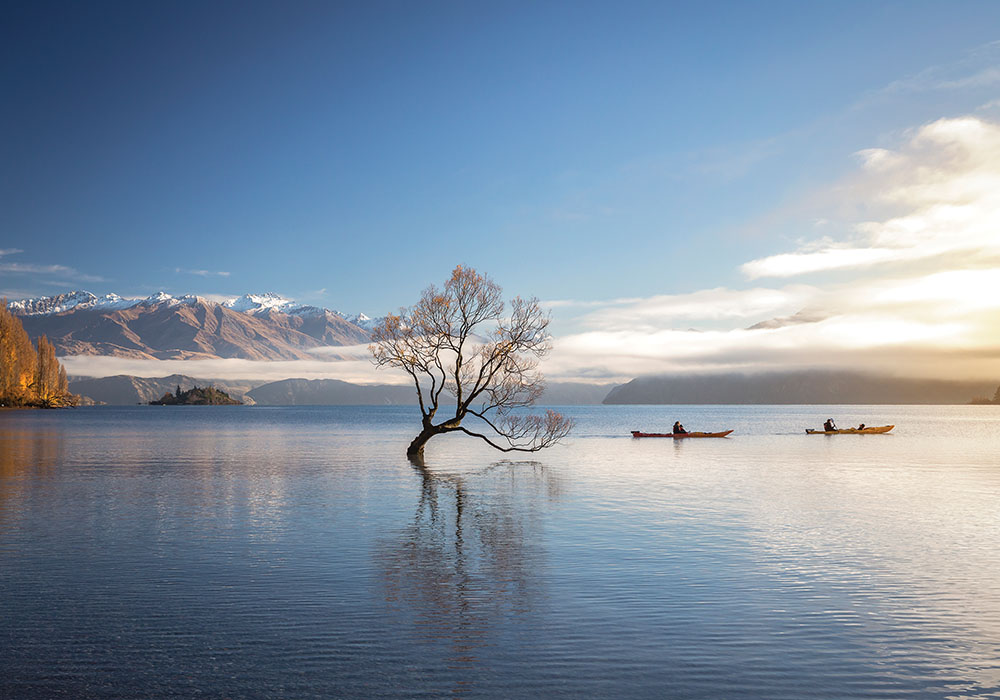
At the southern corner of Roy’s Bay grows a lonesome willow that has become, improbably, New Zealand’s most photographed tree. The legend of #thatwanakatree was born from humble origins – a branch used as a makeshift fencepost that took root and slowly grew into an icon. Today its gnarled trunk leans lazily out of the water, skeletal limbs reaching skyward against a backdrop of snowy peaks and ridgelines. Photographers come from around the world to capture it in every light and season.
Ski Wānaka
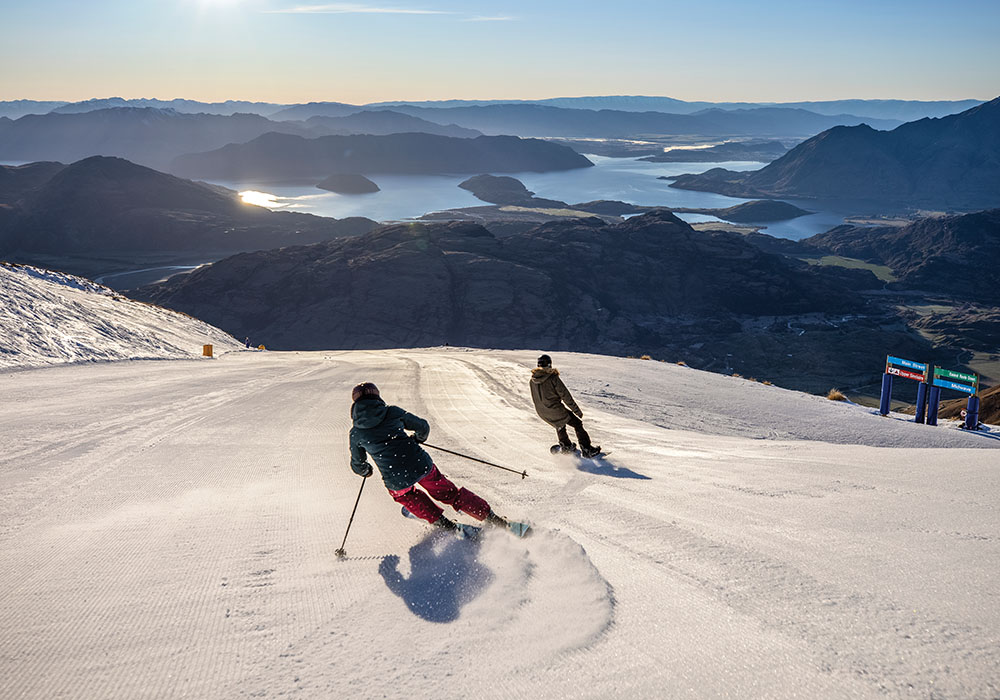
Wānaka’s three ski areas each offer a distinct experience. Cardrona Alpine Resort is the most family-friendly of the trio, with an abundance of gentle slopes boasting views stretching from Lake Wānaka to Queenstown. Lifts rise from a 1,670m base to 1,860m with a maximum 600-metre descent, and there’s a solid freestyle offering including half-pipes and a gravity cross.
Thirty minutes from Wānaka, Treble Cone is the pick of the three for serious skiers, spreading across four basins with some of the country’s longest trails, a 700m vertical drop, open powder fields, natural half-pipes and outstanding off-piste terrain. At 1,960m it’s among the highest ski fields in the country, attracting an abundance of high-quality powder snow.
For something altogether different, Snow Farm is one of the southern hemisphere’s premier cross-country ski destinations, offering 55km of trails for all abilities alongside fat biking, ski touring, snowshoeing and dogsledding. Night skiing is available in winter, and in summer the farm opens for trekking, mountain biking and nature watching.
On Target in Arrowtown
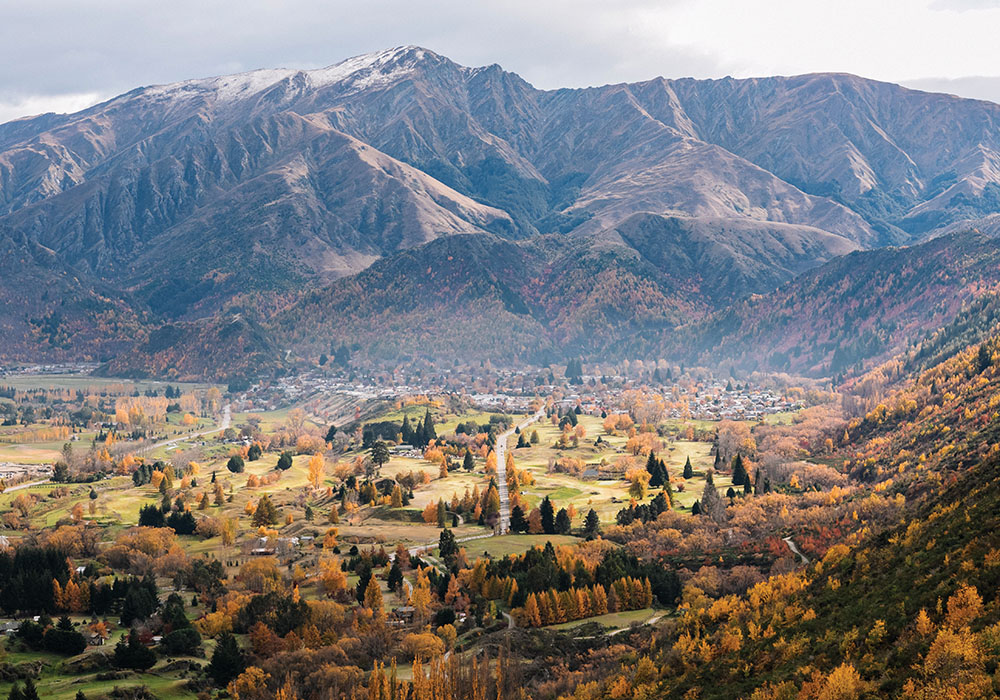
Enchanting Arrowtown sits in the glacially carved Arrow Basin northeast of Queenstown, a place once frequented by early Māori for hunting and collecting pounamu. Gold was discovered in the Arrow River in the mid-19th century, and for a time the river contained among the world’s highest concentrations of the precious metal. Today, its well-preserved, tree-lined streets and historic architecture, make the town feel like a time machine to the gold-rush era.
The settlement was established in 1862, initially known as Fox’s after William Fox, who led a group of miners secretly working the Arrow River and was so determined to conceal his find that he’d reportedly abandon his camp under cover of night to shake off followers. Gold was discovered by a shearer named Jack Tewa – also known as Māori Jack – and by the end of 1862 over 1,500 miners were camped on the riverbanks. In early 1863 alone, a remarkable 340kg of gold was extracted from the area. Over 70 historical buildings survive today as testament to that feverish era.
The gold rush also brought a wave of Chinese immigrants, invited from Guangdong province in the 1860s to work mines the Europeans had often supposedly exhausted. Industrious and resourceful, many found missed gold reserves and established their own businesses. Discriminatory policies followed, and it was a complicated and often painful chapter in New Zealand’s past – one the government formally acknowledged in 2002 with an official apology to China.
On the banks of Bush Creek, the Arrowtown Chinese Settlement preserves this difficult history through a partially restored collection of 19th-century buildings maintained by DoC. Storyboards detail the community’s story, including the tale of Ah Lum, a local store owner who became a unlikely hero by saving a European man from drowning – a poignant act given the mistreatment his community endured.
By the 1950s, visitors began arriving in growing numbers, drawn by Arrowtown’s extraordinary autumn colours, well-preserved streetscapes and gold-rush romance. That trickle became a flood, and today the town has embraced its role as one of Aotearoa New Zealand’s most charming heritage destinations.