

From ancient emperors and meditating monks to royal courts and modern-day mugs, the story of tea is as rich and steeped in culture as the brew itself.
Steeped in legend and long revered for its medicinal properties, tea has deep roots in Chinese herbal tradition. Some credit its discovery to Emperor Shennong way back in 2737 BC, when leaves from a Camellia sinensis tree drifted into
his boiling water, creating, so goes the legend, the world’s first cuppa!
Another legend – this time from India – credits the Buddha with inventing the drink, following a multi-year mediation session. Whatever its origin, tea has played a vital role in Asian culture for centuries, with its first official mention found in the 8th-century Ch’a Ching (“The Classic of Tea”) by Chinese writer Lu Yu.
By the time of the Tang dynasty (7th–10th centuries), tea drinking was widespread, with various herbs added to enhance flavour and increase health benefits. The drink reached Europe courtesy of Portuguese merchants in the late 16th century, and the Dutch led commercial imports. In Britain, its popularity is said to have risen thanks to Catherine of Braganza, daughter of Portugal’s King John IV, who married Charles II in 1662. Two years later, the East India Company began importing tea to Great Britain.
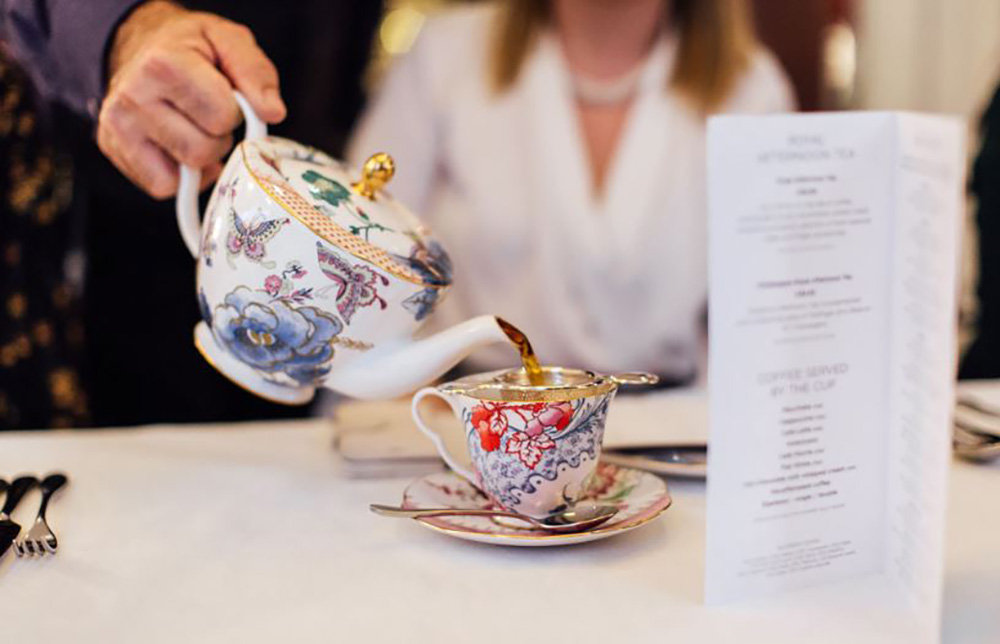
According to the UK Tea & Infusions Association (UKTIA), 84% of the UK population now drinks tea every day. The UKTIA say around 100 million cups of tea are consumed daily, and roughly 98% of those brews are served with milk.
Here in Aotearoa New Zealand, tea was the drink of choice from colonial times until deep into the 20th century. The Bell Tea Company was founded by Norman Harper Bell, after he arrived in Dunedin from Melbourne in 1898. Teabags were introduced in 1969.
Today – water aside – tea is the world’s most consumed drink.
TEA TALES
There are more than 3,000 varieties of tea – the way they are named and cultivated shares many similarities with wine.
Despite the vast number of teas available worldwide, they are generally classified into six main types: black, green, oolong, white, pu-erh, and yellow.
Most teas come from the Camellia sinensis plant and naturally contain caffeine. Herbal teas, by contrast, are made from infusions of dried herbs, flowers, or fruits such as chamomile or echinacea. Red tea, derived from a South African plant, belongs to a separate category.
Ideal brewing times vary: green tea typically steeps for 2-4 minutes, while black tea may require up to six minutes.
Green and white teas should be brewed with water heated to around 80C, whereas black tea calls for boiling water to bring out its full strength.
Some research suggests green tea may reduce the risk of cancer.
A study in the International Journal of Dental Hygiene found that adding a splash of milk can significantly reduce teeth staining.
According to research by Loughborough University, adding milk before pouring the tea results in more even heating and better preserves the flavour.