The brick wall in the botanical gardens looks like just another relic of Tasmania’s convict past, until I hear the story behind it.
In 1829, Governor Sir George Arthur ordered the building of a heated wall so that exotic plants could thrive in Tasmania’s cold climate, and Australia’s first pineapples were grown in a glasshouse attached to the wall. Even in the colony’s early years, locals aspired to the finer things in life.
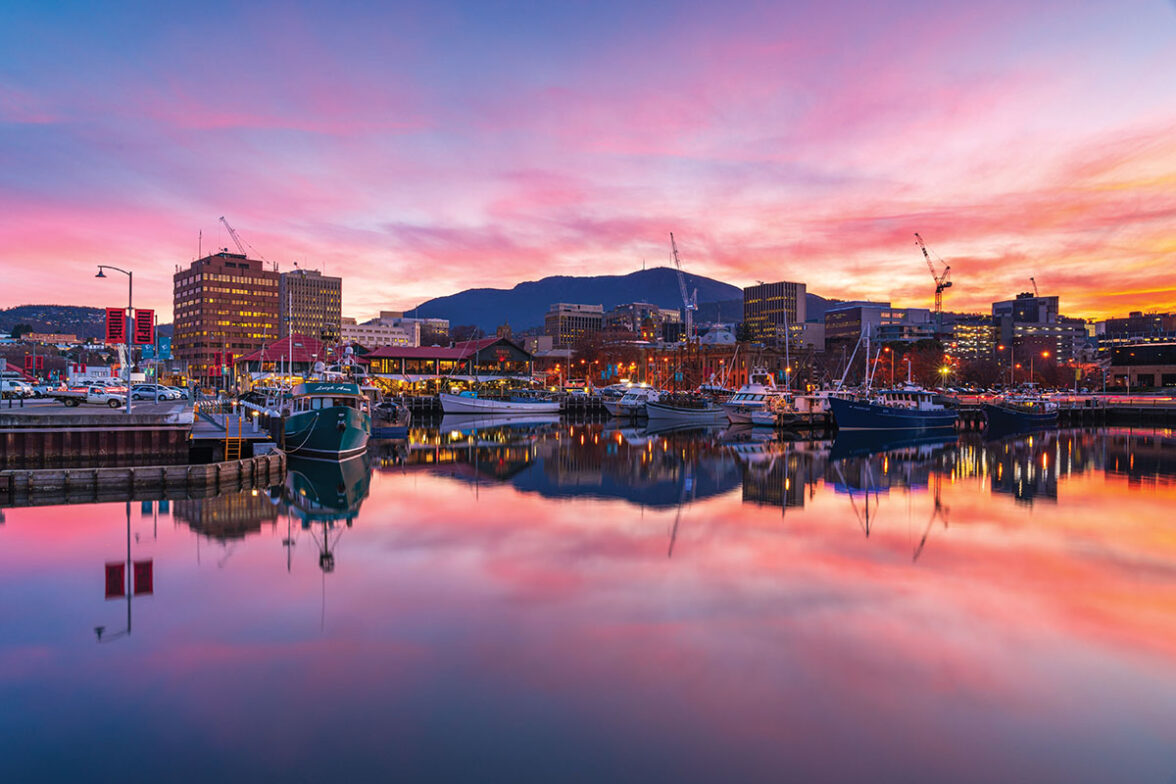
Today Hobart continues this heritage of fine food, but with a focus on local produce. Standing on the summit of Kunanyi/Mount Wellington, I survey the coast dotted with islands, and the green valleys and hills surrounding the city. This environment produced the excellent seafood, fruit, vegetables, and cheese that I will eat over the following days.
My local food journey starts on Pennicott’s Seafood Seduction cruise with crew Earl and Kate.
“The beauty of this trip is that we don’t know where we’re going until the day” explains Earl, outlining a route down the east coast of Bruny Island. Bull Bay is the first stop for a morning tea of oysters, at first raw, and then cooked in white wine. While guests sip Tasmanian sparkling wine, Earl snorkels for sea urchins.
The boat cruises past rocky cliffs where seals bask and sea eagles fly overhead.
Kate prepares a platter with sourdough, local cheddar, brie and blue cheese, smoked tuna, berries, and sea urchin sashimi. Earl dives again, now for abalone.
Back towards Hobart, we moor in a sheltered cove for lunch, which includes sashimi of salmon, lobster, and abalone, and a selection of craft beer, local wines, and fruit juices.
At Faro, each dish is a work of art.
Landlubbers have plenty of seafood options on shore, such as Mures waterfront restaurants. In the Upper Deck restaurant, I order Tasmanian wild fish and chips, enjoying the view over Victoria Dock where yachts bob in a basin surrounded by 19th-century warehouses.
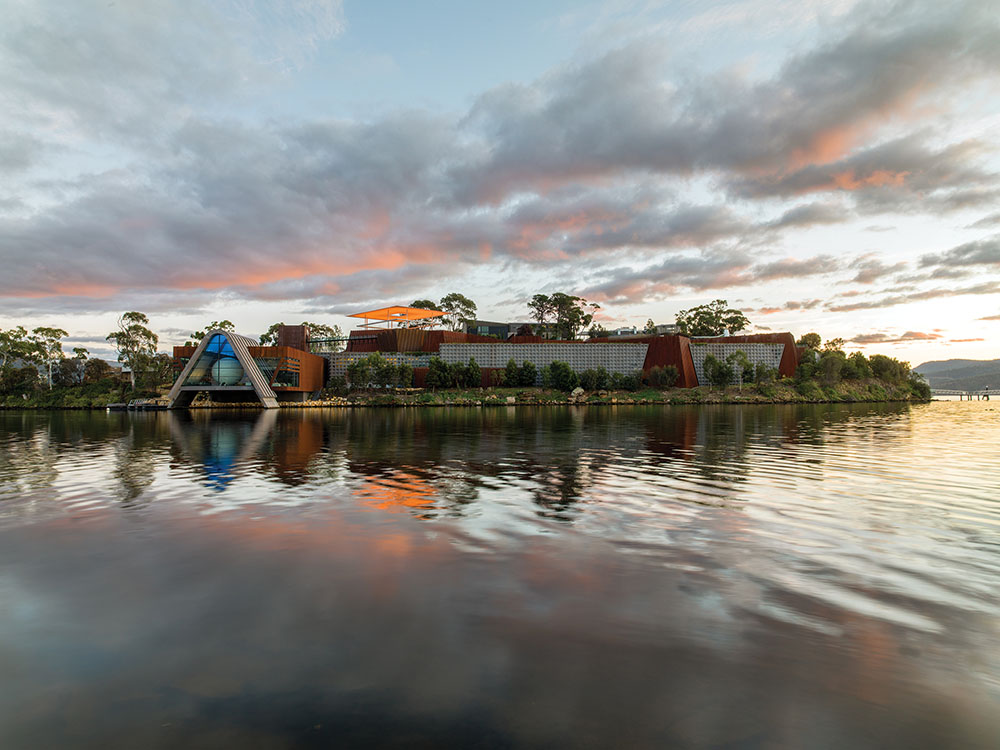
Another restaurant with a view is Faro at the Museum of Old and New Art, in a wing suspended over the River Derwent. The museum has an eclectic and sometimes unconventional collection, including works by Ai Weiwei, James Turrell and many others. At Faro, each dish is a work of art. Ingredients from the land such as mushrooms and wild deer feature on the menu, with crab and seaweed marmalade coming from the sea.
I order Oops I Dropped the Tart and marvel at a fractured tart covered in heirloom tomatoes, surrounded by dots of exquisite flavour – pistachio cream, lemon verbena, basil, and yuzu gel.
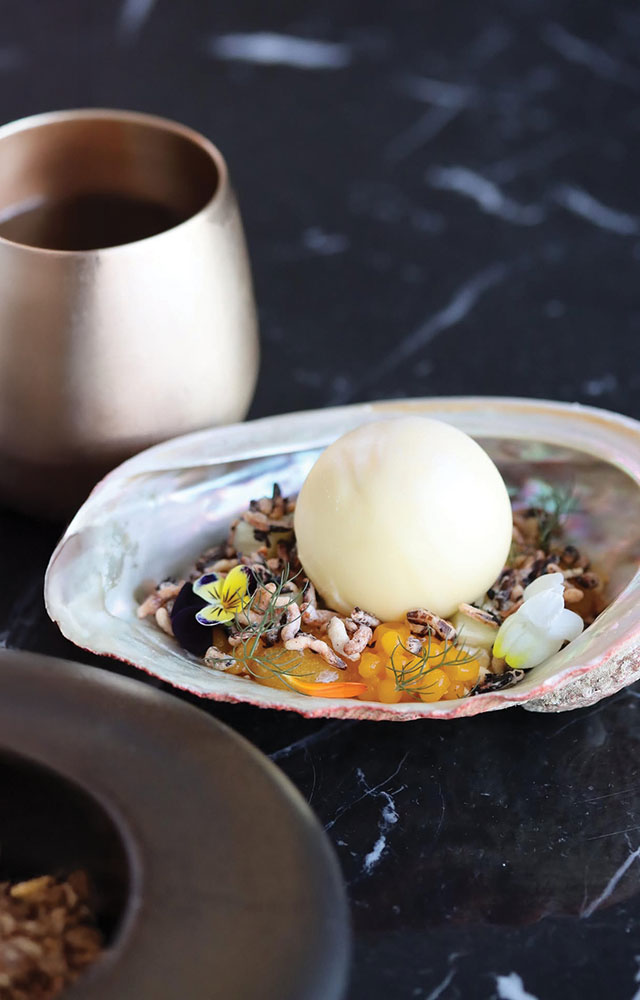
Dessert is spectacular – an iridescent orb of cheesecake and fruit served in an abalone shell – pictured above.
Following an afternoon of art and food, I take the ferry back to the city where my hotel is a short walk from the wharf in the heart of Hobart’s heritage area. The Tasman is spread across buildings from three centuries and has recently received a Michelin key.
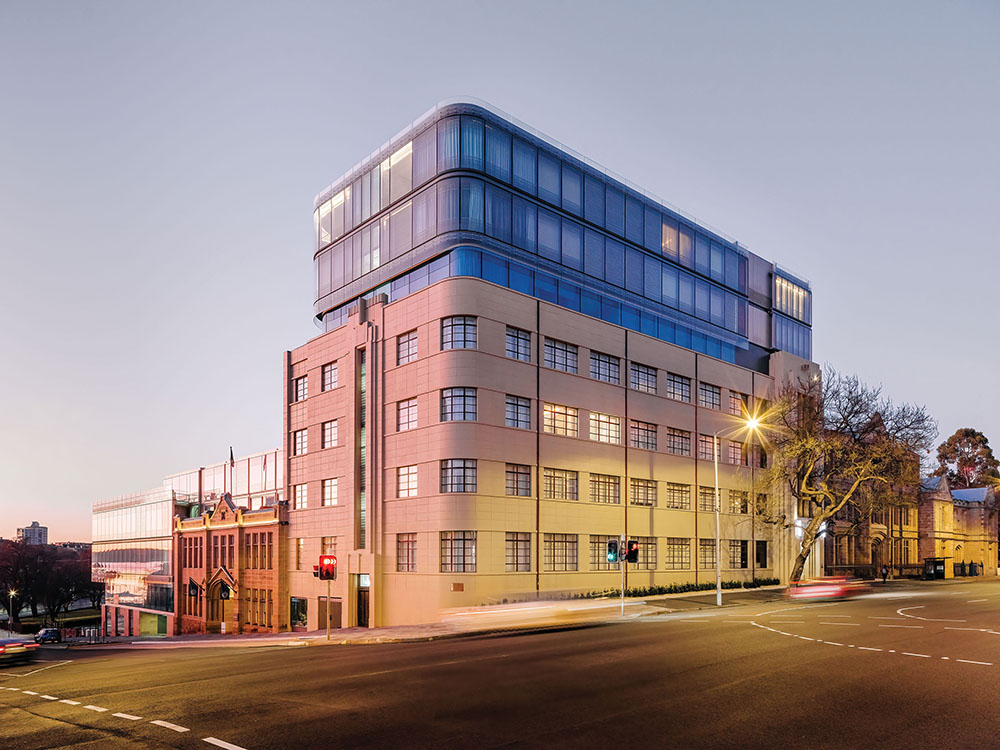
I’m lucky enough to be in the 1840’s Georgian-style building, where I arrive to find my room already heated by a blazing gas fire. The room retains a 19th century ambiance with tall windows and high ceiling. In a guest lounge cabinets display archaeological finds from the site. Wall panels tell the building’s story as a hospital, government offices, and now a hotel.
The hotel’s award-winning restaurant, Peppina, is buzzing with locals when I go for dinner. Classic Italian gnocchi is followed by cannoli for dessert – but what I liked most about the restaurant is its sensational breakfast buffet.
When I entered Peppina the next morning, bowls, platters and baskets are arranged on counters by the kitchen Staff immediately take my order for coffee and eggs, and then I head for the buffet. Selecting from the tantalising assortment of charcuterie, cheeses, salads, and breads is difficult.
There is plenty of seasonal fresh fruit, including the apples for which Tasmania is famed, and an enormous bowl of juicy strawberries. My favourites are the silky pannacotta, and petite pastries with pistachio cream filling.
On Saturday morning I’m awoken by sounds outside. A quick peek through the window confirms vendors are setting up stalls for the Salamanca Market. The area around Salamanca Place is one of Hobart’s oldest, with convict-built stone buildings that housed sailors’ pubs and warehouses. The pubs remain, while boutiques and businesses fill the warehouses.
A stall selling sourdough donuts catches my eye – I choose a lemon curd then meander through the market. The variety of food products includes fruit leathers, cookies, and interesting condiments such as sloe and damson paste. Boutique distilling is popular – with several stalls selling whisky and gin. Crafts are also sold too, with artisans displaying woodwork, pottery, and textiles.
On Sunday I visit Farm Gate Market which is much smaller than Salamanca, focusing on local food. After drinking a long black, I pick up some beans from South Roast Coffee, a micro-roastery in the bush on the Tasman Peninsula. Autumn fruit is piled high, with plump purple figs sold by the kilo. Trays of mushrooms are surprisingly colourful, with portobellos, oyster mushrooms, and chanterelles.
Hobart may be small in size, but it’s an unbelievable holiday destination, rich in scenery, and boasting an abundance of delicious local food.
Denise Stephens was hosted by Tourism Tasmania.
WORDS — DENISE STEPHENS