
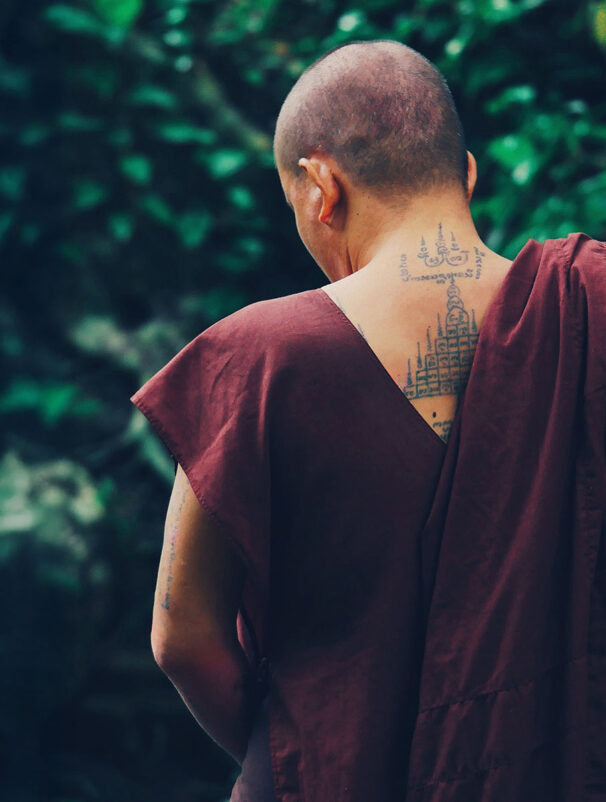
Celebs and tourists alike flaunt them, but across Asia bamboo tattooing is much more than just a surface design…
Travelling to Buscalan village in the Philippines is akin to going on a dangerous quest for hidden gold treasure. From Manila, it’s a mere 425km north, yet there are treacherous, impassable roads, uncertain transportation connections, and you sign your life away on the packed buses. You might get there in half a day. Then again, 24-hour trips are not uncommon.
Many intrepid global travellers make the trip though. This is partly due to the spectacular, lush mountains and green rice terraces that grace the remote mountainous village. But more often it’s because they want to get a special bamboo tattoo from Apo Whang-Od, who at 108, is likely to be the oldest tattoo artist in the world.
Daily, travellers book appointments with the one-time Vogue magazine cover star, who stands out in the village with her colourful hip-hop clothing, jewellery, and innate attitude. If they’re lucky, they’ll be the recipients of the mambabatok’s (traditional Kalinga tribe tattooist) three dots which she taps out on a person’s upper arm.
“A key thing to know about bamboo tattooing is that it involves a traditional hand-poking technique where a bamboo stick with needles attached is used to manually puncture the skin and deposit ink, unlike modern tattoos done with electric machines,” says Whang-od’s grandniece, Grace Palicas (Insta: @palicasgrace). “The method is more culturally authentic and considered to be an artisan practice with origins in Batok traditions.”
The 29-year-old spent several years learning the 1,000-year-old artform from Whang-Od, ensuring that the bamboo tattooing lineage will continue. It’s believed that if someone outside the bloodline is taught, then the tattoos can become infected. As a modern mambabatok, Palicas, along with Ilyang Wigan (another bloodline successor), is doing all she can to keep the Batok tradition going.
Once placed on warriors for spiritual or military purposes, today’s tattoos generally have a personal, rather than tribal, meaning. But they can be just as elaborate, with precise geometric lines placed across arms, legs, chests, and more, via a process that can take multiple sessions and days.
Charcoal is mixed in equal parts with water to produce the ink, then the design is stencilled directly onto the skin. Afterwards, the bamboo tattoo process commences via a series of taps (and more ink).
“We’re not only preserving our national heritage by doing this, but we are also offering special benefits to the user,” says SomBath. “Every design is carefully considered, created, and offers a unique meaning and power.”
Bamboo Man, who opened his store, Ink by Bamboo Man, in 2017, uses a stainless-steel bamboo stick for a variety of reasons, including hygiene, ease of design, and a sense of tradition. Though he does draw traditional Thai characters upon request, his style leans towards elaborate works of art: “I especially like drawing widescreen Japanese comic characters.”
Farther north, in Bangkok itself, Sak Yant Bangkok (@sakyantbangkok) features one local and two foreign masters (also called Ajarns) who use a steel tattooing rod called a khem sak. For hygienic purposes they use small needles in different sizes and shapes once, and once only. Both the Bangkok and Chiang Mai setups offer special Sak Yant tattoos, which are generally in Thai, and which can be blessed afterwards by a monk for a desired result.
“We offer a full explanation about the process and what’s going on in English,” says owner Silaporn Bangbuabal. “We also provide pictures and videos from the whole experience. Afterwards, guests can visit the Wat Bang Pra temple where many masters are influenced by the Wat Bang Pra lineage.”
Whether it involves hand tapping, intricate design, or rods of any sort, there is a healthy belief that both bamboo tattooing and the spiritual experience behind tattoos – mainly found via Sak Yants – originated in Cambodia. Hollywood actress Angelina Jolie helped bring such tattoos into the mainstream when she showed her elaborate designs off after filming there. Though many tourists have gotten them since, the Cambodian artisans who practise the trade take it seriously, imbuing lengthy training and meaning into the artform.
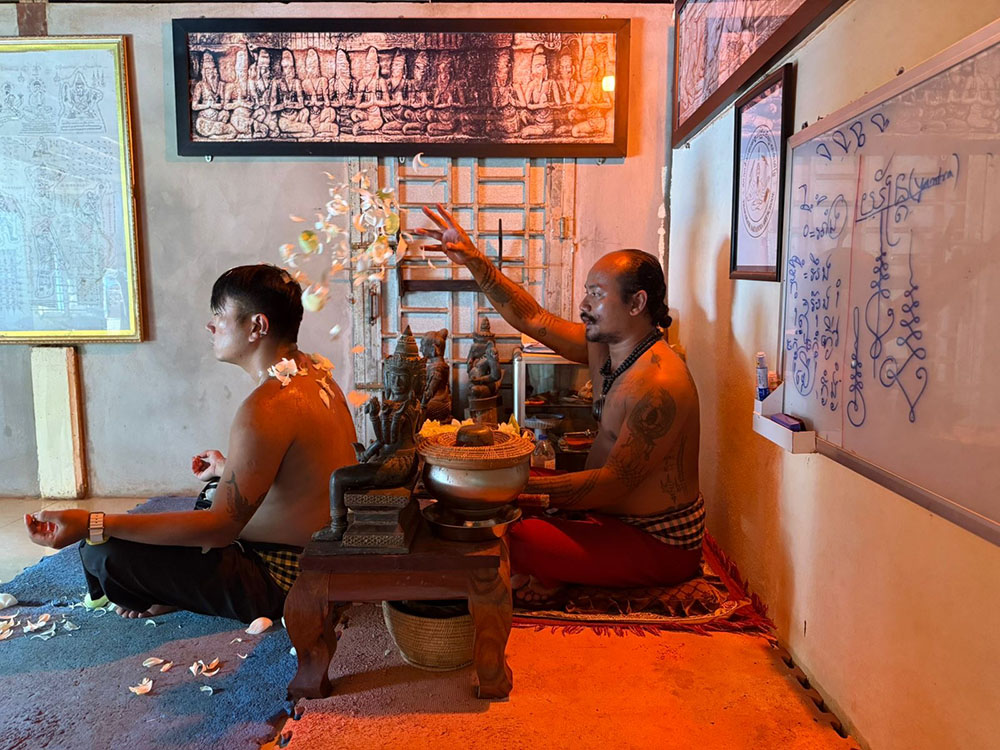
The Federation of Khmer Sakyantra (federationofkhmersakyantra.com) is one of the best examples of this, the initiative started outside Siem Reap in 2014. There, several brothers have spent years practising their designs at the feet of their master, Say Tevent, who himself learnt bamboo tattooing from his own father.
“It’s generally believed that Sak Yants date back thousands of years in Cambodian culture, long before Thailand and elsewhere, though the Philippines is in its own arena in this regard,” says SomBath Sakk “Sak Yants stem from the Khmer language, as ‘yants’ represent the designs and ‘sak’ means to tap or tattoo.”
Though SomBath concedes that there are imitators, especially in Phnom Penh, the attention to detail that the Federation presents is gaining steady recognition for those who wish to have the genuine experience and article. Following a considerate consultation, the needles are sterilised and attached to a long bamboo rod which is used to push ink underneath the skin. The designs and mantras that are created across the body can represent whatever the recipient desires for long term use. Following the session, the tattoos are then blessed by the Master, who bestows upon it special powers.
“We’re not only preserving our national heritage by doing this, but we are also offering special benefits to the user,” says SomBath. “Every design is carefully considered, created, and offers a unique meaning and power.”
WORDS — SCOTT MURPHY