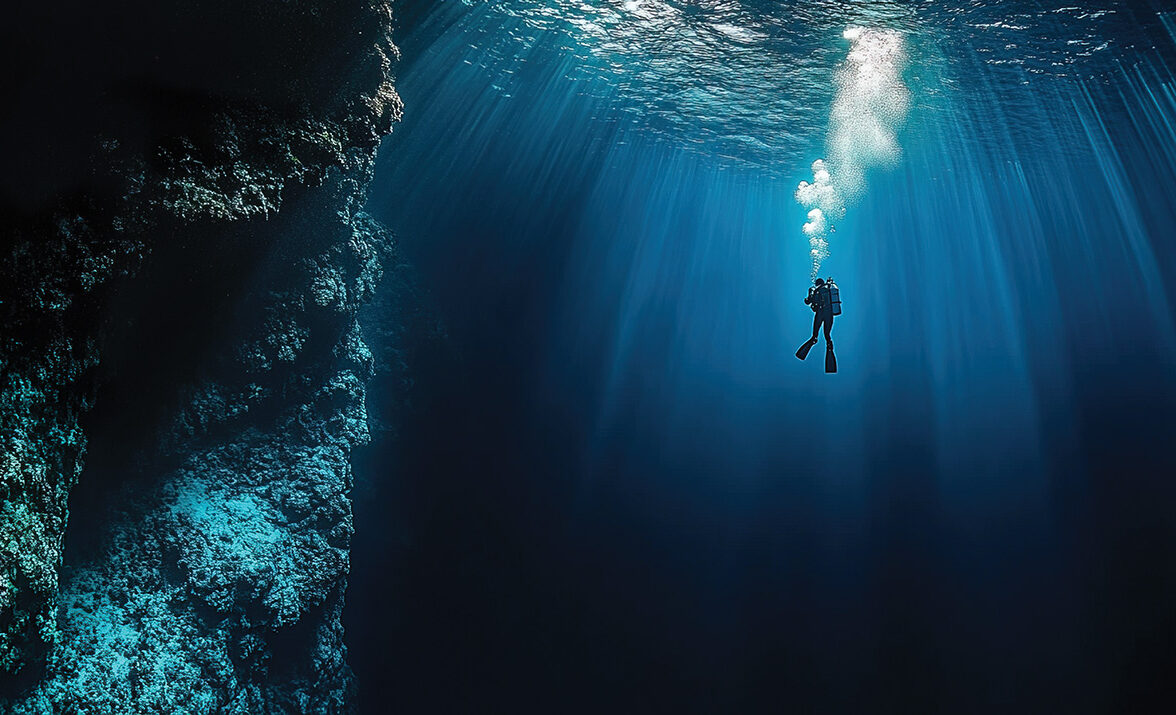
It’s been 80 years since the production of the Aqualung, a device developed by Jacques-Yves Cousteau and French Air Liquide engineer Emile Gagnan that enabled divers to swim underwater for extended periods of time.
A long way from the hollow reeds used by the Ancient Greeks and Romans when diving for pearls and sponges!
Cousteau is, of course, a famed filmmaker, oceanographer, French naval officer, conservationist, and author. His device also led to him becoming known as ‘the father of scuba diving’ and his pioneering oceangoing exploits played an incalculable role in encouraging others to explore the underwater world. He also once famously labelled Aotearoa’s Poor Knights Islands as one of the greatest dive destinations in the world.
We take a journey to Poor Knights, as well as some of Cousteau’s other favourite sites along with some recommendations from PADI (Professional Association of Diving Instructors), the world’s largest ocean exploration and diver organisation.
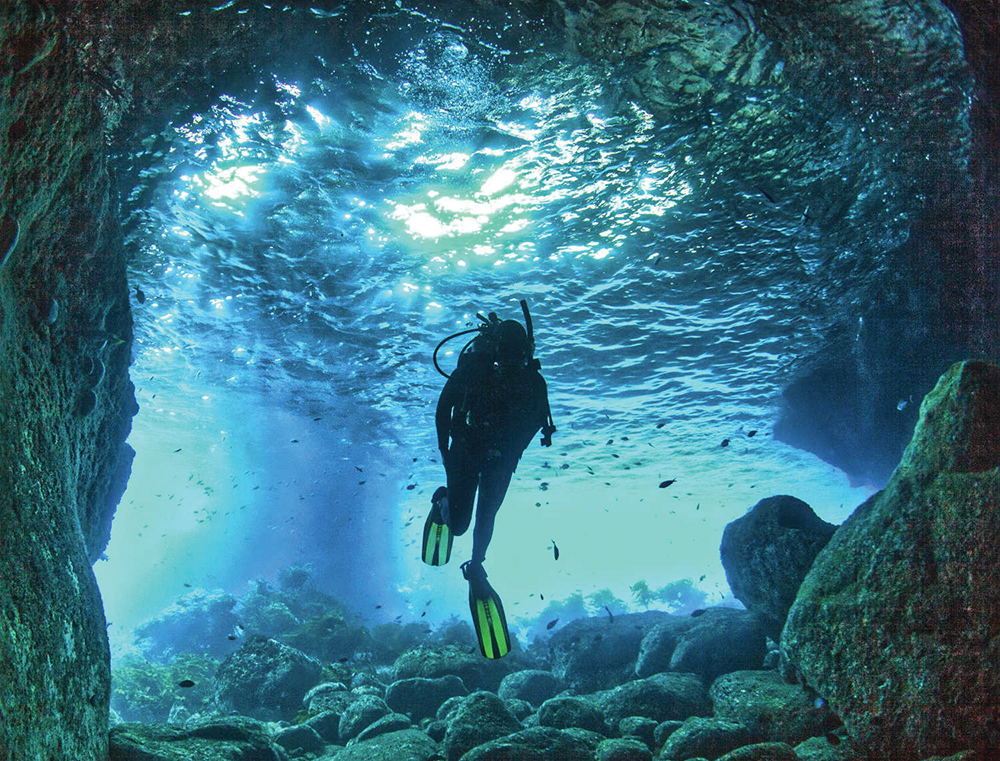
Poor Knights Islands, New Zealand
Protruding from the east coast of our North Island, this impressive assortment of islands, formed from ancient volcanoes, sit amongst clear waters, dramatic underwater landscapes, and an abundance of marine life. Divers are invited to explore vast sea caves, arches, and tunnels all teeming with colourful fish species like pink and blue maomao, as well as dolphins, orca, and rays. Visibility is generally most optimal during winter, while summer brings plankton blooms and an increased chance of encounters with larger marine creatures.
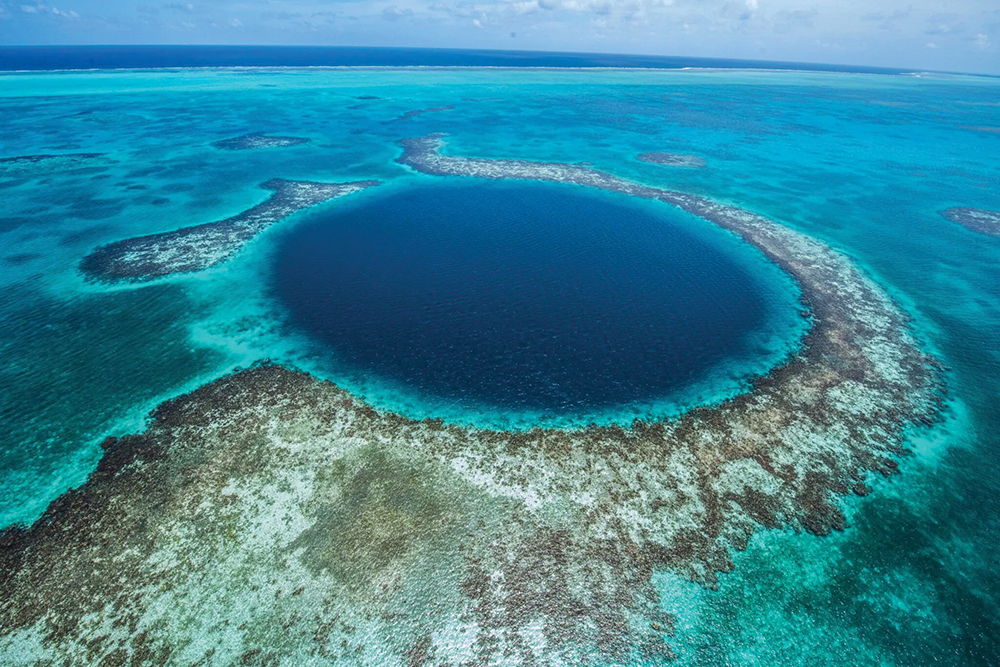
Great Blue Hole, Belize
This jaw-dropping marine sinkhole which plunges to depths of more than 120m (too deep to dive to the bottom!) within the Unesco-listed Belize Barrier Reef Reserve System. Cousteau arrived in his ship, Calypso, in 1971 and featured the iconic site in his iconic documentary series The Undersea World. This dive location is not for the inexperienced – or the faint of heart – with advanced diving certification a must to explore its dark depths.
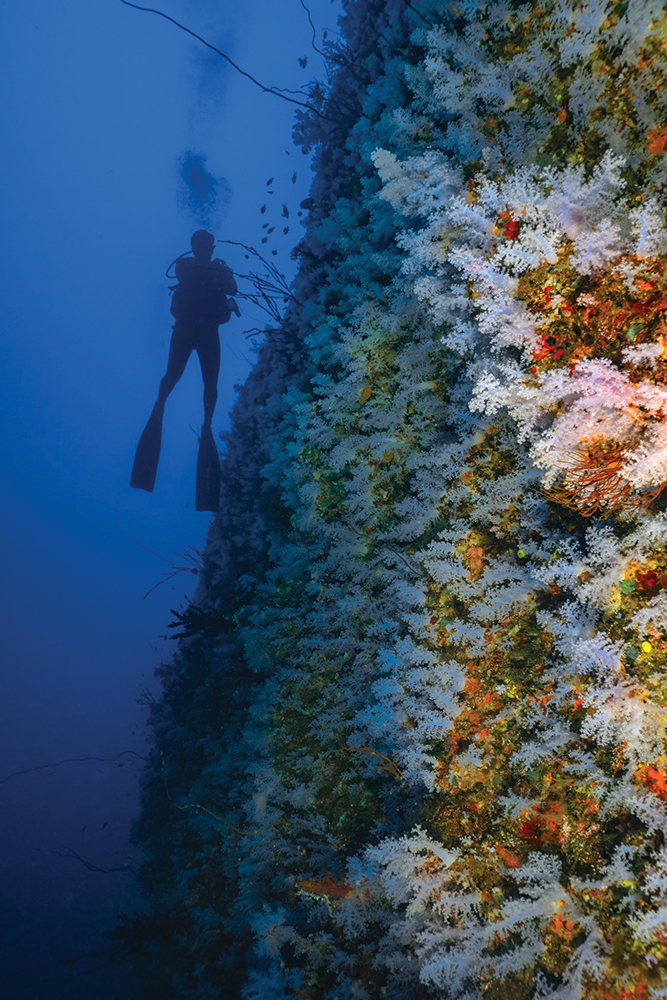
Richelieu Rock, Andaman Sea, Thailand
Resting in the waters of Mu Koh Surin National Park, Richelieu Rock boasts an extraordinary abundance of marine life, including seahorses, moray eels, manta rays, and whale sharks. Aquatic life aside, the horseshoe-shaped reef is most well known for a towering limestone peak that reaches for 30m, finishing just beneath the sea’s surface. As for the name ‘Richelieu Rock’, some believe that Jacques Cousteau christened the red and purple coral-covered rock after Cardinal Richelieu, known for his distinctive crimson attire, while others suggest that the name honours Andreas du Plessis de Richelieu, the only non-Thai to have served as Commander-in-Chief of the Royal Thai Navy.
Sau Bay Resort & Spa, Fiji
Nestled on the shores of Fiji’s second-largest island, Sau Bay is an eco-luxury dive resort just 10 minutes by boat from Rainbow Reef’s dazzling coral gardens. Set on 40 hectares of tropical rainforest, it’s Fiji’s first PADI Eco Centre, offering small-group diving with a focus on sustainability. A white sand beach fronts a vibrant house reef, perfect for snorkelling and diving among sea turtles and colourful marine life. As a Green Fins member, Sau Bay powers itself with solar energy and runs reef restoration and education programmes. Exclusive full-resort bookings are available for private groups of 12 to 16 guests.
“The sea, once it casts its spell, holds one in its net of wonder forever.”
JACQUES COUSTEAU
DEEP DIVE
A rundown of the history of underwater exploration…
1535: Guglielmo de Lorena takes an early plunge using a diving bell in Lake Nemi, Italy – it’s one of the first underwater exploration tools.
1600s: Diving bells get an upgrade. Edmond Halley – yes, the comet guy! – designs one with weighted barrels to supply fresh air, and they’re used for salvage and construction.
1715: John Lethbridge invents a very early diving suit: basically a wooden barrel with armholes. It might sound odd, but it worked!
1820s: Augustus Siebe develops the first successful air-pumped hard-hat diving suit, laying the groundwork for modern diving gear.
1864: French inventors Benoît Rouquayrol and Auguste Denayrouze create a demand regulator – an important step towards today’s scuba systems.
1930s: Divers begin experimenting with self-contained systems using compressed air – early versions of what we now know as scuba.
1943: Jacques-Yves Cousteau and Émile Gagnan invent the Aqualung, the first practical open-circuit scuba system. This is seen as the birth of recreational scuba diving.
1950s–60s: Cousteau’s books and films inspire people worldwide. Dive clubs grow, certifications begin, and the hobby really takes off.
1966: PADI is founded, making diving more accessible and standardised for the general public.
1980s–2000s: Big tech advances arrive: dive computers, nitrox (enriched air), rebreathers, plus better wetsuits and drysuits.
Today: Scuba diving is safer, more accessible, and more popular than ever, with millions of certified divers and incredible dive sites all over the world.