
Over the past 30 years, fashion as a product has disseminated around the globe and diverged into a number of distinct forms: streetwear, techwear, vintage, luxury and high fashion. But of all the style varieties and flavours of fashion, there is one that stands outside the rest and truly in a league of its own—haute couture.
Translated literally as ‘high sewing’, haute couture is the apex of the fashion world, a tiny circle of the fashion system where dresses are handmade over hundreds of hours and at a cost of hundreds of thousands of dollars, in a process that only a small handful of companies and artisans are skillful enough to produce.
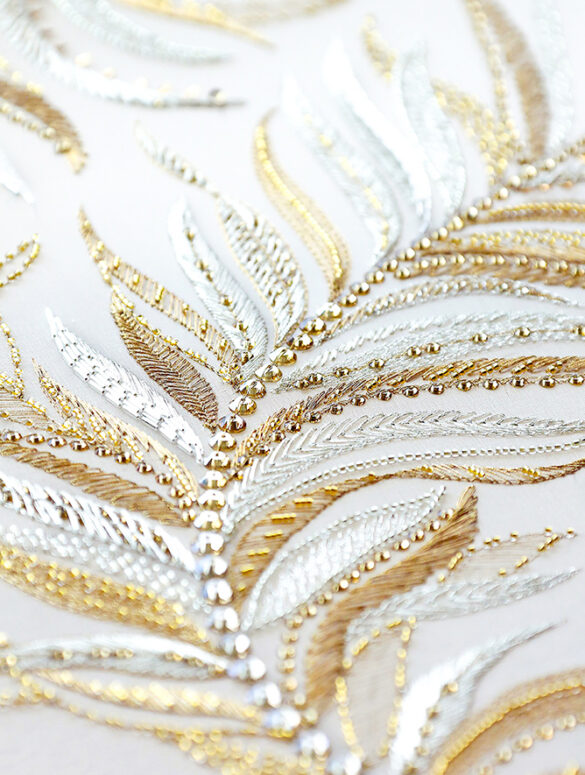
One of the oldest and perhaps most prestigious of these is Maison Lesage, an embroidery house whose clients include Chanel, Dior and Saint Laurent. Founded in 1858, Lesage began life under the name of Michonet and with the adoration of the French upper crust, whose desire for luxury was fuelled by the restoration of the royal house of Napoleon III during the Second Empire, and in particular his wife Eugénie, whose fondness for the designs of Charles Frederick Worth—an Englishman otherwise known as the ‘father of haute couture’—dictated high society taste.
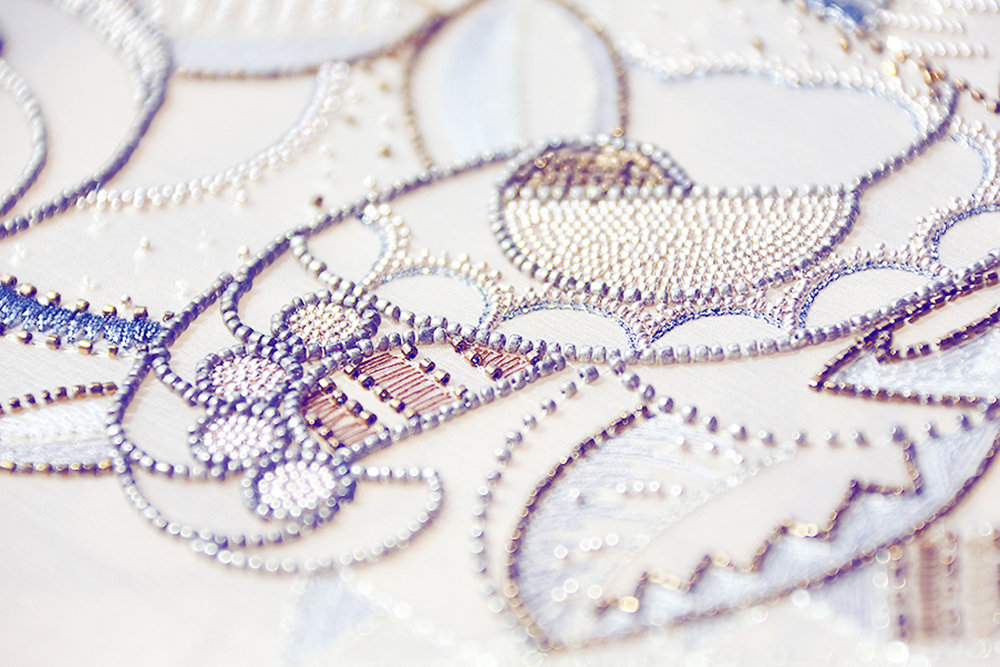
Michonet continued this work over the subsequent decades until the arrival of a young Frenchman called Albert Lesage. Albert had begun his career in fashion after the First World War, becoming director of women’s clothing at the prestigious Marshall Field’s department store in Chicago in 1919, before returning to his native Paris in 1922 to take a job at Michonet, where he met Marie-Louise, an assistant in charge of embroidery at Madeleine Vionnet—a loyal Michonet client and one of the leading figures of Paris fashion in the interwar years. The couple purchased Michonet in 1924 and renamed it Albert Lesage et Cie, a name that would soon outshine even its storied predecessor, and become unrivalled in the art of embroidery.
Through the 1930s, Lesage would come to be associated most notably with Elsa Schiaparelli, a longtime rival of Coco Chanel, whose Zodiac collection of 1938 championed the embroiderer’s intricate work on jackets, dresses and capes inspired by the astrological signs. Despite this long standing and fruitful relationship, it would take the sudden death of Albert in 1949 and the ascension of his son, François – at the time just 20 years old—to the head of the house for Lesage’s presence to be felt throughout the fashion industry. François pursued collaborations with the fathers of French luxury – Dior, Balmain, Balenciaga, Givenchy – when these men were at the height of their powers, while others such as Yves Saint Laurent worked exclusively with Lesage for more than 40 years, employing the full scope of the house’s talents in his jaw-dropping 1988 homage to Van Gogh’s Irises.
Nowadays, as it was with Schiaparelli and Saint Laurent, Lesage is synonymous with another great house: Chanel. After beginning their relationship in 1983, Chanel acquired Lesage in 2002 under subsidiary company Paraffection as part of its Métiers d’Art, an initiative aimed at preserving the traditional skills of artisans like Lesage, and one that will ensure its breathtaking creations survive well into the 21st century and beyond.
Words—Nick Ainge-Roy