

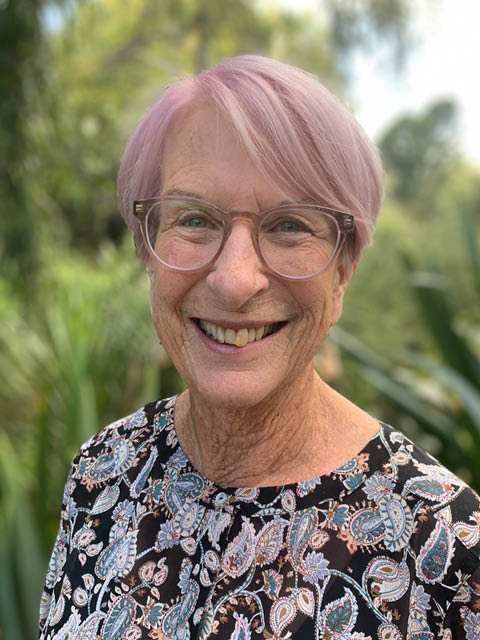
Together, Dianne and Jan bring over 40 years of experience in practicing and teaching mindfulness to people from all walks of life. We chatted to the two to find our more about their perspectivies on mindfulness, and bust some myths surrounding the practice!
Have you seen an increase in people curious about meditation and mindfulness practices over the last 2.5 years as we’ve been navigating the global pandemic?
There have always been a lot of people wanting to understand more about their mind and how they can have some influence over it in a positive way. But definitely over the past few years we have seen an increase in the diversity of people coming to our courses, in age ranges (on our last course we had ages from 20 to 72), every occupation you could imagine and in particular a lot more men!
For most of us, the past few years (and in particular the lockdown) were challenging. Without a lot of the supports, connections and distractions of everyday life we became more acutely aware of our own thinking patterns and how easy it is to get lost in them (particularly the more unhelpful ones). Perhaps people have a greater appreciation for how important our mental health and wellbeing is, that it affects all areas of our life, and the hopeful promise that with an evidence-based programme like MBSR (Mindfulness Based Stress Reduction) we can take an active role in supporting it.
What are some of the common myths surrounding mindfulness?
Perhaps the most common myth is that mindfulness is the same as relaxation. People often do report they feel a lot calmer and more relaxed in life, but that is not the main purpose!
The purpose is to become more present in life (so we don’t miss these precious moments of being alive each day) and to increase our awareness (of ourselves and of others) so we can start to take more skilful action. So that may mean we might also notice more of the unpleasant parts (which may not feel relaxing at all!). However there is a real freedom in that as we are no longer running away but being an active participant and responding rather than reacting in life.
Another myth is you have to be able to empty your mind of all thoughts, and if you don’t you’re not doing it correctly! It’s more about noticing what your mind is up to and training it to come back to the moment rather than being constantly lost in your thinking.
Finally, some people still think it’s a bit weird and for people who like crystals and burning incense! In fact, it’s a very ordinary simple thing (plus we don’t like either of these so that’s proof!). That’s why mindfulness training is now showing up everywhere from education, healthcare, corporations to the UK Parliament.
What are some of the key benefits that you see people who undertake an in person mindfulness course receive, in comparison to those who use mindfulness apps or similar?
It’s a great question as mindfulness is so popular now and it’s not always clear what can make a real difference in your life, and what’s a gimmick! Apps and similar are a great introduction to mindfulness and meditation but they do have their limitations. It’s common for people to wonder if they are “doing it right”, to encounter challenges, or have a lot of questions about what they are experiencing, and without someone who is knowledgeable to talk these things through with it’s very easy to give up and think it’s not for them.
The support of an experienced teacher is priceless, and people learning together in a group is powerful, supportive and motivating. When we realise that all the things we thought were our issues are in fact more about being human it can help us not to take it so personally. Our courses are 8-weeks long, people come in feeling nervous but by the end are sad to say goodbye and ready to continue forward having established a life-changing new habit and understanding what practices are right for them – the group bond is one of the joys of being a teacher. Plus, I think we all now have a much greater appreciation for the importance of connection with other humans after the past few years!
We should also add that most of the benefits we read about from mindfulness (like improved concentration, sleep and happiness, and reductions in stress, chronic pain, anxiety and depression) are based on the research on the 8-week MBSR course. There may not be any proven benefit from using apps and the like – that doesn’t mean they don’t have their value, but its important to know what you are signing up for and be realistic about what results you can expect to receive. We’d always encourage someone to do some research on the teacher and resource they are using.
What are some of the ways that employers and organisations can support their staff?
It’s really heartening to see the way that employers are starting to make wellbeing a real priority for their staff. Gone are the days of “just suck it up and get on with it”. If we are stressed, exhausted, unhappy, and overwhelmed we are unable to peform effectively at work. A happy mind is a hard-working mind! Perhaps that’s why mindfulness courses in organisations are becoming more and more popular (from London Transport, to Google, to Goldman Sachs). Programmes like our specialised Being Your Best at work mindfulness training programme that organisations fund for their staff to join during work hours help individuals become more mindful in the workplace. People want to be supported to be the best that they can be, and to look forward to showing up at work, to challenge and grow and leave feeling satisfied they contributed to something greater than themselves.
I would also add that there is growing research of the impact that Mindful Leaders can have on the rest of the team – from greater empathy, communication, resilience right down to productivity and less sick days. Starting at the top!
What do your personal mindfulness practices look like? Do you have any ‘non-negotiables’ in your daily routine?
Mindfulness is part of our daily lives, and it can take many forms. A formal meditation first thing in the morning is something we both tend to do, before anything else gets in the way – how wonderful to wake up and acknowledge that today I am alive, I have this day! The attention training and deep awareness that comes from the practice also tends to spill out into the coming day, allowing us to be more present and for the day to proceed more smoothly.
Jan, as a long time student of Iyengar Yoga, do your movement practices intersect with your meditation and mindfulness practices?
I’ve been practicing yoga for longer than I have been practicing meditation and I find movement practices to be a super important part of my mindfulness practice. The mind and body are so connected, you could say they are really two sides of the same coin – what we do with our mind impacts on our body and vice versa. When my mind is racing, or I feel angry, upset or sluggish I can move my body in a way that leaves me feeling refreshed and rejuvenated and more present. I also love dancing for the same reason! Most of us are so cut off from our bodies, we don’t tend to feel much from the neck down. There is so much information available to us and the more we can come into the body the more present and stabile we can be in our day.

Dianne, you’ve trained with many different teachers, tell us about the importance of lifelong learning and exploration for you, and how your mindfulness and meditation practice evolved over the years?
I have been so fortunate and feel grateful to the many different teachers I have trained with and learned so much from over the years. As mindfulness practice develops and deepens over the years, it becomes obvious that the learning and exploration never stops. I am sure that this is why after 20 years of teaching it always feels fresh and new to me. My greatest teachers have and continue to be the participants on the courses, they inspire me with their courage and insights and practice and I’m always learning something new from them. It does feel for me now that mindfulness does inform my life in many ways.
For more information about the courses on offer at Mindfulness Aotearoa, check out https://mindfulnessaotearoa.com/