
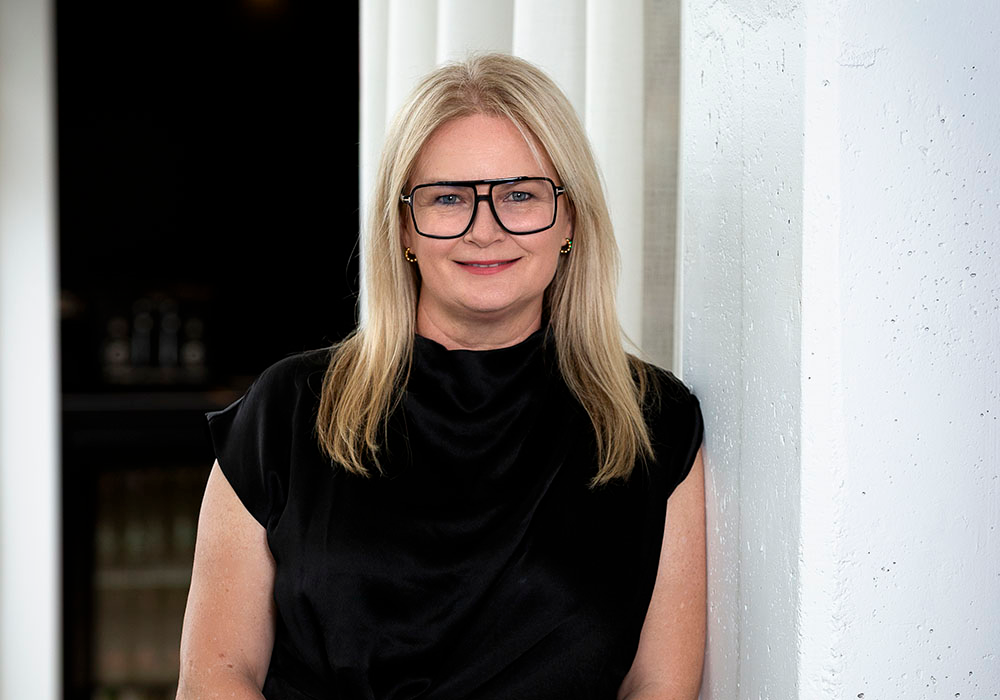
For more than two decades, sleep specialist Kirsten Taylor has worked at the intersection of natural medicine and sleep science.
When she founded SleepDrops®, the intention was clear: address sleep in a way that reflected its true complexity to get people results.
“Sleep is a full body, multi-system process – involving brain chemistry, circadian rhythm, the stress response, hormones, the immune system, nutrition, behaviour and much more,” says Kirsten. “Treating it as a single issue is where most approaches fall short.”
Over the past 20 years, SleepDrops® has become New Zealand’s leading sleep brand, working with hundreds of thousands of individuals across all life stages – from early childhood through to high-performing adults. But alongside that real-world experience, Kirsten has also focused on validating this systems-based approach through third-party, independent scientific research.
“We wanted to test whether addressing multiple pathways simultaneously would produce outcomes beyond what is typically observed in sleep research,” she explains.
Across two human clinical trials, every participant demonstrated meaningful improvement in symptoms, with outcomes consistently approaching near full resolution of insomnia across both cohorts. Notably, there were no non-responders – a level of uniformity highly unusual in sleep research.
“It reinforced that when you work with the full biology of sleep – rather than isolating a single pathway – the body responds in a far more predictable and complete way,” Kirsten says.
Beyond one-dimensional sleep solutions
Sleep has traditionally been approached in isolation – a problem to be solved with a single lever. But in practice, sleep disruption is rarely that simple.
“Most interventions target one pathway – calming the mind, supporting melatonin, or addressing stress,” says Kirsten. “But sleep is the outcome of multiple processes within the body interacting. If you don’t address the body as a whole, you don’t restore healthy sleep architecture.”
This multi-pathway model has underpinned her work from the beginning, refined through decades of clinical observation and real-world application across a large and diverse population – and now supported by formal research outcomes.
For individuals managing complex, high-demand lives, this distinction becomes even more relevant.
“Sleep is often the first thing to deteriorate under cognitive load, pressure, or sustained stress,” explains Kirsten. “And it’s rarely, if ever, resolved by a single intervention.”
The data problem no one is solving
The rise of wearable technology has given people unprecedented visibility into their sleep – from REM cycles to deep sleep percentages and recovery scores.
But, according to Kirsten, more data has not translated into better outcomes.
“People can see what their sleep is doing, but they don’t know how to interpret it or act on it,” she says. “Data without direction doesn’t solve the problem. We’re seeing individuals become increasingly focused on their sleep metrics, without a clear framework for what those metrics mean or how to respond. That can create a new layer of cognitive load around sleep itself in anxious people.”
What was missing was a structured way to translate that information into meaningful action.
Introducing sleep intelligence
CleverSleep® is the result of that need – a move from just tracking sleep to understanding and directing it.
Positioned as a sleep intelligence platform, it is designed to function as the interpretation layer between sleep data and real-world decisions.
“CleverSleep® translates sleep complexity into clarity,” Kirsten explains. “It takes what’s happening across multiple processes in the body – physiology, behaviour, stress – and turns that into precise, personalised guidance.”
Rather than treating symptoms in isolation, the platform evaluates patterns, context, and underlying drivers, recognising that similar symptoms can arise from entirely different causes.
“Two people can present with the same sleep issue, but require completely different strategies,” Kirsten says.
“Without that level of interpretation, you’re still guessing.”
From individual products to a full-body approach
The transition to CleverSleep® represents a broader evolution, with the established range of SleepDrops® products delivered within a more integrated, full-body approach.
“I’ve always formulated to address the multiple needs of the body,” says Kirsten. “The challenge has been that the market expects one product to solve sleep – and that’s not how sleep works. Sleep requires at least 13 major pathways to be in balance – so it’s unlikely to be resolved by one intervention.”
Within the new CleverSleepApp.com approach, targeted interventions – including supplementation – remain highly relevant, but they are part of a wider, structured framework developed over two decades.
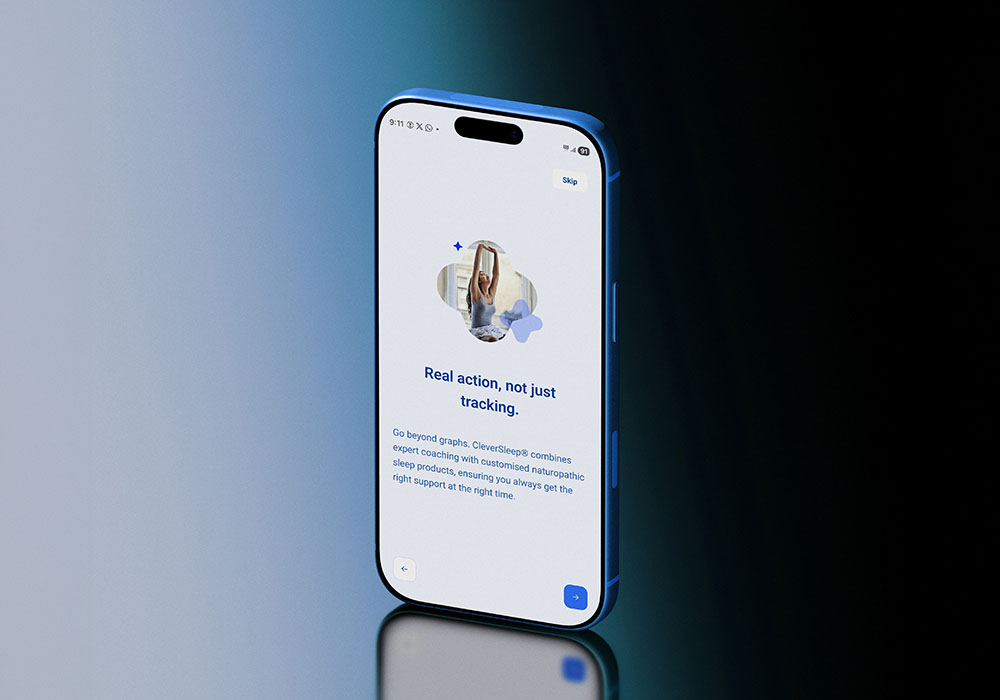
“Supporting specific pathways has value,” explains Kirsten. “But the real impact comes from knowing which pathway to support, when, and why. With modern sleep trackers such as Apple Watches and Oura Rings, we now have real-time data available to us.”
This level of precision reflects a shift already seen in other areas of health where generalised solutions are being replaced by personalised, data-informed strategies.
A more precise future for sleep
As sleep continues to be recognised as a foundational driver of health, performance, and long-term wellbeing, the expectations around how it is managed are changing.
“For a long time, people have been left to navigate their sleep on their own – trying different approaches without a clear framework,” Kirsten continues. “That’s no longer necessary.”
The future, she believes, lies in combining data, expertise, and structured decision-making into a single, coherent model.
“Sleep is too important to approach through trial and error. When you can accurately interpret what’s happening in the body and respond in a targeted way, the entire experience of sleep changes.”
Positioned as a sleep intelligence platform, it is designed to function as the interpretation layer between sleep data and real-world decisions.
After more than 20 years working in the field, Kirsten sees this as a natural progression – not a departure.
“We’re now in a phase where sleep can be understood, measured, and managed with far greater precision than ever before – delivering sleep results without stress, without further burdening our overstretched medical system,” she adds.
“We are currently beta testing CleverSleepApp.com and would love the support of our New Zealand community as we fine-tune this world-first sleep intelligence platform.”