
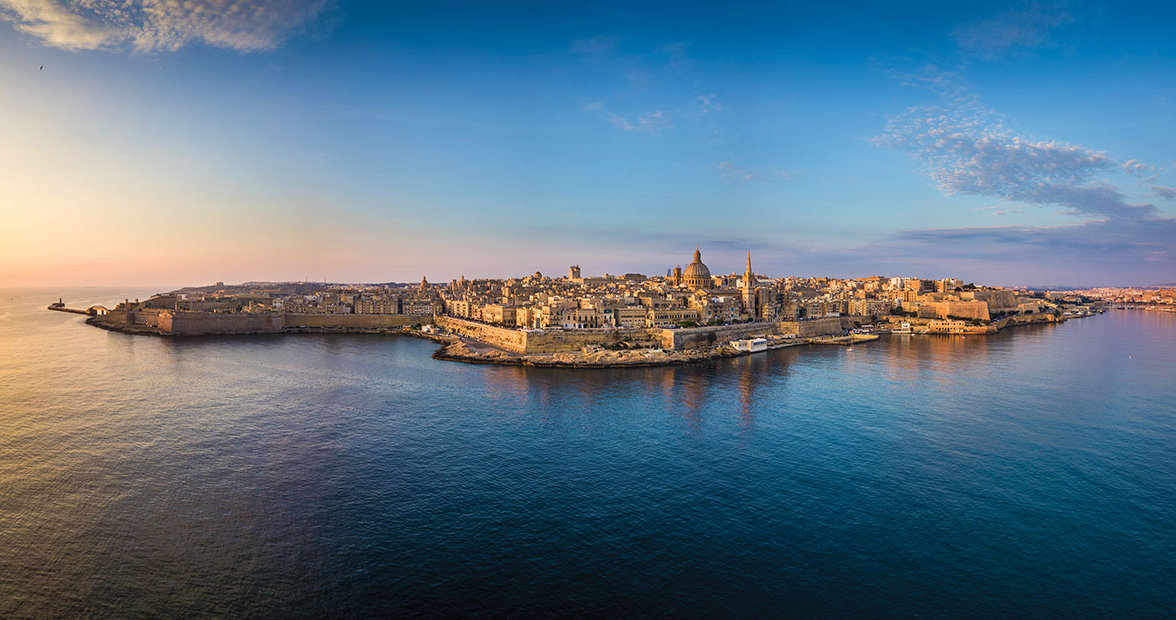
Tiny but mighty, Malta’s sunny capital Valletta is one of the Mediterranean’s most storied cities, and one of its most rewarding to explore. Built on a slender peninsula just 1km by 600m, the city was hewn from honey-coloured limestone in the 16th century by the Knights Hospitaller (a powerful Catholic military order founded in Jerusalem in the 12th century) who decreed it should be “a city built by gentlemen for gentlemen”. That founding ambition endures today. Phoenicians, Romans, Greeks, Arabs and the British have all left their mark on this strategic crossroads, earning Valletta a place on Unesco’s World Heritage List and, in 2018, the title of European Capital of Culture.
Valletta’s Fortifications
Walking Valletta’s limestone walls is one of the city’s great pleasures, with dramatic views over both Grand Harbour and the harbour Marsamxett rewarding every step. Designed by Italian military engineer Francesco Laparelli and largely complete by the 1570s, the walls remain in remarkable condition. At the peninsula’s seaward tip, Fort St Elmo – first built in 1552 and rebuilt after the Great Siege of 1565 – now houses the National War Museum, whose star exhibit is the George Cross awarded to Malta’s entire population in 1942.
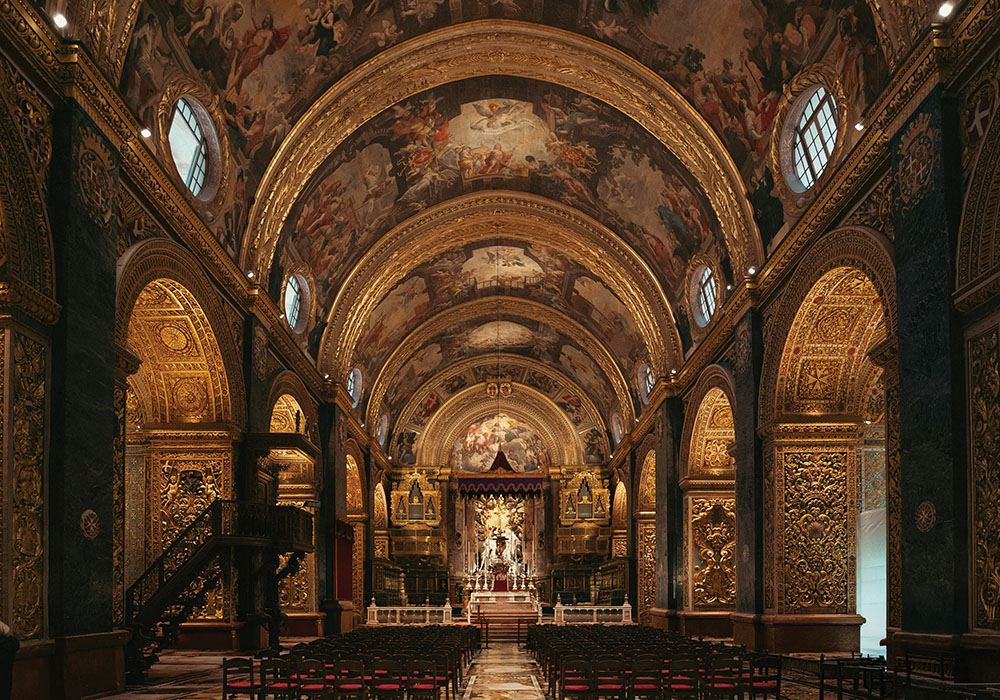
St John’s Co-Cathedral
Its austere fortress-like facade gives little away, but step inside St John’s Co-Cathedral and the contrast is breathtaking – a riot of Baroque extravagance with ornate carved limestone walls, a painted vaulted ceiling and 400 marble tombstones covering the floor, each marking a buried knight. The cathedral also houses Caravaggio’s ‘Beheading of Saint John the Baptist’ – his largest work and the only painting he ever signed. Sir Walter Scott, visiting in 1831, called it the most striking interior he had ever seen.
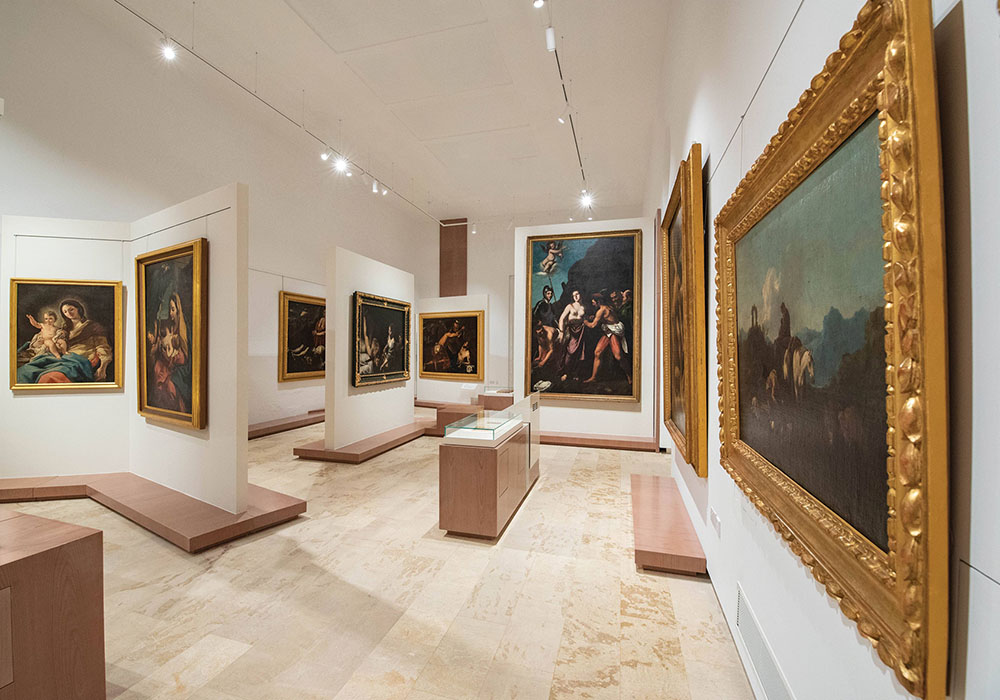
MUŻA
Malta National-Community Art Museum
Housed in the beautifully restored late 16th-century Auberge d’Italie, MUŻA – Malta’s National Community Art Museum – opened as one of the flagship projects of Valletta’s 2018 European Capital of Culture year. Its collection spans the 14th century to the present day, tracing Malta’s artistic journey through its Mediterranean roots, the Knights of St John, British rule and beyond. The museum’s restaurant, set around a lovely Mediterranean courtyard, is a worthy stop in its own right.
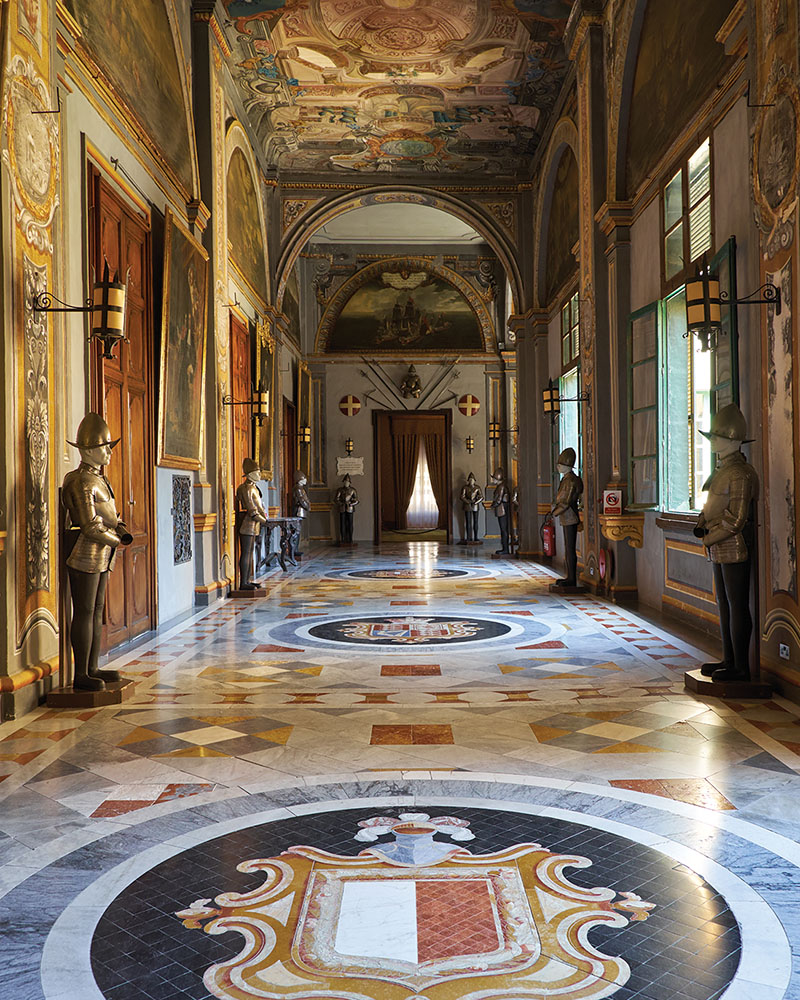
Grand Master’s Palace
The stern exterior of the Grand Master’s Palace belies a sumptuous interior. Built as the residence of the Knights’ Grand Masters and Malta’s parliamentary seat until 2015, it’s now the office of the President. The recently restored Armoury is the star attraction – over 6,000 pieces survive (500 of which are full suits of armour) from an original 25,000, the rest lost to Napoleon’s plundering and British neglect. Highlights include La Valette’s breastplate and a breathtaking gold-inlaid suit made for Grand Master Alof de Wignacourt.
Barrakka Gardens
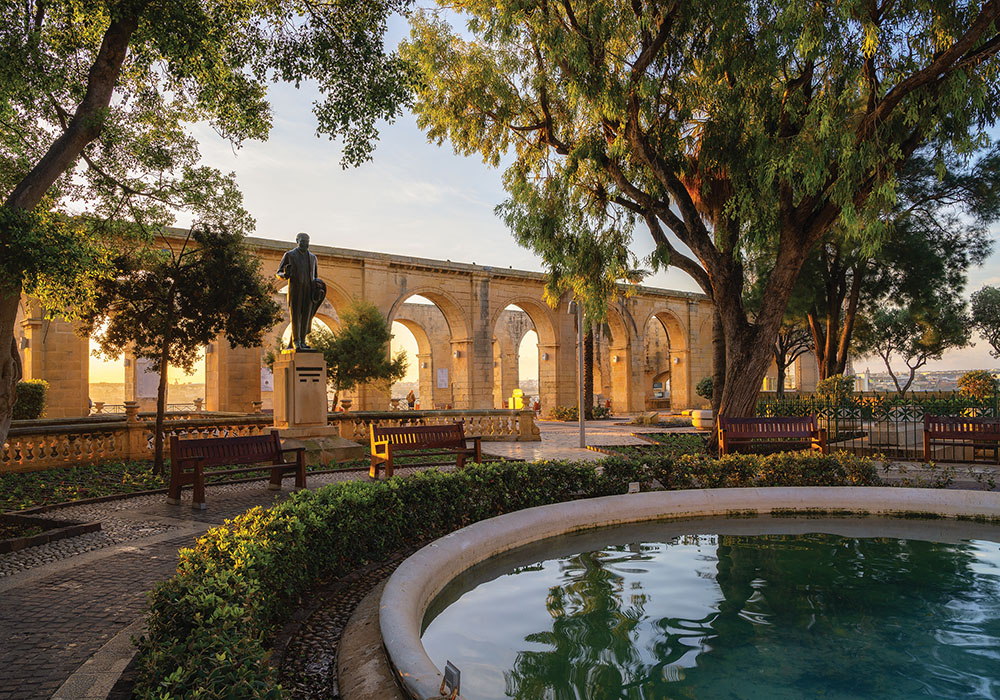
Perched at Valletta’s highest point, the elegantly colonnaded Upper Barrakka Gardens date to the early 17th century, originally built as a private retreat for the knights. Today they’re open to all, and the sweeping views over Grand Harbour towards the old towns of Senglea and Vittoriosa are among the finest in Malta. Time your visit for noon or 4pm Monday to Saturday and you’ll witness the cannon fired from the Saluting Battery just below.
More from VisitMalta –