While travelling around Europe in the early noughties, Tim Lightbourne secured a gig at a Burgundy vineyard as “that guy carrying the grapes in a big basket on his back!”
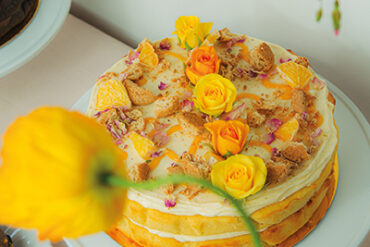
This cake is in honour of all of those endless, bright, summery golden days. It is packed with ground almonds, fresh lemon, amaretti biscuit pieces, and apricots, and covered in dreamy vanilla bean cream cheese icing.
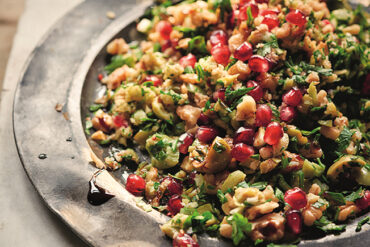
This little salad, a thrilling mix of flavours, textures and colours that is almost too glorious to look at, is a speciality of Gaziantep, a Turkish city on the border with Syria, famous for its gastronomy. If you don’t have pomegranate seeds, never mind.
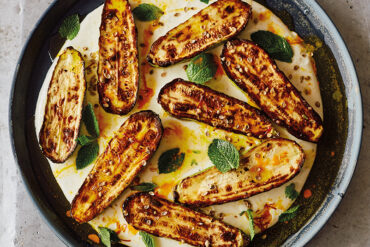
This recipe is inspired by kousa b’laban, a Levantine dish of stuffed baby marrow cooked in yoghurt. In this simplified version the yoghurt sauce and grilled courgettes are cooked separately, then served with a quick saffron butter to spoon on top.