
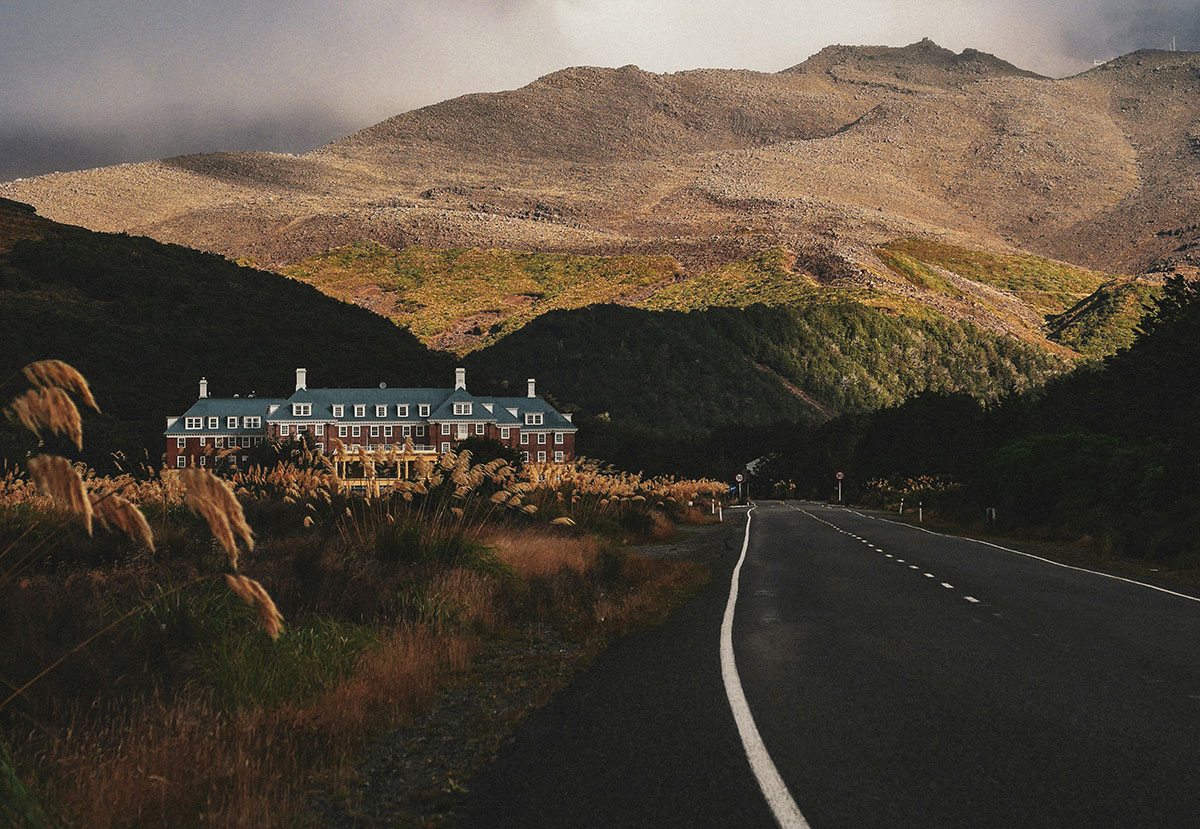
Perched in the heart of Tongariro National Park, the grand old Chateau Tongariro welcomed its first guests way back in 1929 – and remains one of New Zealand’s most iconic buildings.
The story of the now-dormant chateau begins with an act of generosity, when, in 1887, Tūwharetoa chief Horonuku Te Heu Heu Tūkino gifted his people’s land to all New Zealanders, with the intention that the sacred peaks of Ruapehu, Ngauruhoe and Tongariro be protected for all time.
By 1923, the Tongariro National Park Board was exploring ways to draw visitors to the newly formed park, and in 1925 the government offered to lease land and lend up to £40,000 to any company willing to build and operate a hotel on the site. That same year, a new road was also carved to Mt Ruapehu (before then, reaching Whakapapa meant fording rivers, navigating untamed terrain on foot or horseback).
Designed by Timaru-based architect Herbert Hall, the foundation stone was laid in early 1929, with a workforce of over 80 – many recruited from Waikune Prison – completing construction by 1 August that year.
Standing as the largest and most impressive building in the area, it cuts a striking figure against the dramatic mountain backdrop – a sight so evocative of European influence that the name ‘Chateau’ has always felt the most apt. However, despite its French-influenced moniker, the chateau is actually built in the American Colonial Revival style – a variant of Inter-War Georgian Revival. Its most striking feature, the balconied portico at the main entrance, reflects clear American influences while its reinforced concrete construction gives a modern edge to otherwise classic Georgian lines.
Many also remark on the hotel’s resemblance to the Overlook Hotel from The Shining, so it’s only fitting that the chateau is said to have a supernatural element within its superstar looks. Spooky tales date back to its use as a women’s asylum following the temporary closure of the Porirua Lunatic Asylum due to the 1942 Wairarapa earthquake. Staff have told of stories of a nurse named Charlotte, who was said to have died in one of the rooms. It is believed that Charlotte continues to make her presence felt in the hotel, particularly in one of the rooms which was said to be her favourite. There have even been reports of mysterious instances of fires stuttering in their fireplaces, and curtains moving as if blown by a strong breeze, despite no breeze being felt.
Standing as the largest and most impressive building in the area, it cuts a striking figure against the dramatic mountain backdrop.
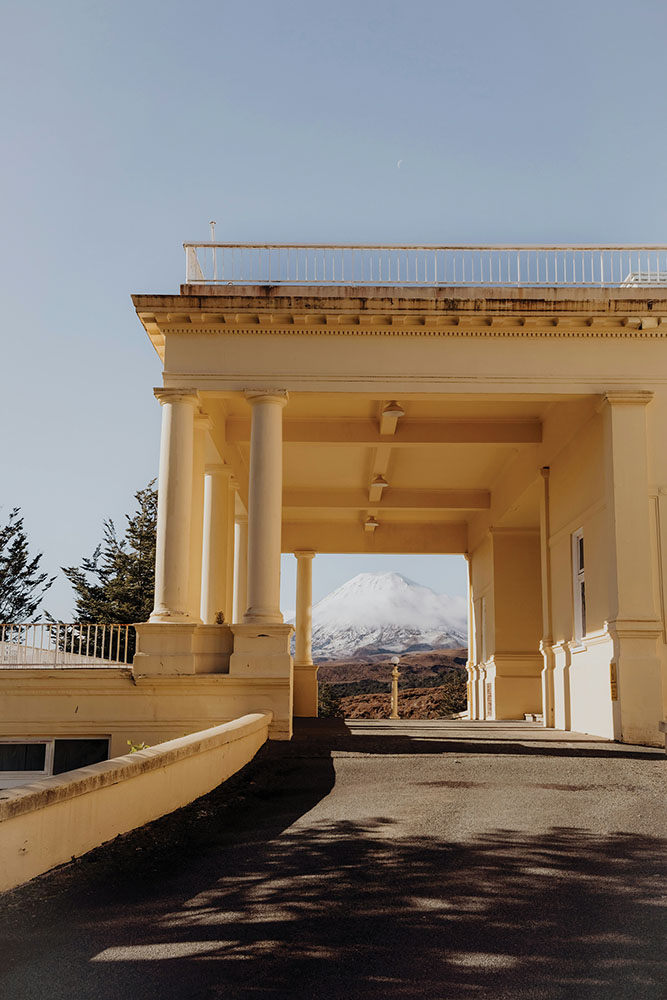
The hotel later served as a rest and recuperation centre for air force personnel returning from the second world war, and, in 1945, was evacuated during Mt Ruapehu’s eruptions. It reopened in 1948 following renovations, ready once again to welcome visitors to the park, and soon established itself as one of Aotearoa New Zealand’s best-known resort hotels and a base for the developing ski industry.
At is height, Chateau Tongariro offered guests a games room with billiards, sauna, indoor plunge pool and a fitness centre. A couple of restaurants and a bar sat alongside an in-house cinema showing a variety of films daily.
The chateau was closed in February 2023 after a seismic assessment deemed it very high risk, with the Department of Conservation later revealing that “significant investment” would be required to reopen it as a hotel. Since its closure, general maintenance alone has cost taxpayers around $2 million per year. While open, the chateau is said to have generated around $10 million to the local economy annually. Public concern over its future has been vocal – in 2025, a petition of 15,000 signatures was presented to Rangitīkei MP Suze Redmayn to save the icon.
Earlier this year, the government announced that it was seeking proposals from experienced operators to reawaken and operate the region’s sleeping beauty.
“The chateau is a landmark many New Zealanders have visited for holidays to school trips and international visitors experiencing Tongariro for the first time,” says Conservation Minister Tama Potaka. “We are looking for proposals that balance commercial viability with conservation values, respect for tangata whenua aspirations, and the unique character of Tongariro National Park.”