
WORDS —
jeff kennedy
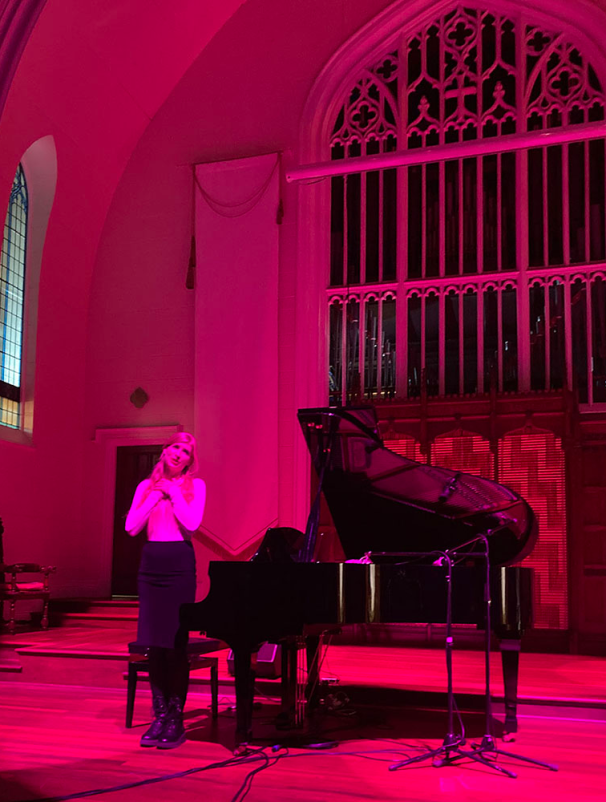
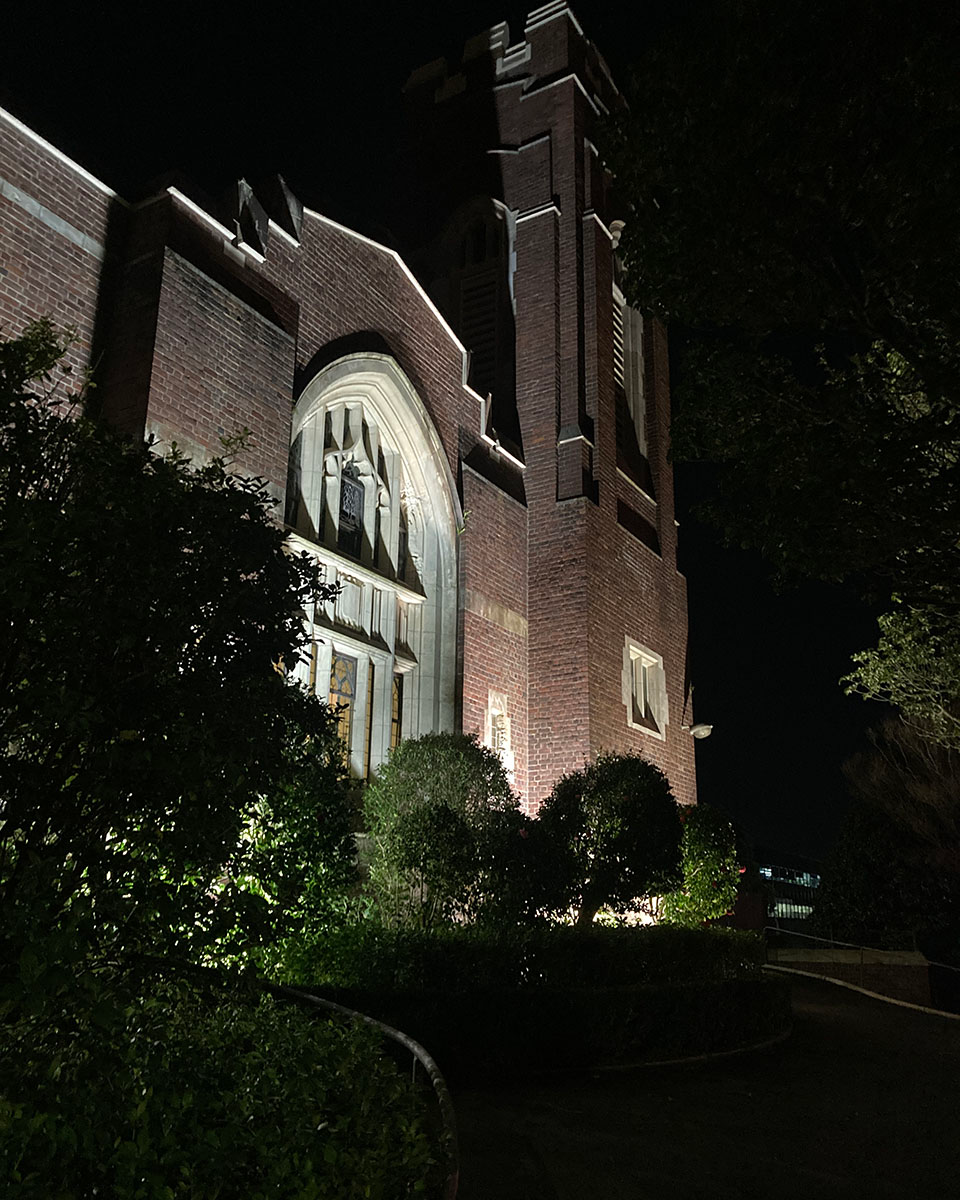
This latest instalment in the fabulous Strange Universe Winter series presented a powerfully moving performance for the audience settled upon pews inside the glorious heritage venue of Kāhui St David’s on Khyber Pass Road. Completed in 1927 as St David’s Memorial Church, since deconsecrated and spared demolition by earthquake-strengthening funded by Max Gimblett’s inspired The Art of Remembrance quatrefoils fundraiser project, the result is a significant multi-purpose space for the people of Tāmaki Makaurau. The stately high ceilings, the historical context, and the reverence and remembrance baked into this space perfectly suited the musicianship and intent of Motte and Kelly Moran, both fiercely and extraordinarily talented artists.
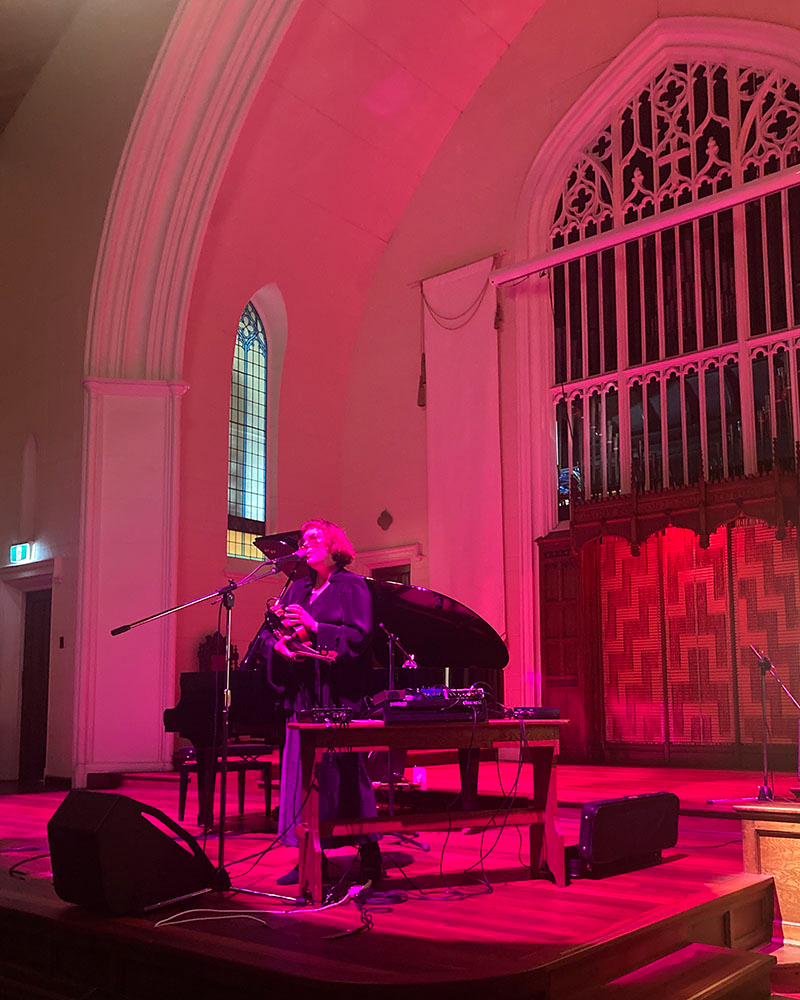
Motte is the solo project of Anita Clark, a violinist and composer whose richly-textured socio-geological soundscapes complement her wide-ranging collaborations with the likes of Jim Nothing, Don McGlashan, The Phoenix Foundation, and Nadia Reid. Motte’s carefully-crafted loops build layered motifs upon a platform of ambient noises (reminiscent of birds and insects, running and dripping water, wind and rustling grasses) reinforced with bass notes, instantly filling the old church with her signature atmospheric sound.
A hugely-engaging seven-track set drawn from the albums Cold + Liquid (2022) and Strange Dreams (2017) closed with ‘Ropes’ from the soundtrack Belle (2025). The always-superb ‘Give It to Me’ was particularly strong – “so you want to take a chance, give it to me one more time with feeling; hold me down and let us dance, let me know so I can feel it” – leaving not a dry eye in (my) house.
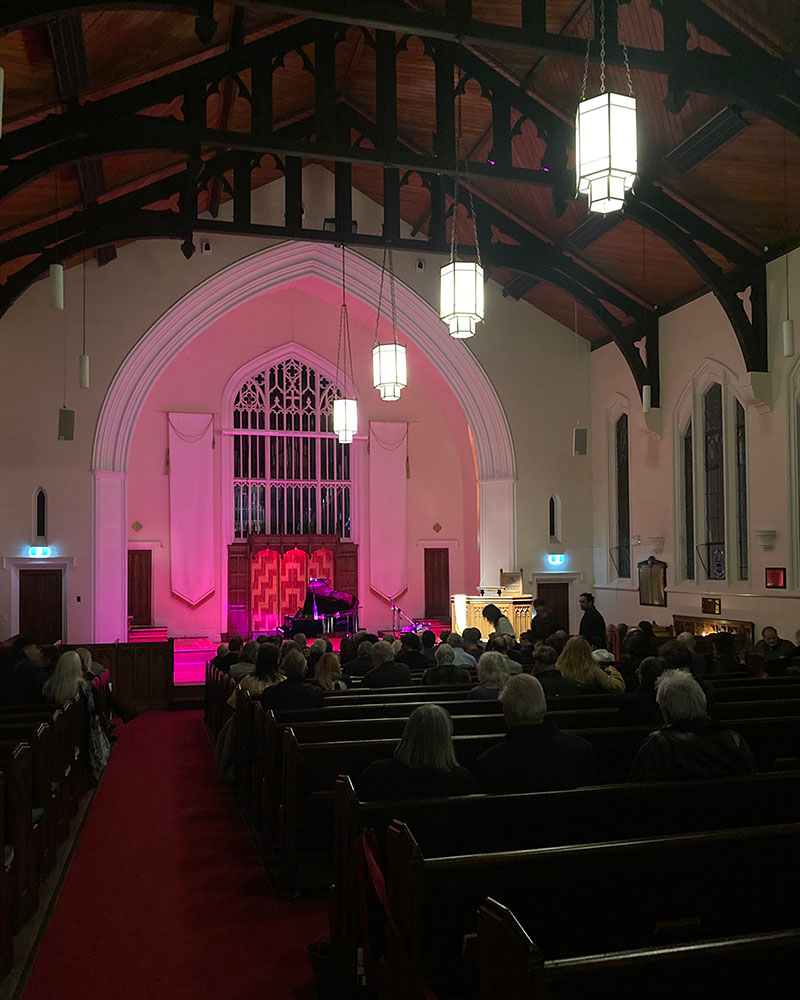
Having indicated the four emergency exits from Kāhui’s great hall and noted the fire-warden meeting point, Matthew Crawley introduced Kelly Moran and confessed his personal delight at the privilege of her being here with us in Aotearoa, promising that we were in for a treat – the word up from Wellington was to expect a transcendent and sacred experience.
Kelly Moran is a classically trained pianist working as a composer and performer across musical styles ranging from contemporary to minimalist to experimental. Moran promised a lengthy performance to make the 19 hours she spent travelling to be here worthwhile. Three chapters were outlined: pieces from the album Don’t Trust Mirrors (2025), some new and never-before-performed-live original compositions, and some examples from her favourite composers.
It took a few minutes for me to escape the gauze of my early-life diet of Rachmaninov, Schubert, Keith Jarrett, and Chick Corea. Kelly Moran brings something unnervingly, tenderly different that is fresh and contemporary and compelling. The pieces from Don’t Trust Mirrors, notably ‘Echo in the Field’, and her new compositions constructed powerful, swirling, colourful, driven music woven around carefully injected digital rhythms and ambience. Throughout, the extreme mastery of musicality and performance displayed was absolutely riveting – not a false note was struck during this perfect, engrossing performance that ran for more than an hour and a half. Moran’s piano-playing is a constantly moving energetic, physical orchestration of shoulders-and-spine, arms-and-hands, head-and-neck, with one foot often tucked way back underneath the piano bench.
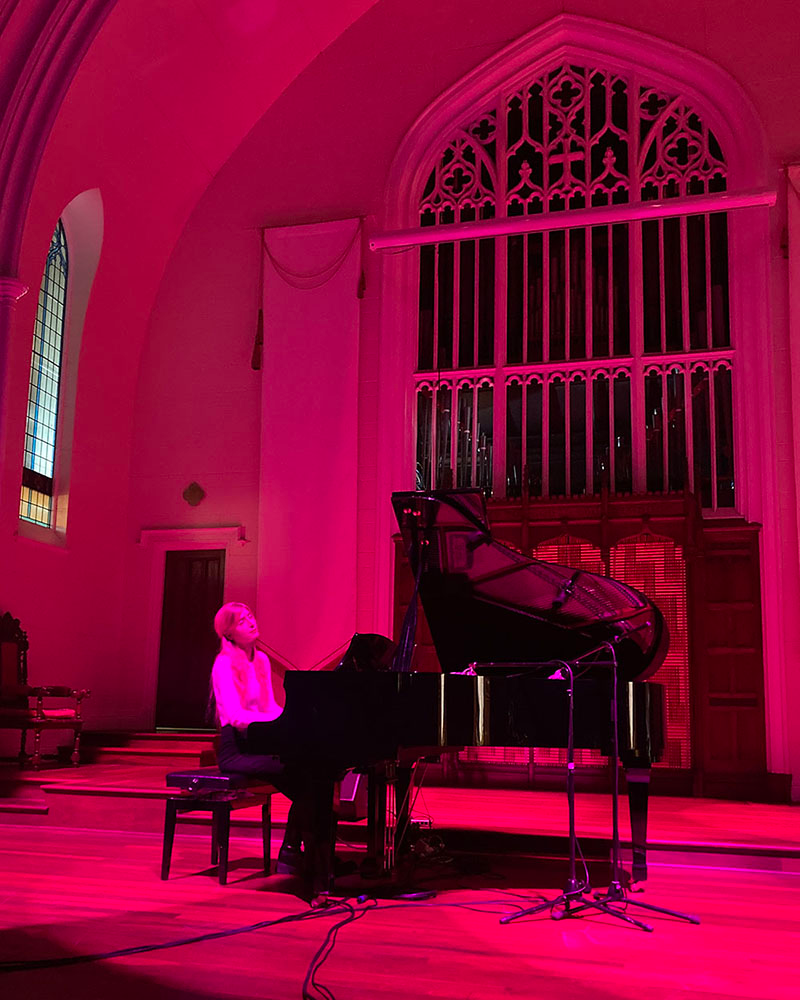
Having earned “free will” and the ability to play whatever she chooses, the final section of Moran’s performance showcased pieces by her favourite composers. A spellbinding rendition of Nico Muhly’s ‘Hudson Cycle’ was followed by a captivating performance of Philip Glass’ ‘Wichita Vortex Sutra’ – Muhly was mentored by Glass. Introducing the closing pieces for the evening, Moran recalled riding the subway to record a dozen Ryuichi Sakamoto pieces, while feeling at once anguished by and utterly powerless to change the endlessly reported horrors of global conflict. This beautiful music that demands so much restraint and sensitivity and spirit and focused attention and care “… helps us all to process and manage the darkness and violence in the world around us – we must cherish these and other pieces and never lose our sense of hope and love: hear and carry the best of what humanity can offer to every person.”
Finishing with Sakamoto’s ‘Merry Christmas, Mr Lawrence’, the audience should have delivered a standing ovation, or fallen to its knees, but we were shaken, and thrilled, and humbled.
Motte and Kelly Moran delivered an incredible and deeply affecting experience, conjuring and provoking a material sense of our shared mortality and spirit, despair and longing, and an exuberant, soaring hope. As @mistercrawley promised, it was transcendent and sacred.