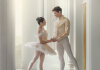
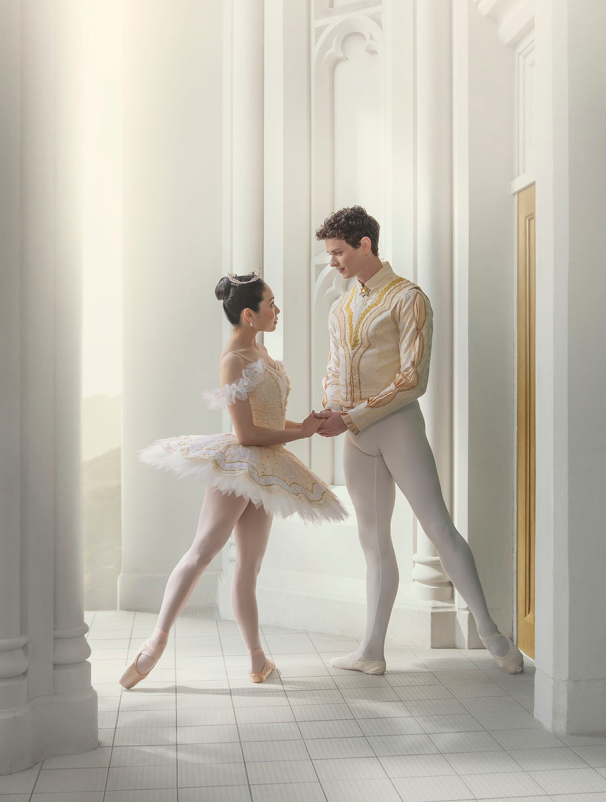
This spring, the Royal New Zealand Ballet brings back one of its best-loved productions: Greg Horsman’s staging of The Sleeping Beauty, touring nationwide from October to December 2026.
Since its 2011 premiere, The Sleeping Beauty has become something of a company signature, with more than 42,000 people having seen the original tour, and artistic director Ty King-Wall is glad to have it back.
“It’s wonderful for the Royal New Zealand Ballet to return to The Sleeping Beauty to bring our 2026 season to a close,” he says. “Created for our company, Greg Horsman’s production is an evocative and respectful staging of one of the great ballets of the 19th century. We look forward to a new generation of dancers taking on these coveted roles as this much-loved story awakens once more.”
Set to Tchaikovsky’s score, the story needs little introduction: Princess Aurora, a curse, a hundred-year sleep, and the kiss that undoes it all. But what makes this production distinctive is how it’s built. Horsman’s choreography leans into the grandeur of the classical tradition without taking itself too seriously – expect warmth and humour alongside the spectacle.
Gary Harris – former RNZB artistic director – designed the sets and costumes, conjuring glittering courts and enchanted forests in properly storybook detail. Wellington’s Wētā Workshop contributed the production’s magical effects, and Jon Buswell’s lighting rounds out a look that’s held up well over more than a decade of touring.
The production has had a life beyond New Zealand, too. After Horsman joined Queensland Ballet in 2012, it crossed the Tasman and has been restaged there several times since, picking up praise as one of the more striking contemporary takes on the iconic ballet. For this tour, Wellington, Christchurch and Auckland audiences get live orchestral accompaniment – the New Zealand Symphony Orchestra, Christchurch Symphony Orchestra and Auckland Philharmonia respectively, all conducted by Hamish McKeich – while other centres will hear a recording of the NZSO.
The New Zealand Community Trust, which is backing the tour, says the aim is to get the production beyond the main centres. As GM of Grants, Marketing and Communications Ben Hodges puts it: “We’re proud to support the Royal New Zealand Ballet as it brings this remarkable production to communities around the country. The tour will give thousands of New Zealanders, including many living beyond the country’s main centres, the chance to experience the magic of world-class live ballet.”
Whether it’s a first ballet or a fiftieth,
The Sleeping Beauty makes a solid case for itself as the pre-Christmas outing thanks to its romance, its spectacle, and a score most people already know they love… even if they don’t know why.
A Long Sleep…
Sleeping Beauty‘s roots go back further than you probably realise – all the way to a 14th-century French romance called Perceforest, where a sleeping princess is found by a wandering prince. The first full telling, though, was in Italian: Giambattista Basile’s Sole, Luna, e Talia (Sun, Moon, and Talia), published in 1634, was a rather dark tale before being softened by Charles Perrault in 1697 when he published La Belle au Bois Dormant 1697 – with the first mention of the spinning wheel and fairy’s curse.
The Brothers Grimm followed in 1812 with Little Briar Rose, and from there, the story split in two directions: Tchaikovsky’s 1890 ballet and, decades later, Disney’s 1959 film – both still shaping how audiences picture the tale today.