Words —
Eleanor Hughes
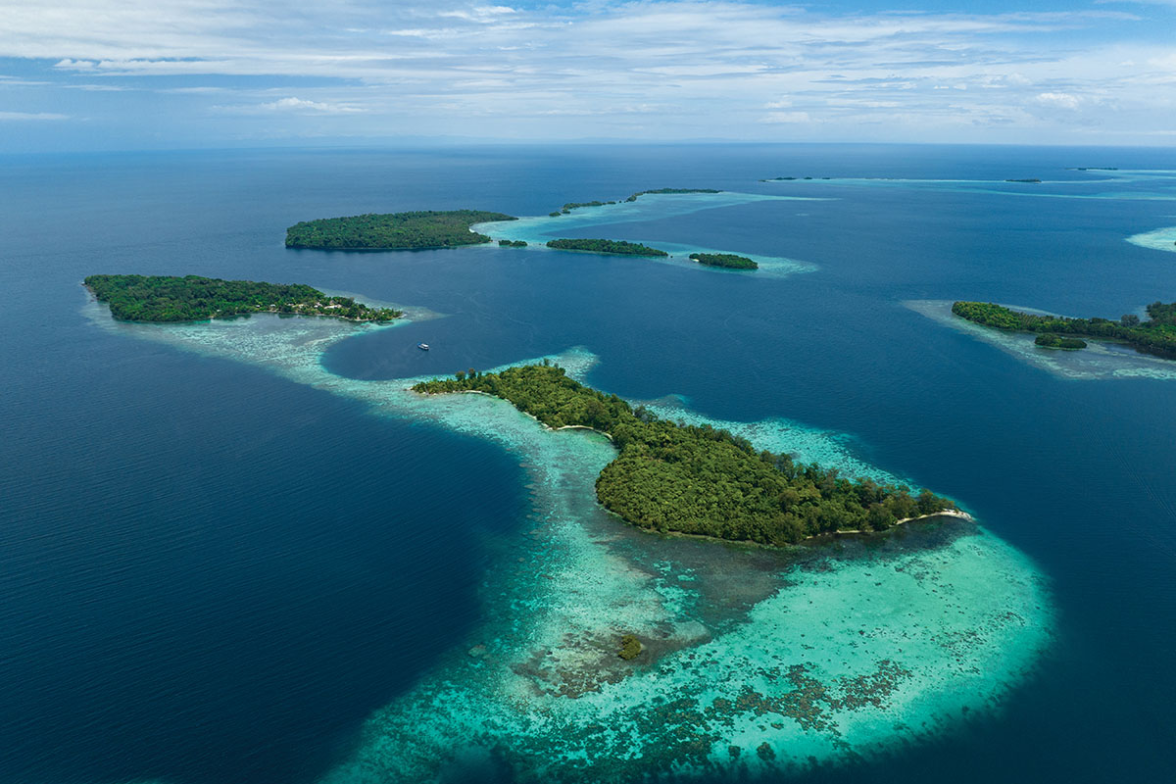
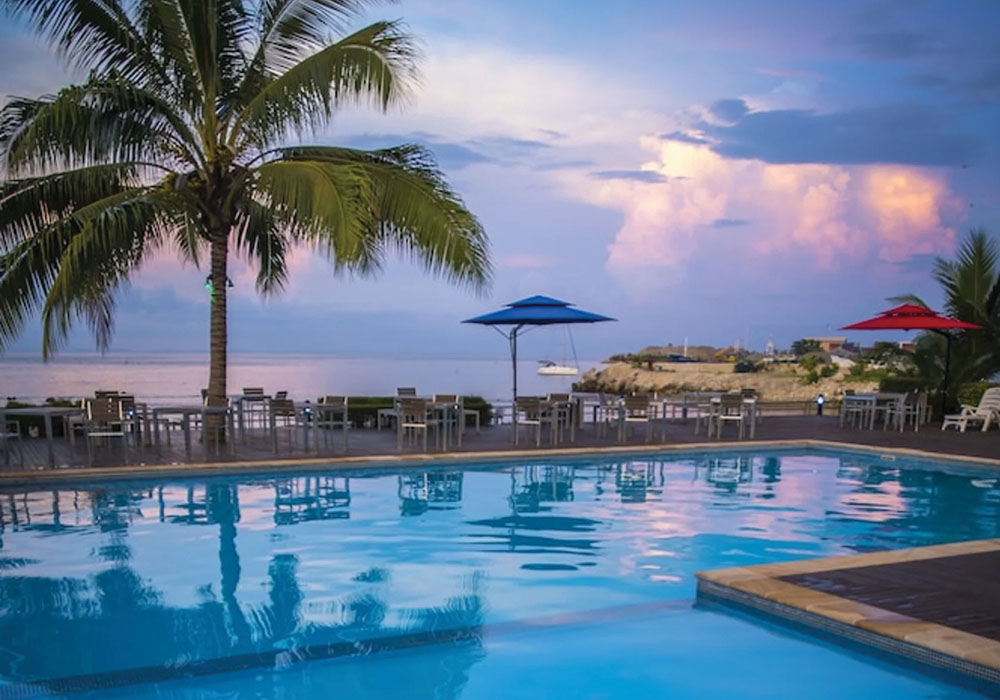
Surrounded by tropical gardens, starting the morning looking out over a placid Solomon Sea while swimming in Heritage Park Hotel’s pool is tranquil. A mere kilometre away, Honiara Central Market is bustling.
A kaleidoscope of colour, the market overflows from an open-air, roofed hall into the chaotic carpark. Orange spider conch shells, cockle-like shellfish and sea snails, sit alongside coconuts. I wander between sacks of sweet potato, stacked watermelons, mounds of ngali nuts, saucer-sized black-shelled crabs wrapped in banana leaves, multi-coloured chillies, and fruit and vegetables I can’t identify. Intricate shell necklaces, earrings, and bracelets are eye-catching where I discover strings of handcrafted shells, used as traditional currency and bride dowry. Waterfront, snapper, fish with turquoise colourings, yellowfin tuna, and unknown species stare blankly from chilly bins.
Guadalcanal’s two lane, and sole highway, leads us away from Honiara’s dusty busyness becoming one lane. Alongside, green vegetation nestles thatched and corrugated iron-roofed homes. We turn off, driving by villages among coconut and banana palms where cacao beans dry on tarpaulins. Tarseal turns to potholed dirt nearer Hotomai Cultural Village.
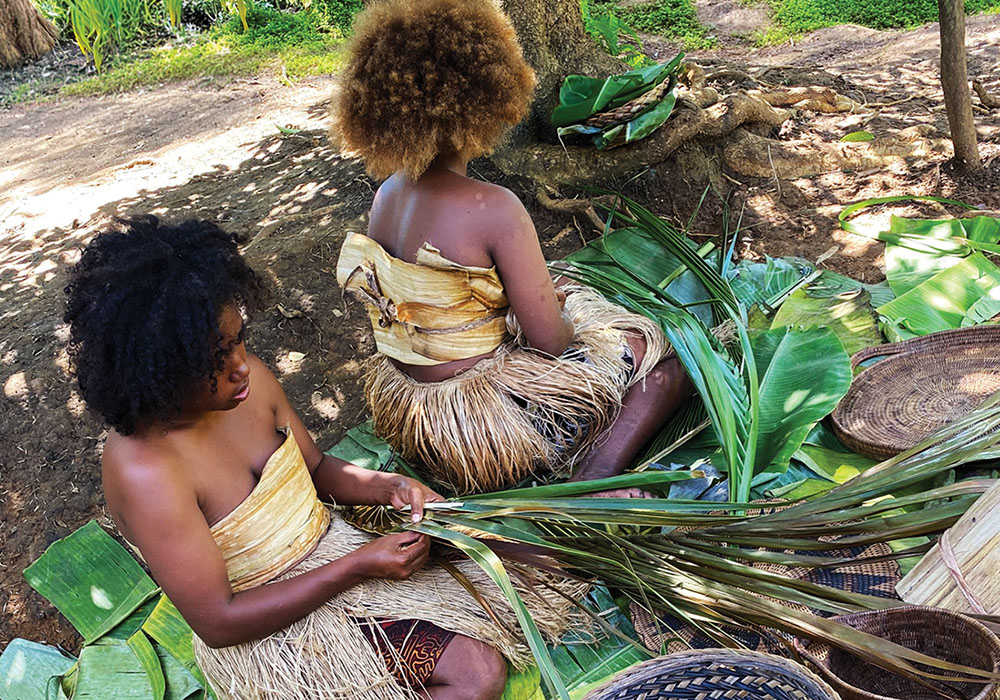
As the deep tone of a conch shell sounds, loin-clothed, yelling warriors run at us, spears raised. It’s a relief when they eventually break out in red-stained teeth smiles. Women wearing sago palm bodices and string-like skirts of stripped pandanus tubers welcome us with song. Betel nut is offered but the resulting red teeth put me off… and the effects this stimulant might have.
We wander dirt paths winding between verdant crops; a rooster crows. A man thrusts a stick, the same height as him, into blackish earth, forming a hole for a woman to plant yam. Another rubs a debarked stick against a larger one until a wisp of smoke appears and he lights a coconut leaf pipe packed with locally produced tobacco. Unripe bananas cook over hot stones; they taste smoky and dry. Presented on a plate-like banana leaf, taro baked in banana leaves then mashed in a wooden bowl and rolled in coconut is tastier. Sugarcane… sweetly delicious.
Baskets of all sizes are intricately woven using coconut leaves and strands of coconut frond spine. Men construct rooves from sago palm leaves, bamboo and lawyer cane vine.
It’s a simple life.
Back on the main road, eastwards bound, an explosion of colour and activity marks a roadside market of thatch-roofed stalls containing produce. We turn down Tenaru Beach Road and bump along the potholed dirt a few hundred metres to meet Grace Fekau.
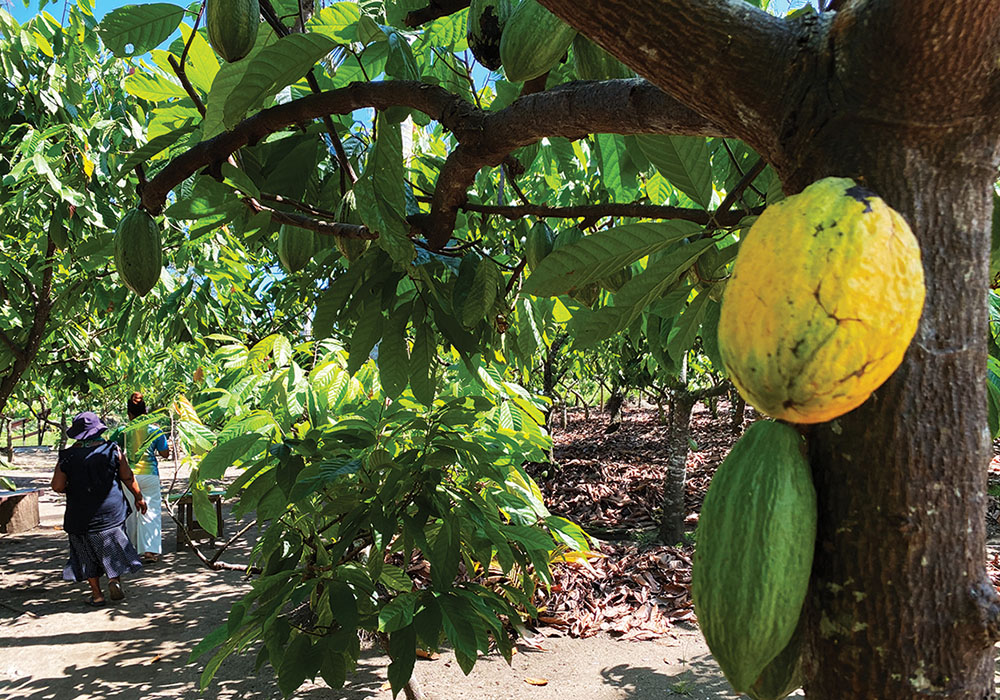
Below glossy-leafed cacao trees, pink, green and yellow pods hanging from the trunks, she tells me of starting Amazing Grace Boutique Cocoa Farm in 2006. Beginning with 600 trees, the farm now supports 1,500 and Grace, at 72, still prunes the lot. Employing relatives, the entire process of turning cacao bean to chocolate is hand done.
Grace machetes open a yellow pod. Inside, resembling a giant sweetcorn cob, white flesh segments surround each bean. The slimy flesh is fruity.
We continue through green peacefulness passing pineapple, knobbly fruited moringa, spiky sowsop and cashew trees, where nuts are enclosed within large green shells attached to brownish, capsicum-like fruit. A crab-sized native apple tastes sweet.
Astride a wooden bench with a serrated metal attachment at one end, I grate coconut flesh which we squeeze through a bag to produce coconut milk.
In the balmy heat serenaded by chirping cicadas, we wander to three wooden bins where cacao beans are fermented over seven days to then sun dry for a day spread on outdoor wooden trays. In a plastic-covered wooden structure, they are then spread and turned regularly over a week. I crunch on one. It’s chocolatey.
A short drive brings us to Tenaru Beach’s black sand. Amidst tropical flowering trees, Grace’s open-sided restaurant looks out onto it. Beneath a neighbouring thatched shelter, she roasts dried beans in a pan over a fire for a few minutes. They too are chocolatey. The roasted skin put aside to later soak and boil to produce tea or hot chocolate, the beans are then ground. A chocolate aroma lingers from a knee-high wooden bowl where a woman with a bat-sized stick has been grinding some into a paste for over an hour. Finally done, she pours the paste into moulds to harden. Being a chocoholic, I purchase the finished product. Surprisingly, it’s quite bitter and coarse.
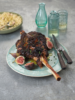
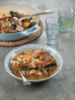
We linger over lunch here, savouring fresh taro, sweet potato, fish, squid and chicken flavoured with coconut, tropical fruit and sweet, cooked banana. Like the Guadalcanal life I have witnessed, it’s simple and memorable.