
First-quarter 2026 data from the US shows used EV sales are up 12% year-on-year and 17% on the previous quarter. In the UK, March delivered a record 86,120 electric car sales, while EV leasing specialist Octopus Electric Vehicles reported a 36% spike in inquiries since the conflict began.
In Aotearoa New Zealand, more than 1,000 EVs were registered in the week that ended on 22 March – nearly double the previous week – making it the country’s biggest week for electric vehicle registrations since the end of 2023. Also in March, it was announced that New Zealand’s electric vehicle public charger numbers are set to more than double, thanks to a $52.7 million government co-funding deal with ChargeNet and Meridian.
“Many New Zealanders have thought about getting an EV, even before the fuel challenges we’re currently facing,” says Transport Minister Chris Bishop. “But research shows that the lack of public chargers is holding many back from making the switch to an EV.”
The 2,574 new charge points include 1,374 DC fast chargers and 1,200 AC chargers.
“About half the new chargers will be spread across Auckland, Hamilton, Tauranga, the Wellington region, Christchurch, and Dunedin,” continues the transport minister, ”with the other half throughout the regions, so drivers outside the main centres will benefit too.”
Energy & Climate Change Minister Simon Watts says that owning an EV in New Zealand already makes strong financial sense: “Electricity is cheaper than petrol and almost entirely generated from renewable sources like wind, geothermal, solar, and hydro.”
So, what should people consider when making the switch to an EV?
A better charging network means more New Zealanders can take advantage of it, and that’s good for household budgets and our emissions profile alike.
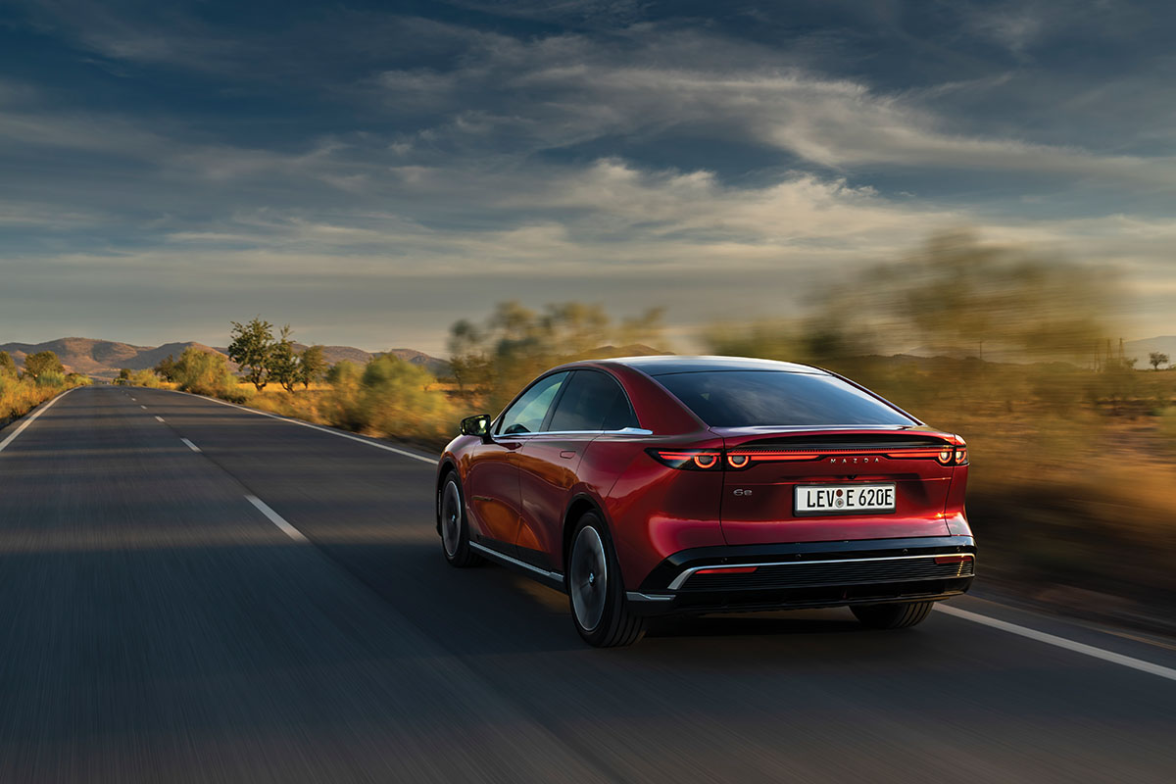
“There are several questions to start with: What sort of vehicle type suits your needs best? How far do you drive daily? Do you often travel long distances? Is overnight charging possible at your home? In some cases a plug-in hybrid may be a better first-step,” says Paul Sherley, product and communications manager for Mazda, who are set to release the 6e later this year (an all-electric sedan with a range of 560km that promises to “remove any hint of range anxiety!”).
When considering the costs of an EV, Paul emphasises that people need to consider that it’s not as simple as a straight-up comparison with fuel. “Charging an EV at home is much cheaper than petrol, though you must pay Road User Charges (RUC). Daily running costs for EVs are lower, and maintenance expenses are reduced, but they still require upkeep. EVs are typically heavier than petrol cars due to the battery pack, so tyre wear can often be greater.”
As for the common fear of battery degradation, Paul says that this is one of the industry’s biggest areas of focus.
“The battery module is central to EVs and remains the main area of development, with ongoing improvements in energy density and chemistry offering longer ranges and faster charging,” he adds. “All electrified vehicles include robust high voltage battery warranties, guaranteeing 70% capacity after eight years or 160,000km. Studies show these batteries frequently degrade more slowly than anticipated, so they will still function well beyond the warranty period.”
For someone sitting on the fence, what’s the honest advice – is now a the perfect time to make the switch?
“Electrified vehicles, including plug-in hybrids and fully electric models, offer multiple advantages,” says Paul. “It’s important to select one that suits your needs, factoring in price, charging options, and daily costs. Many people find using an electrified vehicle straightforward and are positive about making the switch.”
Climate Change Minister Simon Watts says that Kiwis are already making the shift as a cost-of-living choice: “Anecdotal evidence suggests even greater interest over the past couple of weeks as conflict in the Middle East has seen fuel prices increase. At a time when global fuel markets are volatile, that matters.
“A better charging network means more New Zealanders can take advantage of it, and that’s good for household budgets and our emissions profile alike. EVs produce at least 60 percent fewer lifecycle emissions than petrol vehicles.”