
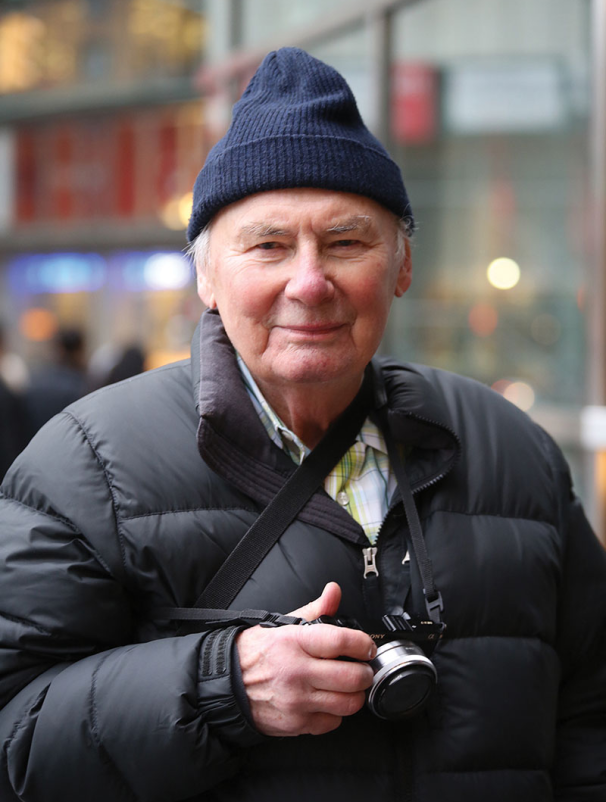
Richard Estes’ meticulously observed paintings of urban streetscapes, storefronts and reflective city scenes are some of the most recognisable images in modern art.
The 94-year-old is widely regarded as one of the pioneers of the Photorealist movement – and one of the greatest living American artists – with work held at the Metropolitan Museum of Art, MoMA, the Whitney Museum of American Art, the Guggenheim, Tate, and dozens of institutions worldwide. As he prepares for a landmark exhibition that reveals the photographs that have long underpinned his creative process, he puts some time aside to chat with Verve.
“I moved to New York in the 1950s to be an artist,” he says. “I was drawn to the adventure of it. I had other jobs to make a living, but I couldn’t do anything but be an artist. I hated working in an office.”
More than 70 years later, New York continues to provide inspiration.
“The city is full of interesting things to look at, especially its architecture. Sometimes I don’t even like the buildings I paint, but I paint them because they make an interesting picture.”
That ability to find beauty in the overlooked has long defined his work. While many viewers focus on the extraordinary precision of his paintings, Estes is often more interested in complexity than perfection. Reflections in windows, one of his most recognisable motifs, allow him to combine multiple realities within a single image.
“With windows in particular, I’m interested in perspectives that show the inside and outside at the same time,” he explains. “It reminds me of scenes in the operas Rigoletto or Aida where you see action happening in two places at once.”
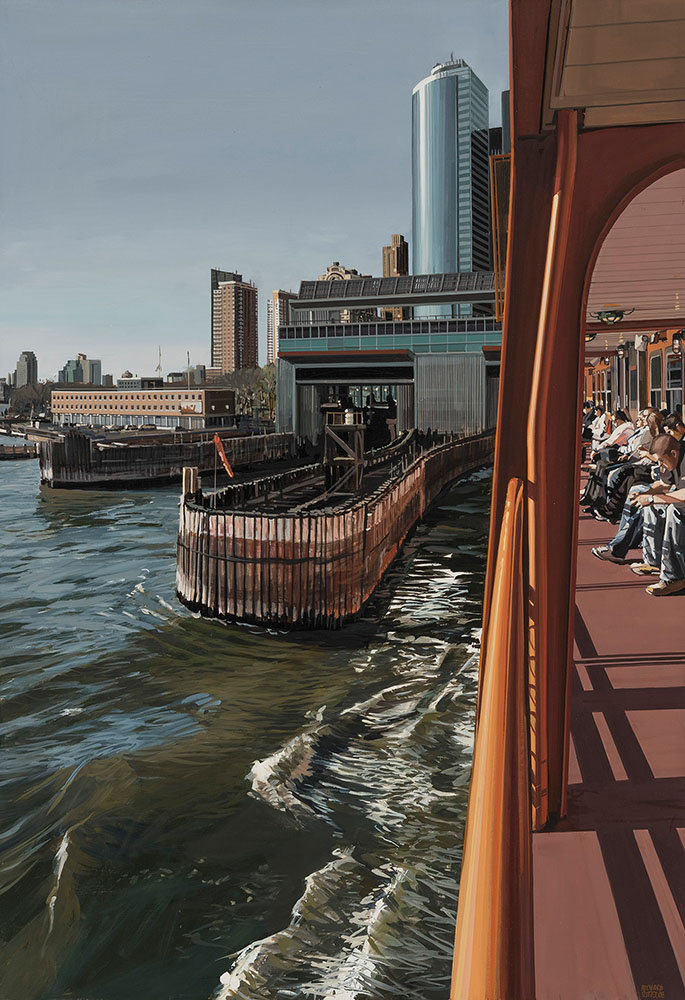
Despite decades spent examining the surfaces of cities, buildings and objects, Estes resists the suggestion that his work contains hidden psychological meanings.
“I really just look at the world and try to understand it,” he says. “For me, art can just be a visual experience.”
The instinct to observe began early. Born in a small Illinois town, Estes spent much of his childhood drawing, studying comic strips and watching films. A move to Chicago during his youth expanded his horizons considerably.
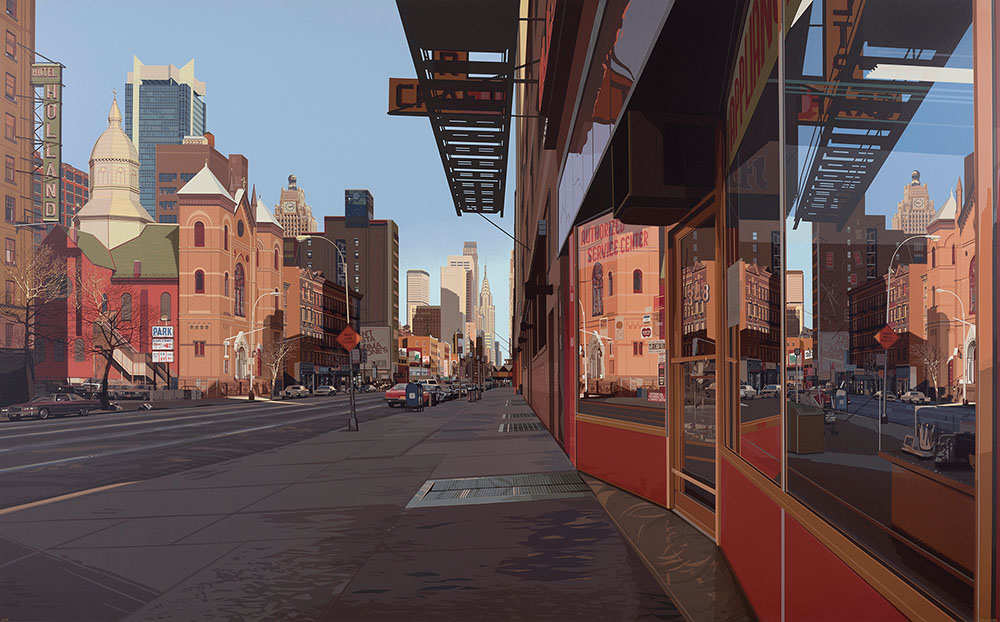
“My family moved to Chicago in the late 1940s,” he recalls. “That really opened my eyes to the visual aspects of living in a city. I loved exploring and going to the museums and the library.”
He was only eight years old when he received his first camera, a gift that would quietly shape the direction of his career.
Today, he remains captivated by the challenge of seeing. While New York’s architectural complexity continues to inspire him, Maine presented a different test altogether.
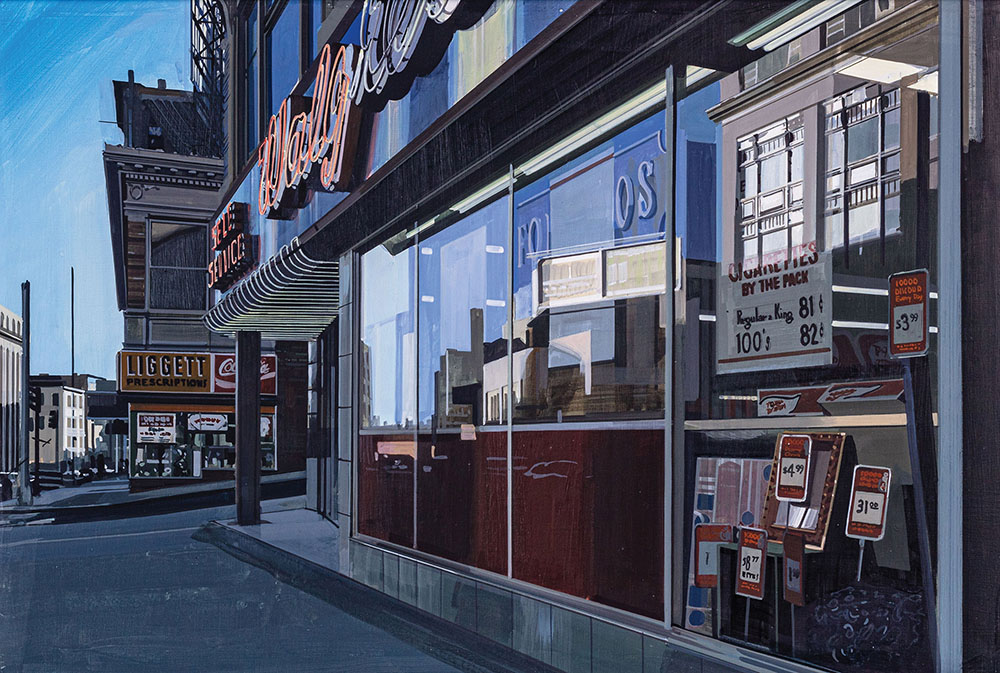
“When I started spending time in Maine, I wanted to see if I could paint the natural environment too. That challenge appealed to me.”
Perhaps surprisingly for an artist whose work has been analysed by critics for decades, Estes rejects the notion that there are hidden messages buried within his paintings.
“There is not anything hidden in my work,” he says. “I certainly do focus on details. It’s an interesting challenge to paint the small details of what I see.”
Likewise, when asked about influences that audiences may have missed, his answer remains characteristically direct.
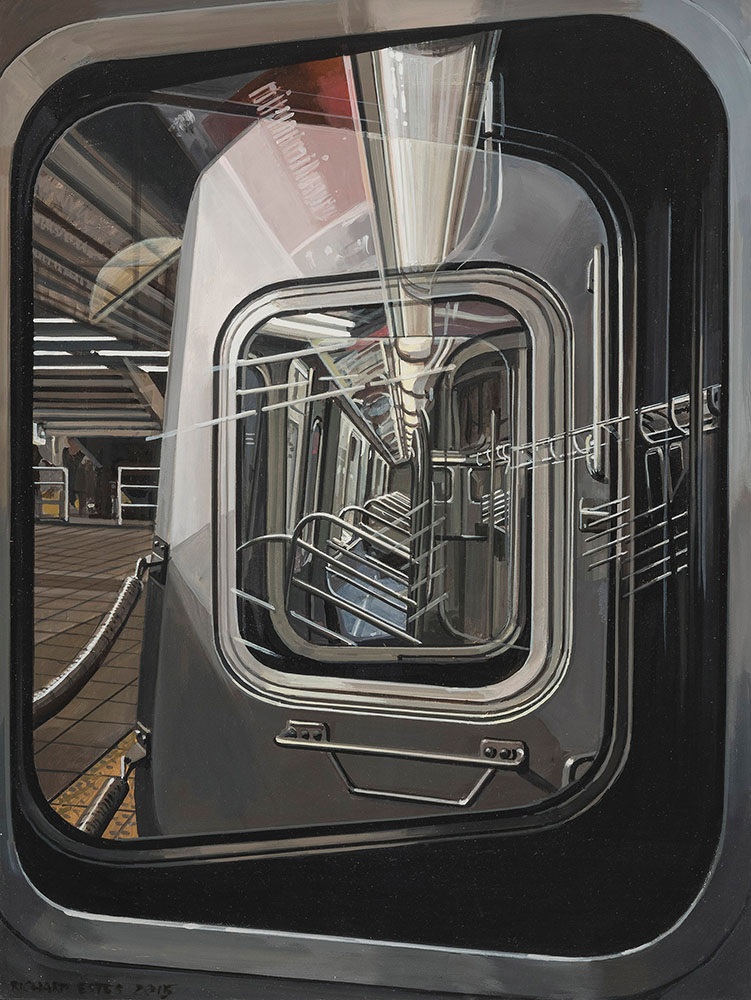
“My travels have certainly influenced my work. But I wouldn’t say there’s some unrecognised meaning hiding in my work. I just do what I do because I couldn’t do anything else. I just try to make interesting pictures.”
After a lifetime of acclaim, museum exhibitions and international recognition, Estes remains focused less on legacy than on the work itself. Asked what he hopes people will understand about him decades from now, his answer is, as always, modest.
“I’m not trying to say anything particular about myself. I hope my work stands the test of time on its own. I just hope they interpret it positively.”
From 15 July to 21 August, Richard Estes: My Camera Is My Sketchbook runs at New York’s Schoelkopf Gallery.
For more information, visit schoelkopfgallery.com